
Conference Coverage
about 2 months ago
Aggressive Treatment Fails to Improve Outcomes in Early-Onset CRCabout 2 months ago
Surgery Completion Boosts Outcomes in Gastric/GEJ Adenocarcinomaabout 2 months ago
Watch-and-Wait Success in High-Risk Rectal Cancer: ESMO GI 2026 Findingsabout 2 months ago
Real-World Data Support Fruquintinib Efficacy in Previously Treated mCRCabout 2 months ago
Survey Highlights Need for Nurse Autonomy in Multiple Myeloma CareLatest Content

Aug 29, 2026 | News
Exercise May Reverse Obesity-Induced Immune Suppression in Lung Cancer
APAO 2026: Mark Honor on the Role of PAs as Oncology Care Managers
Aug 28, 2026

mRNA Cancer Vaccine Met Endpoints in Adjuvant Melanoma
Aug 28, 2026

Navigating TNBC: Nurse-Led Insights on ADCs and Toxicity Management
Aug 27, 2026

Daraxonrasib Approved: What Oncology Nurses Must Know About Rasonque
Aug 27, 2026








Advertisement
Shorts

0:31
Oral Iberdomide Expands Myeloma Care Access for Rural and Frail Patients
11 days ago
by
Elise Curry, BA, BSN, RN, OCN

0:38
How Oncology Nurse Navigators Guide Patients Through Early Cancer Care
12 days ago
by
Emily Mason Beard, BSN, RN, OCN, CBCN

0:34
Reframe Patient 'Difficulty' as Emotional Trauma in Oncology Care
12 days ago
by
Kelly Dyckman, LCSW

0:56
How CAR-T and Bispecifics May Replace Myeloma Stem Cell Transplants
16 days ago
by
Melissa LaMirand, MSN, RN, FNP-C

0:41
The 'Spark and Gasoline' of Oncolytic Therapy
19 days ago
by
Michael K. Wong, MD, PhD, FRCPC

0:54
Integrative Oncology Does Not Delay Conventional Cancer Care
20 days ago
by
Alexandre Chan

0:44
Simple Tip to Start Patient Health Conversations
22 days ago
by
Kavita K. Mishra, MD

0:20
Why Lobular Breast Cancer Needs a Specialized Lens
a month ago
by
Patricia Jakel, MN, RN, AOCN

0:54
Training Nurses to Combat Cancer Information Overload
a month ago
by
Michelle Mollica, PhD, RN

1:25
Using Creatine and Exercise to Stop Muscle Loss
a month ago
by
Gabrielle Raucci
Podcasts

Videos






























































All News
Advertisement
Advertisement

At the 29th APAO Symposium, Jennifer Fisher, PA-C, discussed combining surgery, radiation, and novel systemic drugs to treat brain metastases.

At the 29th APAO Symposium, Dr. Angela Jia highlighted the critical role of PAs and NPs in managing toxicities and applying new ASCO data.
FDA approves daraxonrasib, a first-in-class daily oral RAS inhibitor, doubling survival in metastatic pancreatic adenocarcinoma patients.
Emily Beard discusses how nurse navigators act as essential bridges, leveraging clinical intuition and time to address complex patient needs.
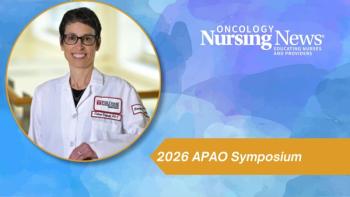
At the 29th APAO Symposium, Lifetime Achievement Award honoree Colleen Tetzlaff, PA-C, shared insights on adapting to rapid clinical advancements.

FDA approves two Ziihera combinations as a first-line treatment standard for adults with HER2-positive advanced gastroesophageal adenocarcinoma.

Kelsey Martin, APRN, discusses the tolerability and clinical benefits of frontline antibody-drug conjugates for metastatic TNBC.

Experts at the 2026 APAO Symposium highlighted patient education, clinical trial updates, and professional development in cancer care.

Kennon McCollum explains how psychosocial, physical, and financial barriers impact treatment selection for patients with CLL.

Learn how oncology nurses can leverage clinical strategies, baseline testing, and targeted referrals to optimize patient vitamin D during treatment.
Advertisement

Adding anti-obesity medication for survivors who do not respond early to lifestyle changes helps 42% achieve clinically meaningful weight loss.

Andrew Evens, DO, and Joanna Rhodes, MD, discuss evolving CLL treatment paradigms, CAR T-cell therapy versus bispecific antibodies, and expanding community access to specialized lymphoma care.

A JAMA study of 73,042 veterans shows active surveillance for low-risk prostate cancer rose to 93%, with notable racial and social disparities.
How oncology nurses can dismantle patient myths, secure early dietitian referrals, and collaborate to optimize supportive care like vitamin D.

A JAMA Surgery study of 2.7M patients reveals decade-long increases in surgical delays, with significant racial and socioeconomic disparities.
Advertisement
Advertisement
Trending on Oncology Nursing News
1
Exercise May Reverse Obesity-Induced Immune Suppression in Lung Cancer
2
Daraxonrasib Approved: What Oncology Nurses Must Know About Rasonque
3
mRNA Cancer Vaccine Met Endpoints in Adjuvant Melanoma
4
The Role of Oncology Nurse Practitioners in Metastatic Triple-Negative Breast Cancer Care
5