Beth Faiman details the new IMS/IMWG consensus definition of cure for multiple myeloma, requiring 5 years of treatment-free remission.
Beth Faiman details the new IMS/IMWG consensus definition of cure for multiple myeloma, requiring 5 years of treatment-free remission.
Following WCLC 2026, Katherine Kuhns details how perioperative immunotherapy, AI patient tools, and wearables are transforming thoracic surgical nursing care.
Beth Faiman details the new IMS/IMWG consensus definition of cure for multiple myeloma, requiring 5 years of treatment-free remission.
Five-week hypofractionated radiation after prostatectomy showed similar 5-year cancer control and quality of life but more grade 3 urinary toxicity.
At ASTRO 2026, Suresh Rana details how AI-driven contouring accelerates care timelines, requiring rigorous team monitoring and early nursing input.
At ASTRO 2026, Dr. Erica Braschi Jordan details toxicity tracking, physical therapy referral, and quality of life in proton regional nodal irradiation.
At ASTRO 2026, Dr. Mishaal Munir details how nurse-led triage workflows and prompt symptom escalations improve care for breast cancer brain metastases.
ASTRO 2026 presenter Kayla Kafka-Peterson details an Adapt-Adopt-Build model to bridge global brachytherapy nursing gaps and standardize perioperative care.
At ASTRO 2026, Dr. Nitin Ohri details additive versus synergistic toxicities when combining radiation with novel systemic therapies in clinical trials.
APHON 2026 speaker Amy C. Haskamp, CNS, discusses tiered self-care tactics and boundaries to help pediatric oncology nurses navigate emotional distress and burnout.
At ASTRO 2026, DJohn Hillson details how early post-surgical radiation education within 6 weeks improves outcomes for head and neck cancer patients.

From ICN 2026, Heather Jackson and Ashley Johnson detail APP breast care access models, global cancer pain barriers, and burnout mitigation tactics.

At WCLC 2026, Kaitlyn Gregory details key oncology nursing insights into exercise, caregiver stress, screening models, and APP-led supportive care.
At the 29th APAO Symposium, Mark Honor, PA-C, discussed the collaborative care model and the vital role of PAs in managing day-to-day oncology care.
At the 29th APAO Symposium, Jennifer Fisher, PA-C, discussed combining surgery, radiation, and novel systemic drugs to treat brain metastases.
At the 29th APAO Symposium, Dr. Angela Jia highlighted the critical role of PAs and NPs in managing toxicities and applying new ASCO data.
At the 29th APAO Symposium, Lifetime Achievement Award honoree Colleen Tetzlaff, PA-C, shared insights on adapting to rapid clinical advancements.
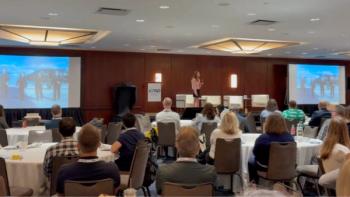
Experts at the 2026 APAO Symposium highlighted patient education, clinical trial updates, and professional development in cancer care.
ESMO GI 2026 data show patients under 50 receive more aggressive therapy yet face poorer survival, suggesting EOCRC is a distinct biological entity.
Study finds 86.5% of gastric/GEJ patients completed surgery after neoadjuvant chemo, significantly improving survival over those who did not.
Long-term data show watch-and-wait is viable for rectal cancer, with most regrowths salvageable despite adverse baseline MRI features.
A real-world study presented at ESMO GI shows fruquintinib is effective in mCRC, with the best outcomes in the third-line setting.
Maite San Miguel and a new survey highlight how specialized training and clinical autonomy are vital for optimizing multiple myeloma outcomes.

Teddi Mellencamp highlights the vital bond and advocacy of oncology nurses during the 2026 Extraordinary Healer awards ceremony in San Antonio.
Dr. Morvarid Rezaie discusses how oncology nurses can leverage medical cannabis to address polypharmacy and enhance opioid synergy for symptom control.
Dan Silver, PA-C, discusses the importance of early intervention in penile rehabilitation and the APP’s role as a partner in prostate cancer recovery.
CIBMTR data shows manageable toxicity and outpatient potential for liso-cel in R/R MCL, emphasizing the vital role of nursing vigilance and education.
Dan Silver, PA-C, discusses proactive strategies for managing treatment-related erectile dysfunction and penile rehabilitation in prostate cancer.
A European survey at EHA 2026 finds nurses central to multiple myeloma care but facing training gaps and severe shortages that limit patient outcomes.
Deanna Lewis, PA-C, explores how reframing communication as clinical infrastructure fosters trust, psychological safety, and innovation in oncology.