



Breast Cancer
Latest News
Advertisement
Video Series
Latest Videos










Shorts
1:16
FDA Approves Maintenance Tucatinib Regimen for HER2+ Breast Cancer
16 hours ago
by
By ONN Staff
0:34
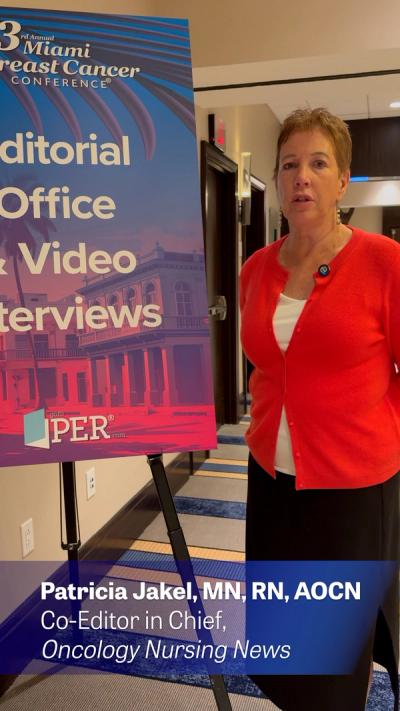
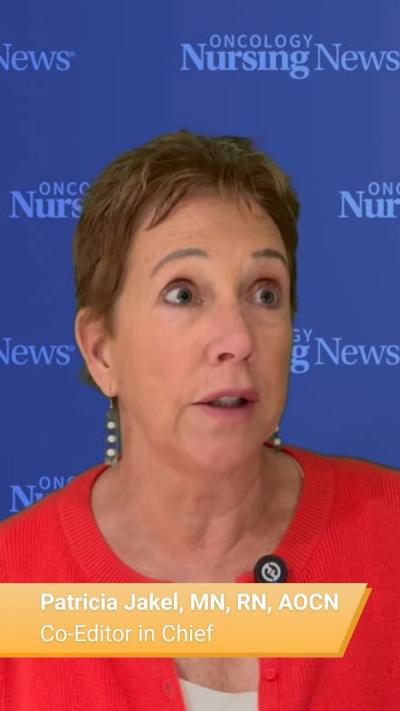
What should nurses know about breast cancer care's evolution?
7 months ago
by
Patricia Jakel, MN, RN, AOCN
0:42
Testing for Lobular Breast Cancer Outside of What Is Recommended
7 months ago
by
Patricia Jakel, MN, RN, AOCN
0:37
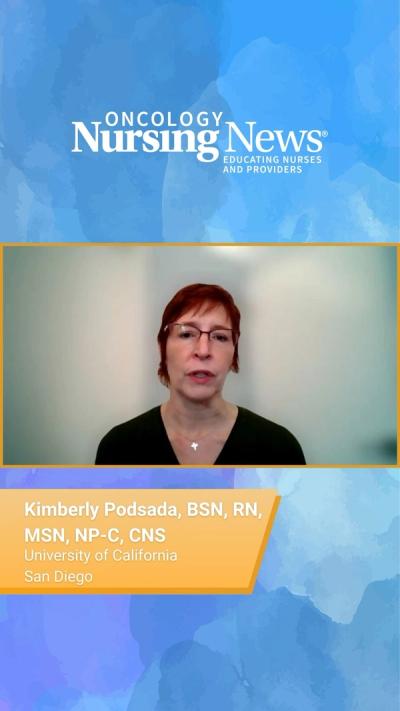
Personalizing CDK4/6 Inhibitor Selection
a year ago
by
Kimberly Podsada, BSN, RN, MSN, NP-C, CNS

0:30
CDK4/6 Inhibitor Risk Factors
a year ago
by
Courtney Moore, APRN, FNP-C, OCN

0:35
Setting Patients With Breast Cancer Up for Success
a year ago
by
Katie Newlin, RN, MSN, APN-BC
Podcasts































































Advertisement
More News

Patients often use AI to read test results, but AI can misinterpret data and cause panic. Learn why human context remains critical.

Oncology nursing teams must navigate the clinical logistics and patient education for the newly approved, ctDNA-guided agent camizestrant.

FDA grants accelerated approval to camizestrant with a CDK4/6 inhibitor for adult patients with ESR1-mutated HR+/HER2- advanced breast cancer.

Study of breast cancer survivors shows that depression and stress, rather than cardiac function decline, are the primary drivers of long-term fatigue.

Sarah Cannon's Kelsey Martin, APRN, AOCNP, discusses managing toxicities, nursing collaboration, and tailored treatment sequencing in frontline mTNBC.

Alanna Iorio, APRN-C, OCN, discusses managing toxicities, educating patients, and professional growth in triple-negative breast cancer care

Adding anti-obesity medication for survivors who do not respond early to lifestyle changes helps 42% achieve clinically meaningful weight loss.

AMH and INHB testing can identify premenopausal patients with HR+/HER2- breast cancer who may safely avoid chemotherapy, sparing unnecessary toxicity.

Theresa Lynne Harrington Stukus, ANPBC NP, discusses patient compliance, side effect management, and screening anxiety in breast cancer care.

A Neurology study reveals breast cancer survivors have a high ischemic stroke risk within one year of diagnosis, linked to specific treatment regimens.

FDA approves gedatolisib with fulvestrant for adults with HR+/HER2- metastatic breast cancer following endocrine therapy progression.
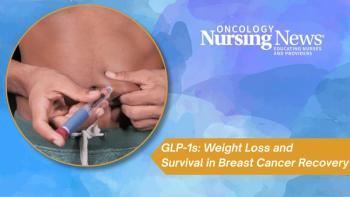
Experts explore the clinical promise, nursing implications, and access barriers of GLP-1s in cancer care.

Dr. Sonja J. Hughes discusses managing GI toxicities and the need for research regarding GLP-1 use among breast cancer patients and survivors.

FDA approves sacituzumab govitecan-hziy as monotherapy and with pembrolizumab for first-line treatment of advanced triple-negative breast cancer.
The FDA approved palbociclib (Ibrance) for maintenance in HR+/HER2+ metastatic breast cancer after induction therapy, based on the PATINA trial.

Dr. Loren Rourke discusses how GLP-1s may impact breast cancer risk by reducing adipose tissue-derived estrogen and chronic metabolic inflammation.

TROPION-Breast02 data show datopotamab deruxtecan extends stability and delays the need for new treatment lines in first-line metastatic TNBC.

Camizestrant switch at ESR1 mutation detection improves PFS, patient-reported outcomes, and delays chemotherapy in advanced breast cancer.

ASCO 2026 data show GLP-1 RAs reduce HR+/HER2- breast cancer risk and improve overall survival in non-diabetic women with a BMI of 25-35 kg/m².

New ASCENT-04 data shows sacituzumab govitecan plus pembrolizumab improves PFS in first-line PD-L1+ TNBC regardless of Trop-2, BRCA, or HER2 status.

Dr. Emily Podany explains how oncology nurses can screen for food insecurity and provide evidence-based solutions to improve patient outcomes.

Dr. Paolo Tarantino highlights the need for drug-specific prophylaxis to manage toxicities like ILD and neutropenia in patients receiving ADCs.

Final KEYNOTE-522 analysis shows 85.1% 7-year OS in early TNBC. Dr. Javier Cortes details nursing management of immune-related side effects.

Studies to be presented at the 2026 ASCO Annual Meeting examine GLP-1 receptor agonists in relation to cancer progression, survival, and immune-related adverse events.

Study findings suggest biologic aging and neighborhood deprivation may shape cognitive benefits from exercise after breast cancer.
Advertisement
Advertisement
Trending on Oncology Nursing News
1
FDA Approves Atezolizumab Plus Chemo for Stage 3 dMMR Colon Cancer
2
FDA Approves Maintenance Tucatinib for Advanced HER2+ Breast Cancer
3
Daily Symptom Shifts Linked to Quality of Life in Metastatic Breast Cancer
4
Surveillance, Patient Resources, and Financial Support
5