




Lung Cancer
Latest News

Advertisement
Video Series

Latest Videos






Shorts

0:51
Why Lung Cancer Is Now Being Managed as a Chronic Illness
2 months ago
by
By ONN Staff
Podcasts
























































Advertisement
More News

Gotistobart reduced death risk by 54% and doubled 12-month survival vs chemo in pretreated advanced squamous NSCLC, per PRESERVE-003 results.

Nuvalent submitted an NDA for neladalkib in TKI-pretreated ALK+ NSCLC, supported by ALKOVE-1 data showing systemic and intracranial activity with tolerability.

Zongertinib elicited responses in patients with advanced HER2-mutant NSCLC, showing intracranial efficacy in those with active brain metastases, per phase 1b Beamion LUNG-1 data.
Adagrasib shows efficacy in elderly patients with KRAS G12C-mutant NSCLC and an ECOG PS of 0-1, while those with a PS of 2 see limited survival benefit but QOL improvements.

Calderasib, a potent KRAS G12C inhibitor, demonstrated improved outcomes in patients with metastatic NSCLC, especially when combined with pembrolizumab.

Explore phase 1 data for setidegrasib, a novel KRAS G12D-targeted protein degrader showing antitumor activity and manageable infusion-related reactions in patients with advanced NSCLC.

The FDA issued a complete response letter to retifanlimab due to inspection findings at a third-party facility.
Zongertinib has been granted accelerated approval in NSCLC harboring HER2 TKD mutations as part of the Commissioner’s National Priority Voucher pilot program.

Of 9 evaluable patients with progressive non–small cell lung cancer (NSCLC) and progressive SCLC, 6 achieved disease control with Olvi-Vec.
The FDA has approved a monthly dosing schedule for subcutaneous amivantamab in NSCLC following the first 4 weeks of treatment.
New clinical data highlight the impact of infusion timing on NSCLC survival, alongside updated ASCO guidelines and FDA RMAT status for inhaled KB707.

Risvutatug rezetecan, an antibody-drug conjugate was granted FDA orphan drug designation for use in patients with small cell lung cancer.
The FDA has approved the use of subcutaneous amivantamab and hyaluronidase-lpuj across all amivantamab indications.
Catch up on recent regulatory decisions by the FDA in oncology, including actions in lung, hematologic, genitourinary, and gastrointestinal cancers.
Jillian Thompson, MSN, ANP-BC, AOCNP, discusses how COCOON data improve toxicity management for amivantamab/lazertinib in frontline EGFR-positive NSCLC.
The FDA has converted its accelerated approval to a standard one for tarlatamab in extensive-stage small cell lung cancer.
The FDA has approved sevabertinib for the treatment of patients with HER2-positive nonsquamous non-small cell lung cancer.
Adding platinum-based chemotherapy to osimertinib improved overall survival vs osimertinib alone in EGFR-mutated NSCLC, even in high-risk subgroups.
Sevabertinib demonstrated robust, durable responses and manageable safety in both treatment-naive and pretreated patients with HER2-mutant advanced NSCLC.
Ivonescimab plus chemotherapy improved progression-free survival and response rates with manageable safety vs tislelizumab in advanced squamous NSCLC.

Ponsegromab increased body weight in patients with cancer-associated cachexia, yielding greater improvement in those who received ponsegromab previously.
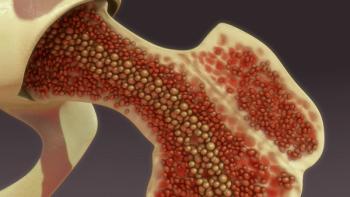
Chemo-induced myelosuppression can affect patients’ ability to do daily tasks, and management varies by patient, treatment regimens, locations, and more.
CRS and ICANS were observed in 48% and 16%, respectively, of patients with ES-SCLC who received tarlatamab, according to real-world data.
The FDA has approved lurbinectedin plus atezolizumab for the treatment of extensive-stage small cell lung cancer following induction therapy with atezolizumab.

The addition of atezolizumab to chemoradiation led to meaningful improvements to quality of life for patients with small cell lung cancer.
Advertisement
Advertisement
Trending on Oncology Nursing News
1
FDA Approves Camizestrant for ESR1-Mutated Advanced Breast Cancer
2
Managing Daraxonrasib: Key Takeaways and Efficacy Insights for Oncology Nurses
3
Addressing Financial Toxicity: Team-Based Workflows in Oncology Care
4
SBRT Reduces Bowel Toxicity in Localized Intermediate-Risk Prostate Cancer
5