


Multiple Myeloma
Latest News
Advertisement
Video Series
Latest Videos






Shorts

Podcasts

















































Advertisement
More News
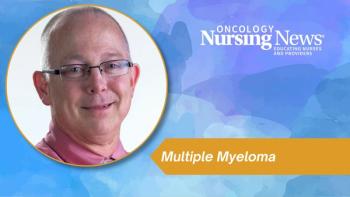
Kevin Brigle, PhD, ANP, discusses frontline quads, managing toxicities of bispecifics, and the evolving role of nursing in multiple myeloma treatment.
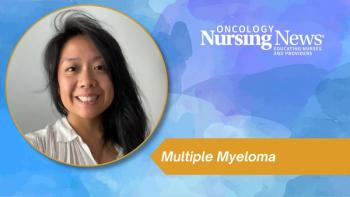
Czarina Cecilio, BSN, RN, shares roundtable insights on toxicity management, injection techniques, and the critical role of nursing education.
FDA approves subcutaneous isatuximab-irfc for multiple myeloma indications, offering an efficient delivery alternative to intravenous administration.
A European survey at EHA 2026 finds nurses central to multiple myeloma care but facing training gaps and severe shortages that limit patient outcomes.
Phase 3 MagnetisMM-5 trial data in multiple myeloma highlight progression-free survival gains and key safety considerations for oncology nurses.

Oncology nurse practitioners discuss CD38-based frontline therapy for newly diagnosed multiple myeloma, including Dara-VRd efficacy, AE management, and subcutaneous administration strategies.
Natalia Neparidze, MD, discusses subcutaneous daratumumab safety, MRD as a clinical endpoint, and emerging therapies for multiple myeloma management.

Samantha Shenoy, NP, MSN, provides nursing guidance on teclistamab/subcutaneous daratumumab’s second-line approval in multiple myeloma.
Teclistamab plus daratumumab hyaluronidase-fihj has been approved for patients with relapsed/refractory multiple myeloma as part of the CNPV program.
FDA fast-tracks trispecific IBI3003, reviews iberdomide combo, and expands Yescarta use.
The FDA approved subcutaneous daratumumab/VRd in patients with newly diagnosed multiple myeloma who are not eligible for ASCT. Here’s what you should know.
Subcutaneous daratumumab plus teclistamab improved survival outcomes in patients with R/R multiple myeloma vs standard daratumumab-based regimens.
Subcutaneous bispecific antibody cevostamab demonstrated early efficacy and safety in patients with relapsed or refractory multiple myeloma.
KRd demonstrated higher PFS, deeper response, and greater MRD negativity compared with VRd in newly diagnosed multiple myeloma.
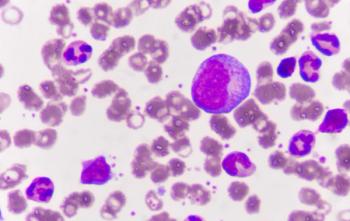
Higher LDH levels were linked with poorer survival outcomes in patients with relapsed and refractory multiple myeloma who received elranatamab.
The FDA has approved subcutaneous daratumumab and hyaluronidase-fihj for use in patients with high-risk smoldering multiple myeloma.

Treatment for patients with R/R multiple myeloma should be based on the individual patient and their history, said Lisa Hwa Christenson, DNP, APRN, CNP.
BCMA-targeting ADC belantamab mafodotin was approved for use in patients with relapsed/refractory multiple myeloma after 2 or more lines of treatment.
A 1-time dose of arlo-cel demonstrated safety and efficacy in patients with relapsed or refractory multiple myeloma that was previously treated.
New AQUILA data show PFS improvement in patients with smoldering multiple myeloma who were treated with subcutaneous daratumumab vs active monitoring.

Nurses must stay up to date on novel agents and their toxicities to properly monitor for and manage immune effector cell-associated neurotoxicity syndrome.

Lisa Hwa Christenson, APRN, DNP, CNP, FAPO, outlines best practices for safely transitioning patients with multiple myeloma on bispecific antibodies to community care.
CRS is a common but manageable toxicity of CAR T-cell therapy and bispecific antibodies. Learn strategies to identify and manage this adverse effect.
Nurse practitioner Beth Faiman outlines nursing strategies to monitor, assess, and manage toxicities associated with talquetamab in multiple myeloma.
Beyond administering CAR T-cell therapy and bispecifics, oncology nurses must apply proactive, supportive care and an understanding of complex treatments.
Advertisement
Advertisement
Trending on Oncology Nursing News
1
ASTRO 2026: Dr. Mishaal Munir Outlines Nurse Triage in Brain Metastases Care
2
On-Body Isatuximab: Clinical Workflows and At-Home Potential in Myeloma
3
ASTRO 2026: Early Radiation in Head and Neck Cancer Care
4
ASTRO 2026: Dr. Erica Braschi Jordan Details Proton Regional Nodal Care Plan
5