





















































Findings from this safety run-in cohort of teclistamab, daratumumab, and lenalidomide in newly diagnosed multiple myeloma will steer how randomization of the MajesTEC-7 trial will commence.
Findings from this safety run-in cohort of teclistamab, daratumumab, and lenalidomide in newly diagnosed multiple myeloma will steer how randomization of the MajesTEC-7 trial will commence.

Talquetamab treatment was safe and efficacious for patients with relapsed or refractory multiple myeloma, including those with comorbidities and poor functional status.
Triplet therapies containing belantamab mafodotin, pomalidomide, and dexamethasone may address an unmet need for relapsed/refractory multiple myeloma.
A nurse-driven, verbal workflow to place tocilizumab orders contributed to safer and more effective delivery of tocilizumab for cytokine release syndrome.
Throughout April, the FDA approved drugs for the treatment of diseases including solid tumors, lung cancer, multiple myeloma, bladder cancer, and low-grade glioma.

A subgroup of patients from the 3 CARTITUDE trials experienced cranial nerve palsy after treatment, most of whom were men.
Establishing a nurse-led system to administer tocilizumab in patients receiving bispecific antibodies tended to get the immunosuppressive drug to patients faster.
Results from the CARTITUDE-2 trial support cilta-cel in patients with multiple myeloma, which addresses the unmet needs of these patients, an expert presented.
Patients in the CARTITUDE-4 trial experienced a high response rate to the treatment as early as their first relapse.
The FDA’s Oncologic Drugs Advisory Committee voted in favor of minimal residual disease as an end point to support accelerated approval of multiple myeloma treatments.
Cilta-cel (ciltacabtagene autoleucel; Carvykti) was approved by the FDA to treat patients with relapsed or refractory multiple myeloma who have previously received at least one line of therapy.
The FDA has approved idecabtagene vicleucel for patients with relapsed/refractory multiple myeloma who have received 2 prior lines of therapy.
The Oncologic Drugs Advisory Committee of the FDA unanimously voted in favor of ciltacabtagene autoleucel for the treatment of early relapsed/refractory myeloma.
Immune engager therapies, according to a retrospective study of real-world patients, had the best rates of responses and progression-free survival in patients with multiple myeloma whose disease relapsed after treatment with idecabtagene vicleucel.
A supplemental Biologics License Application for teclistamab-cqyv (Tecvayli) has been approved by the FDA at a reduced dose of 1.5 mg/kg every 2 weeks for the treatment of patients with relapsed/refractory multiple myeloma who have maintained a complete response or greater for at least 6 months.
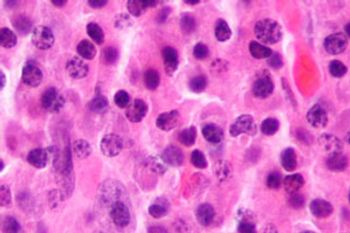
Patients with relapsed/refractory multiple myeloma treated with belantamab mafodotin plus bortezomib and dexamethasone experienced a significant improvement in PFS compared with daratumumab plus bortezomib and dexamethasone.
The FDA received a sBLA that is seeking approval of D-VRd for the treatment of transplant-eligible patients with newly diagnosed multiple myeloma.
Reducing the dose of talquetamab, a GPRC5D/CD3 bispecific antibody, may improve side effect rates while maintain high response rates in patients with relapsed or refractory multiple myeloma.

Beth Finley-Oliver, MSN, ARNP, AGNP-BC, discusses the growing number of new therapies for patients with relapsed or refractory multiple myeloma.
The introduction of CAR T-cell therapy for patients with relapsed/refractory multiple myeloma is considered one of the most significant advancements in the past decade.
During a Case-Based Roundtable™ event, Beth Faiman, Phd, CNP, and participants discussed the use of combination therapies, including daratumumab, as frontline therapy for patients with transplant-ineligible multiple myeloma.

Patients with multiple myeloma are living longer; therefore, their lifelong treatment expenses can become burdensome.
The 4-year progression-free survival rate with daratumumab, bortezomib, lenalidomide, and dexamethasone was 84.3% vs 67.7% with just bortezomib, lenalidomide, and dexamethasone.

Beth Finley-Oliver, MSN, ARNP, AGNP-BC, recaps part of her presentation from the 2023 JADPRO meeting about caring for patients with high-risk multiple myeloma.

The rate of minimal residual disease negativity at 21 months was 77% among patients who received isatuximab-irfc, carfilzomib, lenalidomide, and dexamethasone.