

Courtney Arn, APRN-CNP, a nurse practitioner comments on the recent approval of pembrolizumab for patients with MSI-H/dMMR advanced endometrial carcinoma.
Courtney Arn, APRN-CNP, a nurse practitioner comments on the recent approval of pembrolizumab for patients with MSI-H/dMMR advanced endometrial carcinoma.

Sheila Ridner, PhD, RN, FAAN, discusses the implications of the PREVENT study and how oncology nurses can advocate for patients with breast cancer.

Caitlin Benda, MBA, MS, RD, CSO, LDN, a clinical oncology nutritionist supervisor at American Oncology Network, comments on different ways oncology nurses can assist patients in reaching their overall caloric intake.
Hussein A. Tawbi, MD, PhD, principal investigator of the phase 2/3 RELATIVITY-046 trial, highlights the importance of relatlimab/nivolumab’s recent FDA approval in melanoma.

Charles E. Geyer, MD, FACP, discusses dosing strategies and adverse event management with olaparib.
Sheila L. Ridner, PhD, RN, FAAN, provides an overview of bioimpedance spectroscopy and how the simple design allows for standardized subclinical lymphedema surveillance in breast cancer survivors.
Lindsay Kroener, MD, offers an overview of current fertility preservation options for patients about to undergo cancer therapy.

Ahead of his presentation at the 39th Annual Miami Breast Cancer Conference, Charles L. Loprinzi, MD, highlights some non-estrogenic approaches to hot flash management for patients with breast cancer.

Janice Post-White, PhD, RN, FAAN, an oncology nurse and caregiver, discusses how she handled the guilt she felt following her son’s leukemia diagnosis.

Tebentafusp, the first FDA-approved treatment option for patients with unresectable or metastatic uveal melanoma, may cause mild cytokine release syndrome, an expert explains.

An expert discusses the consequences of cisplatin-induced hearing loss and ongoing research efforts to eliminate this associated risk for children receiving the treatment.

Janelle Wagner, RN, OCN, Senior Manager of Patient Navigation Program for Community Sites, highlights some challenges commonly associated with nurse navigation, and how nurses can overcome them.
Although the long-term effects of e-smoking are still unknown, the percentage of young people developing nicotine dependency is increasing, a Cancer Treatment Centers of America expert explains.
LAG-3 represents a potentially relevant immune checkpoint pathway in melanoma treatment.
An expert from Seattle Cancer Care Alliance highlights key skills in nurse navigation.
An expert from The University of Texas MD Anderson Cancer Center highlights findings demonstrating the impact that diet and probiotics have in immunotherapy responses.

Compared with other antibody-drug conjugates, datopotamab deruxtecan was associated with lower rates of neutropenia, pneumonitis, and hematologic toxicity.
An expert from the Tisch Cancer Institute highlights the importance of medication adherence, nausea management, and proper hydration for patients being treated with selinexor for relapsed or refractory multiple myeloma.
The chair of the Institute of Pain and Palliative Care explains how the holistic approach of palliative care makes it a unique treatment modality.
David Hui, MD, MSc, from The University of Texas MD Anderson Cancer Center, discusses findings indicating that patients with agitated delirium may be under-sedated, in accordance with their personalized sedation goal.
Kathy Burns, MS, APRN-CNS, AGCNS-BC, of the Arthur G. James Cancer Hospital and Richard J. Solove Research Institute, comments on the importance of self-awareness as an oncology nurse when working to overcome one’s implicit bias.

Jessica MacIntyre, APRN, NP-C, AOCNP, explains how Hematology/Oncology Nurse Practitioner Fellowship at Sylvester Comprehensive Cancer Center prepares fellows for success.
The chair of the Institute of Pain and Palliative Care explains how patients with cancer may improve their treatment outcomes with palliative care.
The chair of the Institute of Pain and Palliative Care explains the primary difference between hospice and palliative care.
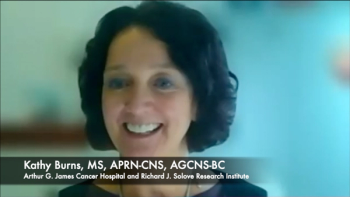
Kathy Burns, MS, APRN-CNS, AGCNS-BC, Arthur G. James Cancer Hospital and Richard J. Solove Research Institute, comments on the importance of being mindful about one’s implicit bias in the treatment of patients with cancer who have substance use disorders.
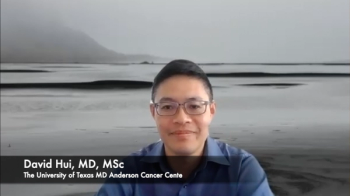
David Hui, MD, MSc, from The University of Texas MD Anderson Cancer Center, discusses how caregivers may prioritize communication when making end-of-life sedation decisions for loved ones with agitated delirium.
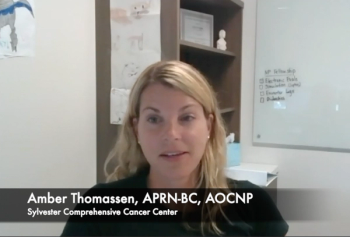
“Each step along the way has really helped me grow professionally, not just as a clinician, but as a whole practitioner, to make my transition to practice a lot easier and make me more comfortable… it’s really an invaluable experience.”

Stephanie Jackson, DNP, MSN, RN, AOCNS, BMTCN, Oncology Nursing News co-editor in chief, discusses the importance of NCCN guidelines in prescribing medications for patients with chronic leukemia. .

Jessica MacIntyre, executive director of clinical operations at Sylvester Comprehensive Cancer Center, explains how the small market for experienced oncology nurse practitioners prompted their institution to design a successful Hematology/Oncology Nurse Practitioner Fellowship.
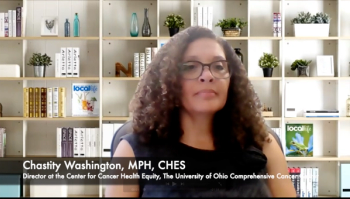
The director at the Center for Cancer Health Equity, The University of Ohio Comprehensive Cancer Center, discusses how the pandemic put a spotlight on issues of equity within the health care system.
