

Patient K.C. transitions from high-risk care to invasive mammary carcinoma treatment under the care and support of a breast cancer advanced practice provider.
Patient K.C. transitions from high-risk care to invasive mammary carcinoma treatment under the care and support of a breast cancer advanced practice provider.

Oncology nurses and APPs are key players in patient education on precision medicine.

What should nurses know about treating patients with KRAS G12C-mutated metastatic colorectal cancer using adagrasib and cetuximab?

A patient acuity model drove efficient and safe staffing through data from a natural language processing model informed by oncology nurse insights.

With evolving standards for handling hazardous drugs, nurses must comply with safety and handling guidelines.

Ivonescimab plus chemotherapy improved progression-free survival and response rates with manageable safety vs tislelizumab in advanced squamous NSCLC.

The DESTINY-Breast11 trial found neoadjuvant T-DXd followed by THP improved pathologic complete response vs ddAC-THP in high-risk, HER2-positive early breast cancer.
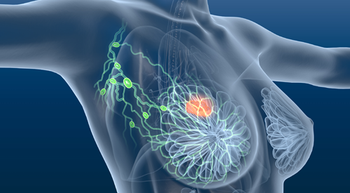
Long-term NATALEE data show adjuvant ribociclib plus an aromatase inhibitor (AI) improves invasive disease–free survival vs AI alone in HR+, HER2– early breast cancer.
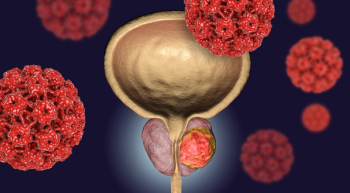
Patient-reported outcomes showed that health-related QOL stayed at baseline for patients with HRRM-positive mHSPC receiving a niraparib regimen.

The FDA has granted approval to adjuvant cemiplimab treatment for patients with high-risk cutaneous squamous cell carcinoma after surgery and radiation.
The FDA has approved imlunestrant for the treatment of patients with ESR1-mutated ER+, HER2- metastatic breast cancer.