

What should nurses know about treating patients with KRAS G12C-mutated metastatic colorectal cancer using adagrasib and cetuximab?
What should nurses know about treating patients with KRAS G12C-mutated metastatic colorectal cancer using adagrasib and cetuximab?

For patients with gynecologic cancer for whom platinum-based chemotherapy is no longer effective, antibody-drug conjugates are an exciting second-line option.

During a Case-Based Roundtable™ event, Beth Faiman, Phd, CNP, and participants discussed the use of combination therapies, including daratumumab, as frontline therapy for patients with transplant-ineligible multiple myeloma.

Jeanelle S. King, PA-C, provides an in-depth look at nivolumab-relatlimab in a downloadable reference sheet.

Experts with the University of Miami Sylvester Comprehensive Cancer Center share their insights.

Melanie Taylor, APRN, and Mark Lin, APRN, share how they optimize strategies in caring for patients with lymphedema.

Nicole Gay, APRN-C, shares how nurse navigators can talk to their patients about lung cancer screening.

A lung cancer screening navigator offers their perspective on shared decision-making.

Chemotherapy shortages are affecting patients across the country.

The program’s initiative aims to identify those at increased risk for cancer through assessment and testing and then formulate a personalized evidence-based cancer surveillance or screening plan.

Jessica MacIntyre, DNP, MBA, APRN, NP-C, AOCNP, describes how nurses used an app imbedded in the electronic medical record to refer patients to the Leukemia & Lymphoma Society.
Johanna Garibaldi, BSN, RN, EMT-P, discusses how a mobile clinic improved cancer screening rates among local firefighters.
Jessica MacIntyre, DNP, MBA, APRN, NP-C, AOCNP, discusses ways to standardize the process of referring patients to the Leukemia and Lymphoma Society.

Terri Pollack, DNP, APRN, FNP-C, PMHNP-BC, discusses key data that may affect clinical practice for nurses from the 2023 GI Cancers Symposium.

In this episode of "The Vitals," Terri Pollack, DNP, APRN, FNP-C, PMHNP-BC, underscores potentially practice-changing data which were presented during the 2023 GI Cancers Symposium.

Terri Pollack, DNP, APRN, FNP-C, PMHNP-BC, shares some of her top takeaways from the 2023 ASCO GI Cancers Symposium.

As the therapy continues to evolve, best nursing practices become more nuanced.

Adolescents and young adults who have cancer also have a negative body image, financial toxicity, and concerns about family planning.
Press Release
Researchers with Sylvester Comprehensive Cancer Center, part of the University of Miami Miller School of Medicine, and the University’s Frost School of Music are using a $2.6 million federal grant to study how mindfulness and music therapy can alleviate stress, anxiety, and depression, reduce treatment-related symptoms, and improve quality of life for cancer patients and survivors.

Press Release
Kristin E. Rojas, M.D., FACS, FACOG, assistant professor of surgical oncology in the DeWitt Daughtry Department of Surgery and Sylvester Comprehensive Cancer Center at the University Miami Miller School of Medicine, realized she had struck a chord with women being treated for cancer when she started the Menopause Urogenital Sexual Health and Intimacy Clinic (MUSIC).
Press Release
Sophia George, PhD, is hoping to find new strategies for early detection of ovarian cancer, a disease that is particularly deadly for African American, Caribbean, and Jewish women.
Press Release
Sylvester Comprehensive Cancer Center researchers Lluis Morey, PhD, and Ramiro Verdun, PhD, have received a $1.8 million NIH R01 grant to study the epigenetic mechanisms that drive head and neck cancers.
Press Release
Researchers are investigating ways to make immunotherapies more effective.

Structured preceptorships promote competence, confidence, and job satisfaction in new oncology nurse practitioners.

Nurse investigators characterized the onset and management of edema and effusion with loncastuximab tesirine in the pivotal LOTIS-2 trial.

Jessica MacIntyre, ARNP, NP-C, AOCNP, discusses empowering oncology nurse navigators to refer patients undergoing chemotherapy or radiation therapy to nutrition services.

Jessica MacIntyre, APRN, NP-C, AOCNP, explains how Hematology/Oncology Nurse Practitioner Fellowship at Sylvester Comprehensive Cancer Center prepares fellows for success.
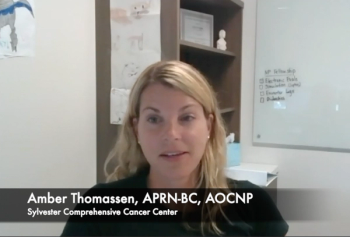
“Each step along the way has really helped me grow professionally, not just as a clinician, but as a whole practitioner, to make my transition to practice a lot easier and make me more comfortable… it’s really an invaluable experience.”

Jessica MacIntyre, executive director of clinical operations at Sylvester Comprehensive Cancer Center, explains how the small market for experienced oncology nurse practitioners prompted their institution to design a successful Hematology/Oncology Nurse Practitioner Fellowship.

The Hematology/Oncology Nurse Practitioner Fellowship is a yearlong program which seeks to train those who have recently received their NP certification.