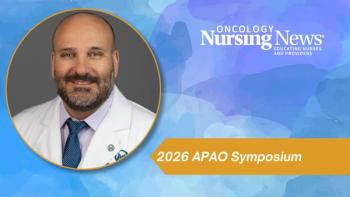
At the 29th APAO Symposium, Mark Honor, PA-C, discussed the collaborative care model and the vital role of PAs in managing day-to-day oncology care.
As CAR T-cell therapy expands to solid tumors, oncology nurses play a key role in monitoring, educating, and supporting patients.
CAR T-cell therapy has revolutionized the treatment of certain hematologic malignancies, providing durable remissions for patients who once had few options. Understandably, both patients and oncology providers are eager to see whether this breakthrough can extend to solid tumors, a setting where progress has historically been slower. Barriers such as the dense tumor microenvironment, limited T-cell penetration, and the heterogeneity of tumor antigens have made it challenging for CAR T-cells to effectively recognize and destroy cancer cells in solid tumors.
Research presented at the 2025 American Society of Clinical Oncology Annual Meeting highlighted claudin18.2 (CLDN18.2) as a promising therapeutic target in gastric and gastroesophageal junction cancers (G/GEJC) and described satricabtagene autoleucel (satri-cel; CT041), as an autologous CAR T-cell therapy specifically engineered to target this protein.
A phase 2 trial (NCT04581473) evaluated the efficacy and safety of satri-cel in patients with advanced CLDN18.2-positive G/GEJC who had progressed after at least 2 prior systemic therapies. This open-label, multicenter, randomized controlled trial enrolled 156 patients in China and assigned them in a 2:1 ratio to receive either satri-cel (up to 3 infusions of 250 x 106 cells) or a treatment-of-physician-choice (TPC) regimen, which included standard options such as apatinib, paclitaxel, docetaxel, irinotecan, or nivolumab. Patients in the TPC arm were allowed to cross over to satri-cel upon disease progression or drug toxicity.
This was a particularly high-risk patient population. The median number of prior therapies was 2, with many patients having received 3 or more. Most patients in each arm had peritoneal metastases, and most had Lauren diffuse or mixed histology, both indicators of aggressive disease. The median follow-up was 8.90 months for progression-free survival (PFS) and 12.29 months for overall survival (OS).
Satri-cel demonstrated meaningful clinical activity. In the intention-to-treat population, which includes all patients originally assigned to a treatment arm regardless of whether they completed therapy, the median PFS was 3.25 months with satri-cel versus 1.77 months with TPC (hazard ratio [HR], 0.366; 95% CI, 0.241-0.557; P <.0001), and the median OS was 7.92 months versus 5.49 months (HR, 0.693; 95% CI, 0.457-1.051; one-sided P = .0416), reflecting a clear survival benefit.
Among patients who actually received the study therapy, outcomes were even stronger: median PFS improved to 4.37 months with satri-cel compared to 1.84 months with TPC (HR, 0.304; 95% CI, 0.195-0.474), while OS was 8.61 months versus 5.49 months (HR, 0.601; 95% CI, 0.385-0.939), respectively. Notably, patients who crossed over from TPC to satri-cel achieved a median OS of 9.20 months, underscoring the therapy’s benefit even after standard treatment failure.
The safety profile of satri-cel was consistent with known CAR T-cell therapy toxicities, though, notably, no cases of neurotoxicity (ICANS) were reported. Nearly all patients experienced some treatment-related adverse event (TRAE), with cytokine release syndrome (CRS) occurring in 95.5% of cases. Most CRS events were grade 1 or 2, with only 4.5% reaching grade 3 severity. Serious treatment-related adverse events occurred in 35.2% of patients, while treatment-related deaths were rare. As expected, patients in the TPC arm had fewer TRAEs and no CRS.
For oncology nurses, these results carry several important clinical implications. Because CRS is common, though typically mild to moderate, oncology nurses should monitor patients receiving CAR-T cell therapy for fever, hypotension, and hypoxia. Nurses play a central role in early recognition and prompt management of CRS, ensuring timely intervention with antipyretics, fluids, or other therapies when indicated. Patient and caregiver education before infusion is equally critical, as understanding expected AEs can improve safety and reduce anxiety.
Coordination of care is another key nursing responsibility. Satri-cel therapy involves multiple complex steps, including leukapheresis, CAR T-cell manufacturing, lymphodepleting chemotherapy, and eventual infusion at specialized centers. Post infusion, nurses must continue monitoring for hematologic toxicities, infections, and other treatment-related complications. Ensuring patients know what to expect during every step of the CAR-T cell therapy process can improve patient satisfaction.
Satri-cel represents a major step forward for CAR T-cell therapy in solid tumors, showing promising improvements in both PFS and OS with a manageable safety profile. For oncology nurses, understanding the logistics, AE management, and patient education components of this therapy is vital.
Qi C, Liu C, Peng Z, et al. Claudin-18.2-specific CAR T cells (satri-cel) versus treatment of physician’s choice (TPC) for previously treated advanced gastric or gastroesophageal junction cancer (G/GEJC): Primary results from a randomized, open-label, phase II trial (CT041-ST-01). J Clin Oncol. 2025;43(16_suppl):4003. doi:10.1200/JCO.2025.43.16_suppl.4003.