

A supplemental biologics license application has been accepted by the FDA for nivolumab plus ipilimumab as first-line treatment for unresectable hepatocellular carcinoma.
Chris Ryan joined OncLive in November 2021 as a senior editor and became the website's managing editor in October 2023. Before arriving at MJH Life Sciences, he spent nearly a decade covering professional and high school sports—including the New Jersey Devils and the NHL from 2016 to 2021—for The Star-Ledger and NJ.com. Email: chryan@onclive.com
A supplemental biologics license application has been accepted by the FDA for nivolumab plus ipilimumab as first-line treatment for unresectable hepatocellular carcinoma.
First-line amivantamab plus lazertinib has been approved by the FDA for locally advanced or metastatic EGFR-mutated non–small cell lung cancer.

The KeyVibe-008 trial evaluating vibostolimab, pembrolizumab, and chemotherapy in extensive-stage small cell lung cancer has been discontinued.
Neoadjuvant durvalumab plus chemotherapy, followed by adjuvant durvalumab, received approval from the FDA for select patients with resectable non–small cell lung cancer.

Adding IMNN-001 to perioperative chemotherapy enhanced overall survival in patients with newly diagnosed, advanced ovarian cancer.
The biologics license application that was resubmitted for remestemcel-L has been accepted by the FDA for the potential treatment of children with steroid-refractory acute graft-vs-host-disease.

Fast track designation has been granted from the FDA to HP518 to treat androgen receptor–positive triple-negative breast cancer.

Crofelemer missed the diarrhea endpoint in a study assessing prophylaxis in adult patients with solid tumors receiving targeted therapy.
Accelerated approval has been granted by the FDA to afamitresgene autoleucel for certain patients with pretreated unresectable or metastatic synovial sarcoma.
A dostarlimab-gxly combination was approved for advanced or recurrent endometrial cancer.

The TIL cell therapy OBX-115 received fast track designation from the FDA for locally advanced or metastatic melanoma.
The antibody drug conjugate BNT324/DB-1311 received fast track designation for the potential treatment of unresectable advanced or metastatic castration-resistant prostate cancer with disease progression.

Durable complete responses were observed in patients with TP52-mutated mantle cell lymphoma treated with ibrutinib plus venetoclax.
The CAR T-cell therapy ADI-270 received fast track designation from the FDA for pretreated advanced clear cell renal cell carcinoma.
The failure to improve PFS and OS with tiragolumab plus atezolizumab and chemo in metastatic nonsquamous NSCLC indicates missing the primary end points of the SKYSCRAPER-06 trial.
The resubmission of the biologics license application for cosibelimab for locally advanced or metastatic cutaneous squamous cell carcinoma follows a complete response letter from the FDA in December 2023.
The updated risk evaluation and mitigation strategies for autologous CAR T-cell therapy removed requirements for training and educational materials about the risk for certain toxicities.

PSMA response was linked to improved metastasis-free survival in patients with oligometastatic castration-sensitive prostate cancer.

Frontline durvalumab plus chemotherapy, followed by maintenance durvalumab with or without olaparib improved responses in stage III/IV or recurrent endometrial cancer.
The biologics license application for subcutaneous amivantamab is seeking approval for the treatment of EGFR-positive non-small cell lung cancer.
The FDA approved durvalumab plus carboplatin and paclitaxel, followed by single-agent durvalumab for primary advanced or recurrent dMMR endometrial cancer.

Findings from a retrospective study may shed light on the prognostic value of PD-L1 expression in metastatic papillary renal cell carcinoma.
The priority review granted by the FDA to the supplemental new drug application for osimertinib is seeking approval for its treatment of stage III non-small cell lung cancer with EGFR mutations.
Rates of MRD negativity increased with daratumumab plus VRd in newly diagnosed, transplant-eligible multiple myeloma.
Patients with HR-positive, HER2-low, and -ultralow metastatic breast cancer treated with trastuzumab deruxtecan obtained a PFS benefit vs chemotherapy.

Compared with placebo, osimertinib after definitive chemoradiotherapy improved progression-free survival in locally advanced, EGFR-mutated non–small cell lung cancer.
A breakthrough device designation has been granted by the FDA to Teal Wand, an at-home screening test for cervical cancer.
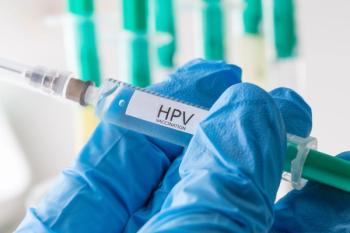
HPV vaccines in patients under the age of 40 may have lowered rates of HPV-related cancer compared with unvaccinated patients.
The accelerated approval of infigratinib has been withdrawn by the FDA for previously treated, FGFR2-positive, advanced cholangiocarcinoma.

Frontline treatment with pembrolizumab plus trastuzumab/chemotherapy significantly and meaningfully improved overall survival in HER2-positive, unresectable or metastatic gastric/GEJ cancer.