Articles by Gina Columbus

The FDA has approved belantamab mafodotin-blmf (Blenrep) as a treatment for patients with relapsed/refractory multiple myeloma who have received 4 prior therapies, including an immunomodulatory drug, a proteasome inhibitor, and an anti-CD38 antibody.
The FDA has approved the CAR T-cell therapy brexucabtagene autoleucel (Tecartus; formerly KTE-X19) as a treatment for adult patients with relapsed/refractory mantle cell lymphoma (MCL).
The FDA’s Oncologic Drugs Advisory Committee (ODAC) voted 12 to 0 in favor of approving belantamab mafodotin for the treatment of patients with relapsed/refractory multiple myeloma who have previously received at least 4 prior therapies, including an immunomodulatory drug, a proteasome inhibitor, and a CD38-directed antibody.

Following the arrival of the coronavirus disease 2019 pandemic, St. Jude Children's Research Hospital launched the first Global COVID-19 Observatory and Resource Center for Childhood Cancer.

Nivolumab plus ipilimumab showed an improvement in relapse-free survival for this patient population.

The combination of atezolizumab (Tecentriq) plus carboplatin/etoposide continued to demonstrate an improvement in overall survival (OS) versus chemotherapy alone as a frontline treatment for patients with extensive-stage small cell lung cancer (ES-SCLC), regardless of PD-L1 and blood tumor mutational burden (bTMB) status.

Telemedicine will remain a mainstay even after the COVID-19 pandemic, says Andrew M. Evens, DO, MSc.

Infigratinib was found to demonstrate clinical activity in patients with metastatic urothelial carcinoma, regardless of what line of therapy it was administered, according to results of a retrospective analysis presented at the 2020 ASCO Virtual Scientific Program.
The FDA has granted an orphan drug designation to fam-trastuzumab deruxtecan-nxki (Enhertu) for the treatment of patients with gastric cancer, including gastroesophageal junction (GEJ) cancer.

A minimally invasive blood test has been found to be feasible to safely detect several types of cancers in patients without a history of malignancies.
The FDA has accepted a biologics license application for a proposed biosimilar for bevacizumab (Avastin), according to an announcement by Mylan during its fourth quarter 2019 earnings call.
The FDA has approved a supplemental new drug application (sNDA) for neratinib (Nerlynx) in combination with capecitabine (Xeloda) for the treatment of adult patients with advanced or metastatic HER2-positive breast cancer who have received ≥2 prior anti–HER2-based regimens in the metastatic setting.

The FDA has granted a priority review designation to a supplemental new drug application (sNDA) for selinexor (Xpovio) as a treatment for adult patients with relapsed/refractory diffuse large B-cell lymphoma (DLBCL), not otherwise specified, who have received ≥2 prior therapies.
The FDA has granted a priority review designation to a new drug application (NDA) for lurbinectedin as a treatment for patients with small cell lung cancer (SCLC) who have progressed following platinum-containing therapy.

The addition of the off-the-shelf cancer immune primer ilixadencel to sunitinib (Sutent) trended toward a benefit in overall survival (OS) compared with sunitinib alone as a first-line treatment for patients with newly diagnosed metastatic renal cell carcinoma (RCC).

The frontline combination of pembrolizumab (Keytruda) and chemotherapy significantly improved progression-free survival (PFS) compared with chemotherapy alone in patients with metastatic triple-negative breast cancer (TNBC) whose tumors expressed PD-L1 (combined positive score [CPS] ≥10), meeting one of the dual primary endpoints of the phase III KEYNOTE-355 trial.
The FDA has extended the Prescription Drug User Fee Act deadline for a new drug application (NDA) for avapritinib (Ayvakit) as a treatment for adult patients with fourth-line gastrointestinal stromal tumor (GIST). The deadline, which was initially February 14, 2020, has been extended by 3 months to May 14, 2020, according to BluePrint Medicines, the developer of avapritinib.
The FDA has granted a priority review designation to a new drug application (NDA) for selpercatinib (LOXO-292) for the treatment of patients with advanced RET fusion–positive non–small cell lung cancer (NSCLC), RET-mutant medullary thyroid cancer (MTC), and RET fusion–positive thyroid cancer.
The FDA has granted an accelerated approval to tazemetostat (Tazverik) for the treatment of adult and pediatric patients aged ≥16 years old with metastatic or locally advanced epithelioid sarcoma that is not eligible for complete resection.
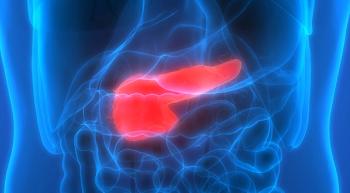
Surufatinib improved progression-free survival (PFS) compared with placebo in patients with low- or intermediate-grade advanced pancreatic neuroendocrine tumors (pNETs) for whom there is no effective therapy, according to a preplanned interim analysis of the phase III SANET-p trial (NCT02589821) that was completed by an independent data monitoring committee (IDMC).

The FDA has granted an orphan drug designation to durvalumab (Imfinzi) and tremelimumab for the treatment of patients with hepatocellular carcinoma (HCC).

In this special edition podcast, we spoke with both a physician and a nurse about the management of immune-related adverse events in patients with melanoma.
The FDA has granted a priority review for the combination of olaparib and bevacizumab for the maintenance treatment of patients with advanced ovarian cancer.
The FDA has approved avapritinib (Ayvakit) for the treatment of adult patients with unresectable or metastatic gastrointestinal stromal tumor (GIST) harboring a PDGFRA exon 18 mutation, including PDGFRA D842V mutations.

The combination of itacitinib and corticosteroids did not induce a statistically significant improvement in overall response rate (ORR) at day 28 compared with placebo plus corticosteroids in patients with treatment-naïve acute graft-versus-host disease (aGVHD).

The FDA has accepted a biologics license application (BLA) to review eflapegrastim (Rolontis) for the management of chemotherapy-induced neutropenia, according to Spectrum Pharmaceuticals, the developer of the novel long-acting granulocyte-colony stimulating factor (G-CSF).

A biologics license application has been submitted to the FDA for the rituximab (Rituxan) biosimilar ABP 798, according to the developers, Amgen and Allergan

The FDA has approved the use of Trastuzumab Deruxtecan for the treatment of patients with HER2+ Breast Cancer, based on recent findings.
The FDA has approved a supplemental new drug application for enzalutamide (Xtandi) for the treatment of patients with metastatic castration-sensitive prostate cancer.
The combination of lenalidomide (Revlimid) and obinutuzumab (Gazyva) elicited a 100% overall response rate (ORR) in patients with relapsed indolent non-Hodgkin lymphoma (NHL) that was refractory to rituximab (Rituxan), according to findings of a single-arm, phase I/II trial presented at the 2019 ASH Annual Meeting.