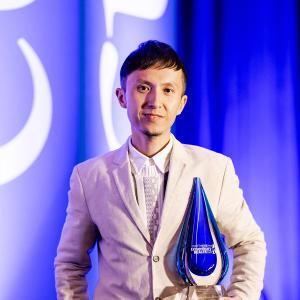
Jill Winther earned the 2026 Extraordinary Healer® Award for her leadership, advocacy and dedication to oncology nursing.
Jill Winther earned the 2026 Extraordinary Healer® Award for her leadership, advocacy and dedication to oncology nursing.

Dr. Jennifer Bickel said system-level wellness supports care teams, improving patient safety, experience and outcomes in oncology care.
Gedatolisib Improves Progression-Free Survival in PIK3CA-Mutant HR+/HER2- Metastatic Breast Cancer Versus Alpelisib Combination Therapy

Eliya Shachar, UCLA Health, says toxicity risk is not independently tied to age or demographics, reinforcing consistent monitoring and individualized care for all patients.

FDA accepted the NDA for TLX101-Px, a PET imaging agent for glioma, with a Sept. 11, 2026 decision date, aiming to improve assessment of tumor progression.

Nurses can catch early IO toxicities through routine symptom checks and support long-term care, as effects may persist after treatment ends.

A program promoting systemwide change, staff engagement and safety culture may improve chemotherapy administration and toxicity management globally, expert says.

Gotistobart reduced death risk by 54% and doubled 12-month survival vs chemo in pretreated advanced squamous NSCLC, per PRESERVE-003 results.
High patient loads, limited advocacy roles and unsafe work environments challenge oncology nurses in low- and middle-income countries.

Nuvalent submitted an NDA for neladalkib in TKI-pretreated ALK+ NSCLC, supported by ALKOVE-1 data showing systemic and intracranial activity with tolerability.
A diabetes drug may help activate exercise-related metabolic pathways in patients with prostate cancer, offering insight into how to support metabolic health during treatment when physical activity is limited.

A 5-day NYC nurses' strike raises concerns about staffing, patient safety, and the critical role of oncology nurses in cancer care.

Breast cancer survivors improved cognitive outcomes with both real and sham acupuncture, but real acupuncture showed greater gains.

Twenty-year follow-up demonstrated continued imatinib efficacy in advanced GIST with doubled median overall survival.
The addition of atezolizumab to chemoradiation led to meaningful improvements to quality of life for patients with small cell lung cancer.

The 2025 Extraordinary Healer® Award was presented during the 50th Annual Oncology Nursing Society Congress, recognizing oncology nursing professionals' dedication and impact.

Per phase 2 trial data, enhanced dermatologic management showed a reduction in dermatologic AEs in patients with advanced EGFR-mutated NSCLC.

Improved progression-free survival in metastatic urothelial carcinoma was observed in patients experiencing neuropathy, skin rash, and hyperglycemia following enfortumab vedotin.

Neoadjuvant immune checkpoint inhibitors plus chemotherapy also improved efficacy outcomes in PD-L1-positive/ERBB2-negative tumors.

Olaparib after surgery resulted in durable response rates in patients with high-risk biochemically recurrent prostate cancer with BRCA2 alterations.

The use of ruxolitinib presented improved rates of skin/joint responses, cGVHD responses, patient-reports, low NRM, and high FFS in patients with refractory sclerotic cGVHD.

This retrospective, population-based study shows strong efficacy across multiple patient subgroups and different lines of therapy in patients with recurrent or metastatic head and neck squamous cell carcinoma.

Even with a low rates of cardiovascular adverse events in patients treated with immune checkpoint inhibitors, cancer care teams should still focus on multidisciplinary approaches and early recognition of these events.

Adjuvant trastuzumab reveals associations with improved disease-free survival in 1-year vs 9-week administration of the drug in patients with ERBB2-positive breast cancer.

This retrospective review demonstrates the increased use of active surveillance in patients with small nonfunctional pancreatic neuroendocrine tumors.

Oral cannabis extract may be useful as an adjunct for chemotherapy-induced nausea and vomiting, although it may be associated with additional adverse events.

Enzalutamide produces strong indication of improvements in OS, PCS, TTS, and TTR compared with abiraterone acetate in patients with metastatic castration-resistant prostate cancer (mCRPC).
Compared to sunitinib, nivolumab plus ipilimumab showed increased overall survival and durable response benefits in patients with advanced renal cell carcinoma.

Compared with available literature, the rates of medication-related osteonecrosis of the jaw were higher in patients with breast cancer and bone metastases treated with antiresorptive therapy.

Higher corticosteroid peak dose may worse progression-free and overall survival in several tumor types including melanoma, non-small cell lung cancer, and others.

April 10th 2026

January 16th 2026

November 3rd 2025

April 11th 2026