
A network to connect patients with unused medications with patients in need brought $18 million of free cancer medication while reducing drug waste.
A network to connect patients with unused medications with patients in need brought $18 million of free cancer medication while reducing drug waste.

In the phase 3 SURPASS-ET trial, ropeginterferon alfa-2b outperformed anagrelide as second-line therapy for high-risk essential thrombocythemia.

Heather J. Jackson, PhD, APRN, FNP-BC, NEA-BC, FAA-NP, shared a review of supportive oncology practices at the 2025 School of Nursing Oncology.
The FDA has approved lurbinectedin plus atezolizumab for the treatment of extensive-stage small cell lung cancer following induction therapy with atezolizumab.

The addition of atezolizumab to chemoradiation led to meaningful improvements to quality of life for patients with small cell lung cancer.

An LED-based intraoral device for photobiomodulation therapy was safe and reduced severe oral mucositis in patients with head and neck cancers.

The REMS program for vandetanib in the treatment of patients with medullary thyroid cancer has been removed by the FDA.
The FDA has approved imlunestrant for the treatment of patients with ESR1-mutated ER+, HER2- metastatic breast cancer.
Revumenib was added to NCCN guidelines for relapsed or refractory NPM1-mutated acute myeloid leukemia.
Off-the-shelf mosunetuzumab/polatuzumab vedotin produced durable responses with manageable safety in BTK inhibitor–exposed relapsed/refractory MCL.

Specialized palliative medicine and supportive oncology advanced practice providers help create a personalized treatment experience for patients.


Read nursing considerations for treating patients with mantle cell lymphoma using lisocabtagene maraleucel.
Subcutaneous pembrolizumab has been approved across all indications, cutting chair and administration times with a median injection time of 2 minutes.

Zidesamtinib, a brain-penetrant, TRK-sparing ROS1 TKI, showed activity and manageable safety in pretreated patients with advanced ROS1+ NSCLC.

Michelle Kirschner, MSN, RN, ACNP, APRN-BC, discusses precision supportive care and tailored survivorship strategies in an ONN interview.

Mosunetuzumab plus polatuzumab vedotin increased PFS and response rates vs R-GemOx in transplant-ineligible large B-cell lymphoma.

Explore stories of oncology nurses who forge connections with patients, transforming challenges into triumphs in cancer care.

When treating patients with bladder cancer using gemcitabine intravesical system, regular AE monitoring is necessary, said Gary Steinberg, MD.

How best can senior staff and leadership support nurses new to the field of oncology?
FLAURA2 data show osimertinib plus chemotherapy significantly improves overall survival vs osimertinib alone in frontline EGFR+ advanced NSCLC.

Lutetium Lu 177 dotatate was linked with partial responses in patients with metastatic bronchopulmonary neuroendocrine tumors, per real-world data.

Read an advanced practice nurse's tips for treating patients with endometrial cancer with durvalumab.
Relacorilant’s new drug application for platinum-resistant ovarian cancer has been accepted by the FDA.

Tepotinib was associated with frequent but manageable adverse events in MET exon 14–positive NSCLC, with peripheral edema most common.
Formerly known as TAR-200, gemcitabine intravesical system has received the FDA’s approval for use in patients with BCG-unresponsive NMIBC.

Adding ivonescimab to chemotherapy improved PFS for patients with EGFR-mutated non–small cell lung cancer after treatment with a third-generation TKI.

New AQUILA data show PFS improvement in patients with smoldering multiple myeloma who were treated with subcutaneous daratumumab vs active monitoring.

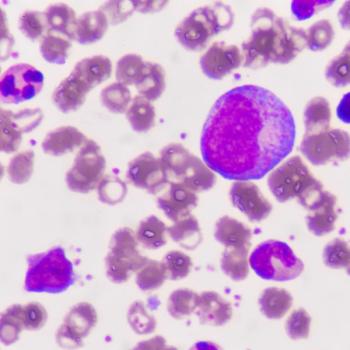
Mortality, progression, and venous thromboembolism were among outcomes improved for patients with polycythemia vera taking a GLP-1a.
