
Janice Post-White, PhD, RN, FAAN, an oncology nurse and caregiver, comments on how the act of writing allowed her to process previously suppressed emotions.
Janice Post-White, PhD, RN, FAAN, an oncology nurse and caregiver, comments on how the act of writing allowed her to process previously suppressed emotions.

Janelle Wagner, RN, OCN, Senior Manager of Patient Navigation Program for Community Sites, highlights some challenges commonly associated with nurse navigation, and how nurses can overcome them.
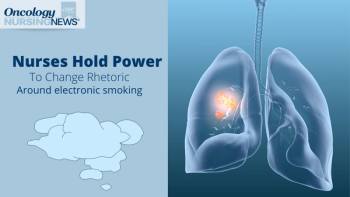
Although the long-term effects of e-smoking are still unknown, the percentage of young people developing nicotine dependency is increasing, a Cancer Treatment Centers of America expert explains.
LAG-3 represents a potentially relevant immune checkpoint pathway in melanoma treatment.
An expert from Seattle Cancer Care Alliance highlights key skills in nurse navigation.
Dr. Hussein Tawbi, MD, PhD, explains the rationale behind the RELATIVITY-047 trial in melanoma and how the LAG-3 findings could further revolutionize immunotherapy.
An expert from The University of Texas MD Anderson Cancer Center offers advice on the best diet to enrich a patient’s microbiome and consequent immunotherapy response.
An expert from The University of Texas MD Anderson Cancer Center highlights findings demonstrating the impact that diet and probiotics have in immunotherapy responses.
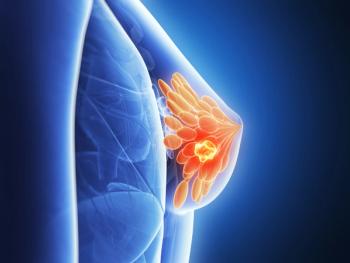
Nausea and upper GI discomfort are frequently linked with use of the oral SERD.
An expert from the Tisch Cancer Institute highlights the importance of medication adherence, nausea management, and proper hydration for patients being treated with selinexor for relapsed or refractory multiple myeloma.
The chair of the Institute of Pain and Palliative Care explains how the holistic approach of palliative care makes it a unique treatment modality.
David Hui, MD, MSc, from The University of Texas MD Anderson Cancer Center, discusses findings indicating that patients with agitated delirium may be under-sedated, in accordance with their personalized sedation goal.
Kathy Burns, MS, APRN-CNS, AGCNS-BC, of the Arthur G. James Cancer Hospital and Richard J. Solove Research Institute, comments on the importance of self-awareness as an oncology nurse when working to overcome one’s implicit bias.

Jessica MacIntyre, APRN, NP-C, AOCNP, explains how Hematology/Oncology Nurse Practitioner Fellowship at Sylvester Comprehensive Cancer Center prepares fellows for success.
The chair of the Institute of Pain and Palliative Care explains how patients with cancer may improve their treatment outcomes with palliative care.
The chair of the Institute of Pain and Palliative Care explains the primary difference between hospice and palliative care.
Kathy Burns, MS, APRN-CNS, AGCNS-BC, Arthur G. James Cancer Hospital and Richard J. Solove Research Institute, comments on the importance of being mindful about one’s implicit bias in the treatment of patients with cancer who have substance use disorders.
David Hui, MD, MSc, from The University of Texas MD Anderson Cancer Center, discusses how caregivers may prioritize communication when making end-of-life sedation decisions for loved ones with agitated delirium.
“Each step along the way has really helped me grow professionally, not just as a clinician, but as a whole practitioner, to make my transition to practice a lot easier and make me more comfortable… it’s really an invaluable experience.”
Stephanie Jackson, DNP, MSN, RN, AOCNS, BMTCN, Oncology Nursing News co-editor in chief, discusses the importance of NCCN guidelines in prescribing medications for patients with chronic leukemia. .

Jessica MacIntyre, executive director of clinical operations at Sylvester Comprehensive Cancer Center, explains how the small market for experienced oncology nurse practitioners prompted their institution to design a successful Hematology/Oncology Nurse Practitioner Fellowship.
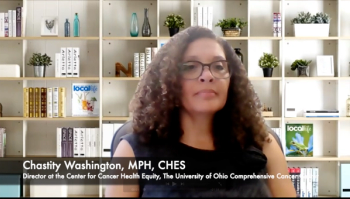
The director at the Center for Cancer Health Equity, The University of Ohio Comprehensive Cancer Center, discusses how the pandemic put a spotlight on issues of equity within the health care system.

Stephanie Jackson, DNP, MSN, RN, AOCNS, BMTCN, Oncology Nursing News co-editor in chief, discusses omacetaxine as a novel regimen in CML treatment.
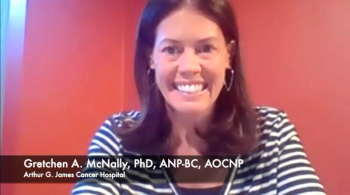
A survey completed by nurses and APPs revealed that many healthcare professionals may be blind to their own implicit biases.
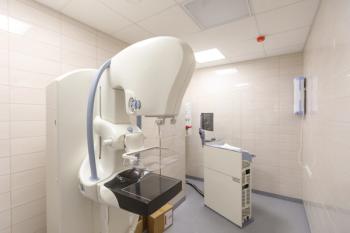
The director at the Center for Cancer Health Equity, The University of Ohio Comprehensive Cancer Center, discusses improving preventative screenings in underprivileged communities.

The Hematology/Oncology Nurse Practitioner Fellowship is a yearlong program which seeks to train those who have recently received their NP certification.

Stephanie Jackson, DNP, MSN, RN, AOCNS, BMTCN, Oncology Nursing News co-editor in chief, comments on how health care providers can effectively care for patients with COVID-19 and hematologic malignancies.

Answering questions without judgement and showcasing community members who have received the COVID-19 vaccine without negative outcomes can help alleiviate vaccine-related fears and concerns in BIPOC patients with cancer.

Stephanie Jackson, DNP, MSN, RN, AOCNS, BMTCN, Oncology Nursing News co-editor in chief, comments on the dedication she has observed from caregivers taking care of loved ones with leukemia during the COVID-19 era.
Stephanie Jackson, DNP, MSN, RN, AOCNS, BMTCN, Oncology Nursing News Co-Editor in Chief, shares her opinion on recent developments in leukemia treatment options.