ANA President Jennifer Mensik Kennedy outlines systemic nurse fatigue mitigation policies, emphasizing patient safety and acuity across oncology care.
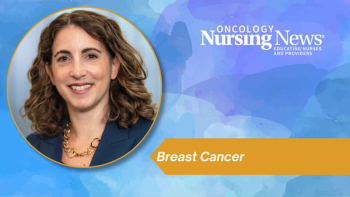
Lillian Rodich, PA-C, MPH, stressed that nurses can take advantage of accessible and local integrative medicine resources to treat patients with cancer.
Nurses are poised to offer a glimpse into integrative medicine techniques in the oncology setting, explained Lillian Rodich, PA-C, MPH, in an interview with Oncology Nursing News at the 43rd Annual Miami Breast Cancer Conference.
Rodich, a physician assistant who works in integrative oncology at Memorial Sloan Kettering Cancer Center in New York, New York, who presented methods for supporting the whole patient with breast cancer, shared that nurses do not need to be at a center with a dedicated integrative oncology team to bring integrative strategies to patients.
She offered that virtual resources such as videos about exercises or mindfulness practices can provide patients an accessible way to start working toward wellness goals while in active cancer treatment or survivorship.
Further, Rodich shared that working with clinicians at nearby centers can help extend resources to patients even if integrative services are not offered at their home clinic.
There is a huge gap that nursing can fill here because they are on the front lines of speaking to patients. Let’s think of a case where a patient is in clinic and they are visibly looking stressed and anxious. Maybe they’re getting an infusion that they’re worried about. Maybe they have a scan the next day that they’re worried about.
Nurses can utilize mindfulness-based stress reduction techniques, breath work, and meditations. Teach them to the patient, offer them videos, offer them those resources that you don’t need a whole lot of support, a big center, or anything specific for. This is something that they can learn to use from then on.
Collaborate with outside providers at other centers. Maybe there are incredible local acupuncturists you can collaborate with who do really well with treating these symptoms that. Utilize virtual programs. This is another underutilized method, and it’s something that we can do more of. Using exercise or mind-body practices in a virtual setting can lead to more patients observing and utilizing these practices. Telling patients, “Oh, I know you mentioned you wanted to exercise more last visit. Have you been able to do that? Look at this virtual program that can show different classes that you can join, and then you can actually get to those goals that you have.” Putting these things in front of the patients is ultimately going to help them achieve those goals.
This transcript has been edited for clarity and conciseness.