
KEYNOTE-564 data show adjuvant pembrolizumab maintains DFS and OS benefits in ccRCC. Review key nursing takeaways and safety outcomes.
KEYNOTE-564 data show adjuvant pembrolizumab maintains DFS and OS benefits in ccRCC. Review key nursing takeaways and safety outcomes.

NCCN survey data show 100% of cancer centers face drug shortages, with ifosfamide and carboplatin critical.

FDA approves cabozantinib capsules for RCC, HCC, and epNET. Review key dosing conversions and safety guidelines for oncology nursing practice.
FDA grants accelerated approval to sevabertinib (Hyrnuo) for HER2 TKD-mutant non-squamous NSCLC, expanding access to treatment-naive patients.

FDA grants accelerated approval to camizestrant with a CDK4/6 inhibitor for adult patients with ESR1-mutated HR+/HER2- advanced breast cancer.

Phase 3 NRG-GU005 trial shows SBRT limits bowel complications and fatigue compared to MH-IMRT, but does not improve disease-free survival rates.

Study of breast cancer survivors shows that depression and stress, rather than cardiac function decline, are the primary drivers of long-term fatigue.
FDA approves rusfertide (Mimrylo), a first-in-class hepcidin mimetic that regulates iron to control erythrocytosis in patients with polycythemia vera.

New ASCO living guideline establishes standard-of-care frameworks for recurrent ovarian cancer, highlighting biomarkers and treatment sequencing.
Oncology nurses share high-level strategies for advanced RCC therapy, focusing on managing hypertension, diarrhea, and fatigue in the frontline.
FDA approves BESREMi (ropeginterferon alfa-2b-njft) as the first new treatment option for essential thrombocythemia in nearly three decades.

A new study shows physical activity increases tumor-killing T cells and reduces suppressive Tregs in obese lung environments, boosting outcomes.

Topline Phase 3 results show individualized mRNA therapy intismeran plus Keytruda significantly improves recurrence-free survival in melanoma.
FDA approves daraxonrasib, a first-in-class daily oral RAS inhibitor, doubling survival in metastatic pancreatic adenocarcinoma patients.
FDA approves two Ziihera combinations as a first-line treatment standard for adults with HER2-positive advanced gastroesophageal adenocarcinoma.

Adding anti-obesity medication for survivors who do not respond early to lifestyle changes helps 42% achieve clinically meaningful weight loss.

A JAMA study of 73,042 veterans shows active surveillance for low-risk prostate cancer rose to 93%, with notable racial and social disparities.

A JAMA Surgery study of 2.7M patients reveals decade-long increases in surgical delays, with significant racial and socioeconomic disparities.

Oncology clinical trial nurse navigator Elise Curry, RN, breaks down the key clinical questions surrounding the FDA approval of oral iberdomide.
FDA grants Humanitarian Device Exemption for OncoSil, the first Class III device delivering targeted P-32 microparticles for distal bile duct cancer.
A meta-analysis shows traditional pathology counts fail to predict which patients benefit from adding hormone therapy to postoperative radiation.
The FDA granted accelerated approval to iberdomide with daratumumab and dexamethasone for relapsed/refractory multiple myeloma.

Oncology social worker Kelly Dyckman, LCSW, shares key strategies for identifying patient distress, demystifying counseling, and managing trauma.

AMH and INHB testing can identify premenopausal patients with HR+/HER2- breast cancer who may safely avoid chemotherapy, sparing unnecessary toxicity.
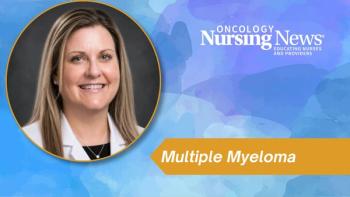
Duke Blood Cancer Center's Melissa LaMirand, FNP-C, discusses quad therapies, bispecific workflows, and nursing standardization in multiple myeloma.

FDA approves Tudriqev-nivolumab for advanced melanoma. Learn key clinical trial data, dosing math, and safety rules for oncology nursing teams.
FDA approves Tudriqev with nivolumab for advanced cutaneous melanoma. Learn about dosing, safety warnings, and trial data for oncology nurses.

New research shows high-dose oral vitamin D provides rapid relief for chemo-induced erythema and radiation dermatitis without toxicity.
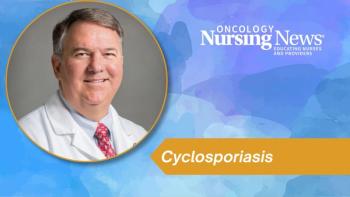
Oncology nurses must differentiate cyclospora from treatment side effects and use PCR-based GI panels to ensure rapid diagnosis during the outbreak.

A study of 400,000 Medicare beneficiaries finds that while genomic testing is rising, next-generation sequencing remains underutilized in cancer care.

August 31st 2022