

Opinion|Videos|January 6, 2025
Patient-Centered Approaches in EGFR-Mutated NSCLC
Panelists discuss how oral and subcutaneous therapies have improved the quality of life for patients with EGFR-mutated advanced non–small cell lung cancer (NSCLC), with Squires sharing patient benefits from newer administration routes, and Dr Scott highlighting promising developments in EGFR-mutated NSCLC treatments, while exploring the evolving role of patient empowerment, self-management, and the multidisciplinary care team in supporting patients through home-based care and active participation in their treatment journey.
Advertisement
Video content above is prompted by the following:
- From your perspective, how have oral and subcutaneous therapies changed the quality of life for patients with EGFR-mutated NSCLC?
- What benefits have patients shared with you about their experiences with these newer administration routes?
- Looking ahead in EGFR-mutated NSCLC treatment, what developments are you most excited about?
- Please highlight any trials, novel agents, or combinations you find promising.
- How do you see the role of the multidisciplinary care team evolving as these therapies advance?
- As patients take more charge of their care, how do you see the role of patient empowerment and self-management evolving?
- What strategies have you found effective in supporting patients to take a more active role in their treatment journey?
- How do you balance the benefits of home-based care with ensuring patients feel supported and connected to their health care team?
Advertisement
Related to this article

Arturo Loaiza-Bonilla, MD, MSEd, explains how artificial intelligence identifies trial-eligible patients, current technology limitations, and why he left academia to close gaps in cancer care.
Approval rests on lidERA, in which giredestrant lowered the risk of invasive recurrence or death by 30% vs standard endocrine therapy.
Updated phase 1/2 data show a 12.8-month median PFS with oral daraxonrasib plus gemcitabine and nab-paclitaxel in metastatic pancreatic cancer.
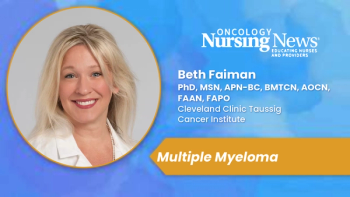
Beth Faiman, PhD, APN-BC, says oral CELMoDs and new CAR T-cell therapies are expanding myeloma care, and nurses must be ready to manage side effects.

A guideline panelist explains expanded molecular testing, early transplant referral, anemia strategies, and symptom-driven JAK inhibitor use.

Attacks on nursing staff are up 26% since 2017, and many go unreported. Nurse experts outline steps for the bedside and for leaders.
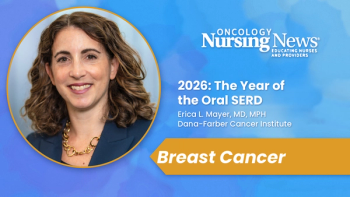
After a run of 2026 oral SERD approvals, Erica L. Mayer, MD, MPH, discusses ESR1 testing and a possible adjuvant role for giredestrant.
Kelsey Martin, AG-ACNP-BC, AOCNP, says new breast cancer approvals in 2026 are bringing targeted treatments to patients earlier and closer to home.
Advertisement
Advertisement
Trending on Oncology Nursing News
1
FDA Approves Adjuvant Giredestrant for Early ER+/HER2– Breast Cancer
2
Daraxonrasib Plus Chemo Yields 60.7% Response Rate in First-Line PDAC
3
New ASH Myelofibrosis Guidelines: Key Points for Nurses and APPs
4
Oral SERDs: What Giredestrant Signals for Nurses
5