ASTRO 2026 presenter Kayla Kafka-Peterson details an Adapt-Adopt-Build model to bridge global brachytherapy nursing gaps and standardize perioperative care.
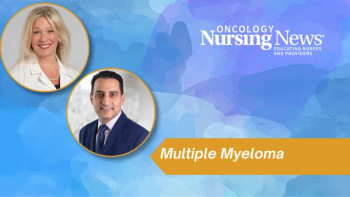
Maite San Miguel and a new survey highlight how specialized training and clinical autonomy are vital for optimizing multiple myeloma outcomes.
Nurses are integral to the management of multiple myeloma (MM), yet they face systemic challenges that hinder their ability to deliver optimal care. According to a five-country European survey presented at the 2026 European Hematology Association (EHA) Congress, while 98% of nurses believe their role must be better supported by healthcare systems, over half report a lack of specific training and standardized guidelines.
Maite San Miguel, a nurse and clinical trials coordinator in hematology at Clínica Universidad de Navarra, explained that the strength of the nursing role lies in the unique relationship between the clinician and the patient.
“The nurses are often the professionals that spend more time with the patient,” San Miguel said in an interview with Oncology Nursing News. “Because you spend more time with the patient, that allows you to build trust with the patient.”
San Miguel highlighted that clinical autonomy has a direct and positive impact on both patient adherence and clinical outcomes. This autonomy allows nurses to move beyond simply executing medical decisions to anticipating patient needs. “Nurses are not only executing the medical decision, they can anticipate the things that can happen,” she noted. “If they can anticipate things, they can make an early intervention.”
This proactive approach is particularly vital for managing side effects and symptom control. San Miguel asserted that when nurses are empowered, care becomes more continuous and proactive, which ultimately improves clinical outcomes.
Despite the clear benefits of nursing involvement, the EHA survey identified significant hurdles across Europe. The study, which surveyed 60 experienced nurses in France, Germany, Italy, Spain, and the United Kingdom, found that 52% of respondents viewed existing nursing guidelines for MM as nonspecific or purely local. Furthermore, more than 50% of participants reported a lack of MM-specific training in their continuing education programs.
The survey results indicated that staffing shortages (62%) and capacity pressures (45%) remain the top barriers to delivering effective care. These findings are critical given that nurses are identified as key decision-makers in patient counseling (72%) and medication administration (70%). Additionally, 95% of nurses participate in multidisciplinary teams, focusing on symptom management and psychosocial support.
Individualizing the patient journey
For San Miguel, the ability to tailor education is a cornerstone of effective nursing. By identifying social, psychological, and practical barriers early through established trust, nurses can individualize care plans. “You know the barriers that that patient has, so you prepare for that patient in an individual way,” she said. “Not for a group of patients, you prepare for the patient.”
The EHA study concludes that addressing gaps in training and standardized guidelines is essential to unlocking the full potential of these frontline clinicians. As San Miguel summarized, empowerment leads to better care: “That make the care better for the patient, [and] that is what you want for your patient.”
Examining the role of nurses in multiple myeloma (MM) care: insights from a European survey. Presented at: European Hematology Association (EHA) Congress; June 11-14, 2025. Abstract 4266.