

Jenn Pouliot, MSN, RN, OCN, discusses cross-departmental hazardous drug handling protocols, 2-clinician verification mandates, and the critical role of APPs in procedural oncology settings.
Jenn Pouliot, MSN, RN, OCN, discusses cross-departmental hazardous drug handling protocols, 2-clinician verification mandates, and the critical role of APPs in procedural oncology settings.
Hardik Thakkar, MSPAS, PA-C, discusses the ways in which NPs and PAs can benefit from each other’s specialized training.

What is the role of oncology nurses as artificial intelligence technologies become a clinical reality?

Patient K.C. transitions from high-risk care to invasive mammary carcinoma treatment under the care and support of a breast cancer advanced practice provider.
Here are 5 presentations that oncology APPs should know about, from patient management to practice management.
An oncology APP-led quality assurance committee identified key safety events across disciplines and specialties.
Daniel Glidden, MS, PA-C, discusses key data oncology APPs should be aware of and how to start incorporating exercise in cancer care.

Oncology Nursing News' exclusive APP Guide reviews the cancer basics and clinical fundamentals for advanced practice providers.
Paola Gonzalez, MPAS, PA-C, explains how third-party vendors shape insurance guidelines and what oncology APPs should know when navigating peer-to-peer reviews.
Korie Bigbee, DNP, explains the necessity of survivorship care and how to enact changes to make it more accessible to patients with cancer.
Dermatitis and lymphedema are among the most pertinent adverse effects of radiation to the breast, according to Alexa M. Lantz, MSPAS, PA-C.

La-Urshalar Brock, FNP-BC, CNM, describes tactics for managing dermatologic AEs in patients with breast cancer as part of a multidisciplinary care team.
A patient with breast cancer and generalized anxiety disorder was able to avoid an unnecessary mastectomy with virtual reality, said Kelly Preti, DNP.
A multisite advanced practice optimization model improved patient access through tailored interventions, including redistributing non-APP responsibilities.

Leaders in oncology nursing and advanced practice spotlight the essential role of advanced practice providers in oncology.

Specialized palliative medicine and supportive oncology advanced practice providers help create a personalized treatment experience for patients.

A care model led by advanced practice nurses was feasible in providing supportive care and linking providers through post-trial care transitions.

Heather Jackson, PhD, FNP-BC, NEA-BC, FAANP, explains how a fellowship program sets the tone for how to transition nurse practitioners to oncology.
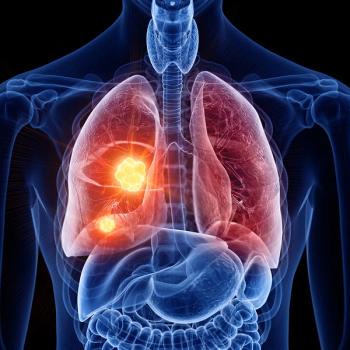
2025 ICE-T Conference presenters explain what nurses and APPs should take into account as immune cell effector therapies become more widely used.

Advanced practice providers have the opportunity to instill hope in patients through education and personalized care.
By monitoring patients’ CBC and other symptoms, nurses and advanced practice providers can spot early indicators of parkinsonism risk, per Yi Lin, MD, PhD.

Nurse practitioners and physician assistants can advocate to play a number of roles in oncology research, including primary investigators.
Providing education about patients’ diseases was difficult, according to 32% of registered nurses and 29% of infusion nurses.
Nurse practitioners should listen to patients’ concerns and be ready with questions when it comes to germline testing, according to an expert.
Using risk assessment and nurse education in the High ED/Admission Risk Therapy (HEART) protocol reduced ED visits by 18% after chemoradiation treatment.

Using liquid biopsies to test for ESR1 mutations in breast cancer is more feasible for patients and has quicker turnaround times.

Practicing at top of licensure can create opportunities for oncology APPs to engage with patients and other providers in new ways.

Working with patients in new contexts can provide meaning for oncology PAs, potentially reducing burnout, according to Eric Tetzlaff, MHS, PA-C, DFAAPA.

Rates of pay, bonus pay, and changes to funding for continuing education were not significantly linked with burnout rates.
Restaging cancer can be an unfamiliar space, but with more experience, APPs can rely less on MDs for guidance in such cases.