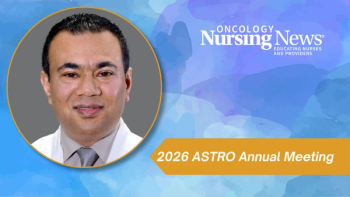
At ASTRO 2026, Suresh Rana details how AI-driven contouring accelerates care timelines, requiring rigorous team monitoring and early nursing input.
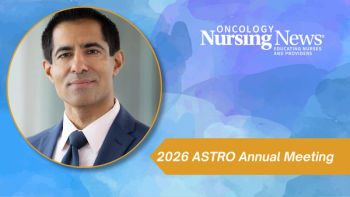
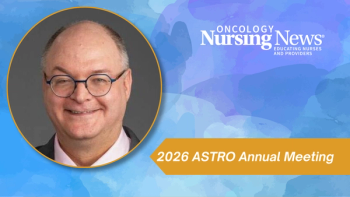
David C. Leopold, MD, explains how evidence-based integrative therapies like acupuncture and nutrition improve oncology patient outcomes and compliance.
Integrative therapies such as acupuncture, nutrition, and lifestyle modifications are essential clinical tools for managing treatment-related adverse effects (AEs) and improving patient adherence, according to David C. Leopold, MD.
In an interview with Oncology Nursing News, Leopold recalled that decades ago, patients undergoing hormone deprivation therapy would discontinue aromatase inhibitors (AIs) or tamoxifen without notifying their oncology team after debilitating struggle AEs like joint pain, fatigue, and mood changes were shrugged off by providers.
Through integrative medicine, Leopold and his colleagues were able to provide patients with research-backed methods to reduce the AEs, which are now recognized broadly as class effects that most patients encounter.
Leopold, who serves as the medical director for Hackensack Meridian Integrative Health and Medicine at Hackensack Meridian Jersey Shore University Medical Center, emphasizes that there is no longer an absence of evidence for these interventions. Instead, the challenge often lies in practitioners staying current with the existing data.
By validating the impact of nutrition, physical activity, and social engagement, oncology nurses and advanced practice providers (APPs) can bridge significant gaps in care. Leopold highlights that acupuncture is specifically effective for managing peripheral neuropathy, nausea, and stress mitigation.
Nurses are uniquely positioned to educate patients at the bedside, providing the validation and referrals necessary to keep patients on their treatment paths. By speaking with confidence about evidence-based integrative health, clinicians can transform the patient experience, ensuring that AEs no longer become barriers to successful cancer treatment.
I used to have women coming into my clinic—and this is 18 or 20 years ago—talking about the effects of aromatase inhibitors or tamoxifen. They would talk about the adverse effects and how much these things were ruining their lives: the joint pain, fatigue, mood changes. They would feel horrible. At the time, they would say, “I stopped taking this thing 2 months ago because I can’t live with it.”
They would essentially drop out, and their oncologists wouldn’t know they stopped taking it because, unfortunately, at that time, it was also denied that those things were causing problems. People would say, “No, that doesn’t make sense. We don’t see that.” We now know that is incredibly true. It’s in most patients.
Early on, I started looking for ways that we could help keep those women in [adherence]. In fact, when you look at the data, some of the things that are the most effective at reducing the adverse effects of AIs and similar medications are acupuncture. Acupuncture is extremely effective for not only the pain, but for fatigue, and even for things like mood and stress mitigation.
One of the things that we always talk about is: there’s not an absence of evidence; there’s an absence of people reading the evidence. There is so much evidence for all these things that we do. Nurses can take it upon themselves to be aware. In medicine, we like to speak with confidence because that’s our training.
For nurses, physician assistants, and nurse practitioners who are interested in this type of thing: become as educated as you can, but then speak to your patient about it. Tell them, “Hey, I’ve been reading about acupuncture, and you know what? It really helps with things like peripheral neuropathy and nausea, and it can even help with stress. It even helps with hot flashes for people on hormone deprivation therapy.”
Nurses validating that nutrition makes a difference, and activity makes a difference, and social engagement—that is so powerful to be at the bedside with the patient and tell them these things make a difference. Unfortunately, sometimes it still is brushed off by the medical community, even though that’s changing as well. If nurses can find clinicians in their area that they can work with and act as a referral, that’s tremendous. Half of my referrals are from the nurses and the nurse navigators, and we have great relationships because they see that it helps their patients.
This transcript has been edited for clarity and conciseness.