

According to findings presented at 2017 ASCO, frontline treatment with ribociclib (Kisqali) plus letrozole improved PFS for patients with HR+/HER2- advanced breast cancer.

Silas Inman, Senior Vice President, Content, joined MJH Life Sciences™ in early 2011 as one of the company's first web editors. In this position, he built OncLive.com from a fledgling web platform to a leading source of oncology news for community oncologists via in-depth reporting of breaking news from major medical conferences and the launch of OncLive® TV.
Throughout his tenure at MJH, Silas has been accountable for several organic launches of highly successful brands and for quickly transforming acquisitions into high-functioning business units. Prior to joining MJH, Silas, who attended Eastern Michigan University, was an EMT, frontend web developer, and social media/SEO expert. Follow him on Twitter @SilasInman or email him at sinman@mjhlifesciences.com
According to findings presented at 2017 ASCO, frontline treatment with ribociclib (Kisqali) plus letrozole improved PFS for patients with HR+/HER2- advanced breast cancer.
The FDA has eliminated the need for REMS certification before administration of ESAs for anemia due to myelosuppressive chemotherapy.

According to findings presented at the 2017 Miami Breast Cancer Conference, combination eribulin and pembrolizumab showed promising results for patients with metastatic triple-negative breast cancer (TNBC).

Adding to ublituximab to ibruitinib has significantly improved reponse rates compared to ibrutinib alone for patients with previously treated high-risk chronic lymphocytic leukemia (CLL).

For patients with non-small cell lung cancer (NSCLC) receiving pembrolizumab, long-term survival rates could reach 25%.

A recent study found that the genomic-based test Decipher can predict metastasis and prostate cancer-specific mortality from diagnostic biopsy specimens for patients with intermediate- and high-risk prostrate cancer.

CAR T-Cell therapy is being explored in multiple approaches to treat hematologic malignancies.
The FDA has granted approval for nivolumab (Opdivo) in the treatment of urothelial carcinoma.

According to findings from a phase II trial, prophylactic treatment with a combination of loperamide and budesonide reduced the rate of all-grade diarrhea associated with neratinib to 65%, compared with 95.4% observed in the ExteNET trial.
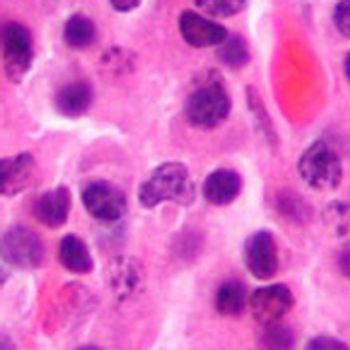
Combination pembrolizumab (Keytruda), pomalidomide (Pomalyst), and dexamethasone shows benefit for patients with relapsed/refractory multiple myeloma.

For multiple myeloa and immunotherapy, combination treatment may be the best pathway to durable responses.

Denosumab is not inferior to zoledronic acid for treatment of skeletal-related events (SREs) for patients with multiple myeloma, according to a phase III study.

Phase III trial results indicate that pembrolizimab reduced risk of death by 40% and improved PFS by 4.3 months for advanced NSCLC.

In a phase III trial, niraparib as maintenance therapy reduced the risk of progression or death by 73% for patients with recurrent ovarian cancer.
Following on a 10-month improvement in progression-free survival (PFS), the FDA has approved ofatumumab (Arzerra) in combination with fludarabine and cyclophosphamide as a treatment for patients with with relapsed chronic lymphocytic leukemia (CLL).
The immunotherapy pembrolizumab (Keytruda) has been granted an accelerated approval from the FDA for the treatment of patients with recurrent or metastatic head and neck squamous cell carcinoma (HNSCC) whose disease progresses after platinum-based chemotherapy.
A lighter and more convenient version of the tumor-treating field device Optune for patients with glioblastoma multiforme received FDA approval July 13 for the treatment of this aggressive type of brain tumor.
The FDA has approved a new agent for the treatment of severe hepatic veno-occlusive disease, a rare but often fatal complication in patients who receive chemotherapy and hematopoietic stem cell transplantation.

Crizotinib (Xalkori) has been approved by the FDA as a treatment for patients with ROS1-positive metastatic non–small cell lung cancer.

The FDA approved the mTOR inhibitor everolimus (Afinitor) for the treatment of adult patients with progressive, well-differentiated non-functional, locally advanced or metastatic gastrointestinal or lung neuroendocrine tumors.
After reports of patient deaths related to intracranial hemorrhage, cardiac failure, and cardiac arrest in the phase III PERSIST-2 trial, the FDA has placed a “full clinical hold” on trials exploring the tyrosine kinase inhibitor pacritinib.

The FDA has approved eribulin mesylate (Halaven) to treat patients with advanced or unresectable liposarcoma following prior treatment with an anthracycline-based chemotherapy.

Short-course radiation therapy and three cycles of chemotherapy administered before surgery reduced side effects and improved overall survival (OS) when compared with standard chemoradiation for patients with locally advanced rectal cancer, new research has found.
The non-alcohol formulation of docetaxel (Docetaxel Injection) has been approved by the FDA as treatment for patients with breast cancer, non-small cell lung cancer (NSCLC), prostate cancer, gastric adenocarcinoma, and head and neck cancer.
The FDA has approved bendamustine hydrochloride (Bendeka) injection for the treatment of chronic lymphocytic leukemia (CLL) or indolent B-cell non-Hodgkin lymphoma (NHL).
The ALK-inhibitor alectinib (Alecensa) was granted accelerated approval by the FDA for patients with metastatic non-small-cell lung cancer (NSCLC) whose disease progressed on crizotinib (Xalkori).

The immunotherapy agent avelumab yielded encouraging overall response rates (ORR) for patients with PD-L1–positive metastatic breast cancer and had an acceptable safety profile, according to findings reported at the San Antonio Breast Cancer Symposium (SABCS).
The FDA has approved nivolumab (Opdivo) as a frontline treatment for patients with BRAF wild-type advanced melanoma, based on a substantial improvement in overall survival (OS) compared with dacarbazine in a phase III study.
The combination of Portrazza (necitumumab) with gemcitabine and cisplatin has been FDA approved as first-line therapy for patients with locally advanced or metastatic squamous non-small-cell lung cancer (NSCLC). The approval is based on findings from the phase III SQUIRE trial.
Based on an extension in overall survival (OS) in the CheckMate-025 trial, Opdivo (nivolumab) has been approved by the FDA for patients with metastatic renal cell carcinoma (RCC) following prior treatment with an anti-angiogenic therapy.