




Lung Cancer
Latest News
Advertisement
Latest Videos






















































Advertisement
More News

Adding platinum-based chemotherapy to osimertinib improved overall survival vs osimertinib alone in EGFR-mutated NSCLC, even in high-risk subgroups.

Sevabertinib demonstrated robust, durable responses and manageable safety in both treatment-naive and pretreated patients with HER2-mutant advanced NSCLC.

Ivonescimab plus chemotherapy improved progression-free survival and response rates with manageable safety vs tislelizumab in advanced squamous NSCLC.

Ponsegromab increased body weight in patients with cancer-associated cachexia, yielding greater improvement in those who received ponsegromab previously.

Chemo-induced myelosuppression can affect patients’ ability to do daily tasks, and management varies by patient, treatment regimens, locations, and more.
CRS and ICANS were observed in 48% and 16%, respectively, of patients with ES-SCLC who received tarlatamab, according to real-world data.

The FDA has approved lurbinectedin plus atezolizumab for the treatment of extensive-stage small cell lung cancer following induction therapy with atezolizumab.

The addition of atezolizumab to chemoradiation led to meaningful improvements to quality of life for patients with small cell lung cancer.

Subcutaneous pembrolizumab has been approved across all indications, cutting chair and administration times with a median injection time of 2 minutes.

Zidesamtinib, a brain-penetrant, TRK-sparing ROS1 TKI, showed activity and manageable safety in pretreated patients with advanced ROS1+ NSCLC.
FLAURA2 data show osimertinib plus chemotherapy significantly improves overall survival vs osimertinib alone in frontline EGFR+ advanced NSCLC.

Lutetium Lu 177 dotatate was linked with partial responses in patients with metastatic bronchopulmonary neuroendocrine tumors, per real-world data.
Benjamin Besse, MD, PhD, shares AE management strategies for amivantamab/lazertinib in EGFR-positive NSCLC following CHRYSALIS-2 results.

Tepotinib was associated with frequent but manageable adverse events in MET exon 14–positive NSCLC, with peripheral edema most common.

Adding ivonescimab to chemotherapy improved PFS for patients with EGFR-mutated non–small cell lung cancer after treatment with a third-generation TKI.

Familiarity with each component of antibody-drug conjugates helps nurses and APPs deliver proactive adverse event management to patients with cancer.

Biology-guided radiotherapy involves teamwork across multiple specialists, according to Samantha Bianzon, BSN, RN.

Kelsey Martin, APRN, AG-ACNP-BC, AOCNP, discusses current ADCs in breast, bladder, and lung cancer and highlights promising agents in development.

The NCCN has added zongertinib to its guidelines for the care of patients with HER2 (ERBB2)-mutated non–small cell lung cancer.

Findings from a small cohort of a phase 2b trial demonstrated 2-year OS benefit in patients with pulmonary metastatic osteosarcoma treated with OST-HER2.
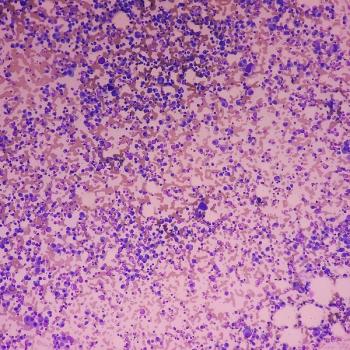
Experts outline AE risks—including ICANS, CRS, HLH—as T-cell engager use expands, highlighting the crucial role of nurses and APPs.

FDA accelerated approval was given to zongertinib for the treatment of patients with unresectable/metastatic nonsquamous NSCLC with HER2 TKD activating mutations.

Nurses should be familiar with PET scan protocol and what to ask patients with lung and bone cancers before administering biology-guided radiation therapy.
New FDA approvals in July include therapies for NSCLC, relapsed multiple myeloma, liver cancer, and B-cell malignancies.

Oncology nurses can ensure patients with non–small cell lung cancer receive the optimal treatment quickly by understanding comprehensive genomic profiling.
Advertisement
Advertisement
Trending on Oncology Nursing News
1
Patient Safety First: How a CNS Bridges Oncology Research and the Bedside
2
Making Innovation Meaningful: Enabling Personalized Care in Multiple Myeloma
3
FDA Grants Accelerated Approval to Dostarlimab in dMMR Rectal Cancer
4
Anktiva Plus BCG: 84% of Responders Cystectomy-Free at 3 Years
5