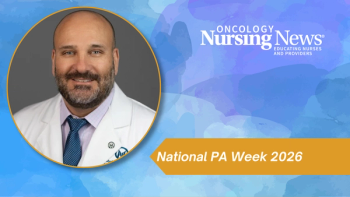
In observation of National PA Week, Moffitt PA Mark Honor discusses the expansion of APPs and key collaboration strategies for oncology nurses.
Donna Berizzi discusses how LeanTaaS capacity management tools reduce nurse burnout by optimizing outpatient workflows and improving patient access.
The landscape of oncology nursing is facing a critical inflection point in 2026. According to the State of Cancer Centers in 2026 report released by LeanTaaS, high patient volume has emerged as the leading driver of burnout among cancer center leaders (29%), even outpacing inadequate staffing (19%).
As cancer diagnoses continue to rise alongside an aging population, oncology centers are shifting their strategy from resource expansion to operational optimization.
Donna Berizzi, DNP, RN, OCN, NEA-BC, Associate Chief Nursing Officer of the Cancer Service Line at Johns Hopkins Medicine, highlights a significant transformation in patient placement in a recent interview with Oncology Nursing News.
She notes that the pressure on the workforce stems from the sheer nature of the patient population and a deliberate move toward outpatient care.
“What we are doing purposefully is moving any patient that can be treated in the ambulatory setting into the ambulatory setting,” Berizzi said. She observed that today, oncology patients are “almost exclusively treated in the outpatient setting,” with only the most acute patients remaining inpatient, a stark contrast to the care models seen just a year ago.
The high-volume, fast-paced environment of oncology can often feel like a “frenzy,” but Berizzi argues that advanced technology is helping nursing leaders move away from a “terrible reactionary stage.”
While 65% of cancer centers plan to expand services this year, 40% of leaders identify scheduling and capacity management tools as the top requirement for growth — ranking it higher than hiring additional clinical staff.
Berizzi emphasizes that the success of these tools depends on their integration into the nursing workflow. “I think that the adoption works best when the nurses see that technology is helping them solve problems and it’s not an added thing to what they’re doing,” she explained. By utilizing historical data through LeanTaaS, nursing teams can achieve what Berizzi calls a "level-loaded" day.
The result is a more predictable environment where wait times decrease and clinicians feel more prepared. Berizzi noted, “the nurse is able to really understand and be prepared for the patients that are coming in front of them.”
Beyond the bedside, these analytical tools are reshaping how administrative decisions are made. Berizzi stresses that solving volume issues is a multidisciplinary effort involving nursing leaders, administrative assistants, and chief administrative officers. Rather than relying on "knee-jerk" reactions to capacity strain — such as rushing to open facilities on Sundays — leaders use data to determine if they have the right amount of chairs or if hours should be expanded.
Ultimately, Berizzi believes the future of oncology nursing relies on the marriage of human expertise and machine intelligence. The technology provided by LeanTaaS, paired with "clinical judgment" and "critical thinking," has become "almost inseparable in solving that day-to-day volume issue."
LeanTaaS. State of Cancer Centers in 2026. Santa Clara, CA: LeanTaaS; June 23, 2026.