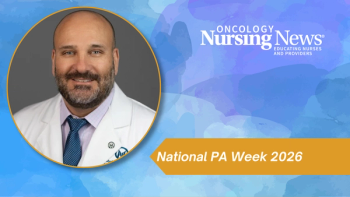
In observation of National PA Week, Moffitt PA Mark Honor discusses the expansion of APPs and key collaboration strategies for oncology nurses.
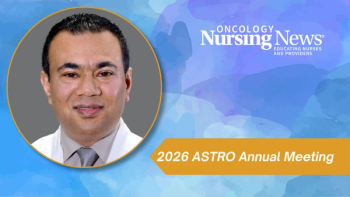
Dr. Rodney Haring discusses the 2026 AACR Cancer Disparities Report and the critical role of oncology navigators in tribal and rural health equity.
The American Association for Cancer Research (AACR) recently released its 2026 Cancer Disparities Progress Report, revealing a complex landscape of significant strides and enduring challenges in the quest for health equity.
According to the report, the disparity in overall cancer mortality between Black and White populations narrowed from 34% in 1991 to 9% in 2024. Similarly, cervical cancer mortality disparities for Hispanic women plummeted from 70% in 2000 to 10% in 2024.
However, Rodney Haring, PhD, MSW, Chair of the Department of Indigenous Cancer Health at Roswell Park Comprehensive Cancer Center, warns that these broad improvements often mask persistent inequities. Despite general progress, American Indian or Alaska Native (AIAN) and Black individuals continue to face the highest overall cancer death rates in the U.S.
Rural populations are also hit hard; residents of rural counties are 17% more likely to be diagnosed with colorectal cancer and 27% more likely to die from the disease compared with those in urban areas.
In a recent interview, Haring emphasized that the path forward lies in community resilience and the strategic integration of oncology nursing roles. “I think that we're making good progress and we just continue to focus on how our communities are resilient in the way we approach things,” Haring stated.
For oncology nurses, the frontline is shifting toward patient navigation. Haring identifies this as an emerging field where cancer centers must embed various roles — including nurse navigators, patient navigators, and community health educators — directly into tribal contexts. He stressed that “it's really important to really work with tribal nations and incorporating that into the the daily work plan.”
A primary obstacle cited by Haring is the historical exclusion of tribal nations from many cancer centers' outreach and navigation portfolios. To bridge this gap, nursing professionals and healthcare systems must prioritize building relationships and fostering trust. This involves coordinating care between specialized cancer treatment facilities and the rural health or Indian Health Services (IHS) clinics where many indigenous patients initially receive care.
The AACR report also highlighted that cervical cancer death rates remain 49% higher in counties experiencing persistent poverty. Furthermore, while stomach cancer mortality disparities for Asian or Pacific Islander (API) populations narrowed from 150% in 2000 to 81% in 2024, API, AIAN, and Hispanic populations still experience significantly higher incidence and mortality for stomach, gallbladder, and liver cancers.
Haring stated that addressing these systemic gaps requires a deeper understanding of the specific cultural and geographical contexts of AIAN populations. “That's a really strong way of implementing and embedding, getting to know our tribal nations a little better and the context of Indian health services,” Haring explained.
As the oncology community looks toward the future of health equity, the integration of navigation services into the daily outreach to tribal and rural communities remains a cornerstone of progress.