Five-week hypofractionated radiation after prostatectomy showed similar 5-year cancer control and quality of life but more grade 3 urinary toxicity.
Melissa Baker discusses SOPs in transplant care, gene therapy for sickle cell, and the essential role of nurses in clinical strategy and care planning.
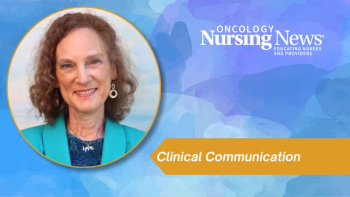
In a new interview, Melissa Baker, MSN, RN, OCN, APN-C, of the John Theurer Cancer Center and a member of the Oncology Nursing News advisory board, discussed the dynamic field of oncology nursing.
Baker highlighted the unique rewards of bone marrow transplantation, emphasizing its potential to provide a "true second chance at life." She shared her commitment to evidence-based practice through standard operating procedures and bloodless medicine research. Furthermore, Baker explored emerging trends like gene therapy for sickle cell disease and stressed that nurses’ unique insights are vital for clinical strategy and patient advocacy.
I don't think I would have gone into nursing if it wasn't for oncology. It is the entire reason I went into nursing and into the medical field. I was looking for something that I would be stimulated for the duration of my career without days when I felt that it was dragging on, and I wanted just to find something that was always ever changing and dynamic, and oncology seemed to be the perfect fit. I knew that I had wanted some kind of care-focused career. I started out doing research at Cornell in the oncology field just by chance from a college friend, and then got turned on to the field of nursing.
I turned to bone marrow transplant early in the career because it involves so many different organ systems and so many aspects of cancer care — many other oncology specialists will focus on leukemia, lymphoma, breast, pancreatic, and when you focus in transplant, you get a mix of myeloma, lymphoma, leukemia, all these and non-heme malignancies, like sickle cell, as well. And back in the day, we used to do some, like testicular cancers, for transplant, as well. So, it has such a variety of different conditions and diseases that we focus on, and there are very few opportunities other than transplant where you really have that true chance for cure, although it can be so devastating when there isn't life-saving techniques, it's the one time where you could really have a chance to completely change their life and give them a real, true second chance at life.
I am a strong advocate for best practice care therapy. I'm also the lead person for writing the standard operating procedures for our division, so I am constantly looking at the evidence and revisiting whether what we do is best practice. More recently, a colleague of mine and myself, we wrote an article on bloodless medicine in the transplant field, and most recently, there was a change for patients who received bloodless medicine that practice as a Jehovah Witness, whereas recently Jehovah’s Witnesses are allowed to receive blood products from their own person, so that does change the scope of managing transplant needs, so we are currently looking at how this can be utilized to open up a field of transplant and other kinds of technologies and other advances, perhaps using slightly more myeloablative or slightly more ablative conditioning regimen, so that we can transplant more patients, so that's just one example of how we're looking at best practice and incorporating it into today's technology.
I think with the advancements of gene therapy and outreach to the sickle cell community that is really upcoming, we're starting to see more and more sickle cell patients that are going through with gene therapy, and that's really also pretty dynamic, because someone that has dealt with a chronic disease, a disabling disease, and has had so many comorbidities and complications from their sickle cell, now they don't have sickle cell anymore.
I train a lot of our newer APNs, and six months into the training, they're like, “It's still just taking so much time. I still don't understand graft-versus-host disease,” or, “It still isn't coming easy,” or, “I'm still struggling.” And the truth is, it just takes time and patience. Oncology isn't something that you pick up right away, and transplant certainly isn't something you pick up right away, and it takes a long time, longer than most people think, to really get the knack of it, and when we find comfort in what we're doing, that's when we start changing things around.
So, I would say if you have a passion for oncology, stick with it, because even though there's really some really sad times and trying times, leaning on your coworkers, developing a great support network, developing professional relationships with patients, it makes all the difference.