Dana Delaski, MSN, FNP-BC, shares insights on how once-daily ruxolitinib, self-injected rusfertide, and givinostat will transform PV clinic workflows.

WVU Medicine has begun treating patients in the first clinical trial to explore the use of subcutaneous blinatumomab in patients with CD19-positive MPAL.
West Virginia University (WVU) Health System Cancer Institute in Morgantown, West Virginia, has dosed its first patient in a first-in-world phase 1/2 clinical trial (NCT07222579) evaluating the efficacy of subcutaneous blinatumomab (Blincyto) in patients with CD19-positive mixed-phenotype acute leukemia (MPAL).
MPAL represents a rare and challenging subset of acute leukemias, accounting for approximately 1% to 3% of all cases, according to a news release from WVU and principal investigator Ashkan Emadi, MD, PhD. Characterized by the presence of both myeloid and lymphoid markers on malignant cells, MPAL currently lacks FDA-approved, disease-specific therapies.
Clinicians typically manage the condition using regimens adapted from acute lymphoblastic leukemia (ALL) or acute myeloid leukemia (AML). A novel investigator-initiated clinical trial is now investigating the use of a subcutaneous formulation of blinatumomab for patients with CD19-positive MPAL.
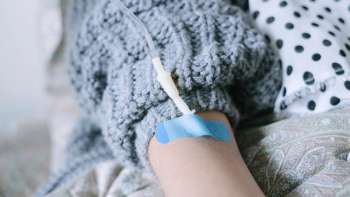
Standard blinatumomab administration requires a 28-day continuous intravenous infusion via a portable pump, which necessitates central venous access and frequent bag changes. The subcutaneous formulation is designed to provide comparable therapeutic exposure while reducing treatment complexity. In the trial protocol, patients receive 250 µg daily for the first 7 days, followed by 500 µg administered 3 times per week.
A subcutaneous injection would give patients freedom from the IV port needed for traditional blinatumomab administration, which will have quality-of-life repercussion, Emadi explained in an interview with Oncology Nursing News.
“For having that [IV] pump, you need a central line…or a port,” said Emadi. “Imagine you want to take a shower. Imagine you want to have a sexual encounter with your partner…. These are the quality-of-life issues…. Imagine you want to go on an airplane. The pump is going to beep in TSA.”
While the treatment seeks greater efficacy of treatment for patients, more significant for some is the potential improvement to quality of life, Emadi explained.
“Yes, we do this because it’s a great drug, and it has revolutionized treatment of [patients with] ALL,” said Emadi. “But having a pump 28 days in a row is not easy.”
The trial is designed to enroll up to 75 patients across 3 distinct cohorts:
Emadi shared insights on the trial’s first participant, a 77-year-old woman with Philadelphia chromosome-positive (Ph+) B-myeloid MPAL. At diagnosis, she presented with 83% bone marrow blasts and severe pancytopenia. Following a dexamethasone pre-phase, she received subcutaneous blinatumomab in combination with the tyrosine kinase inhibitor dasatinib (Sprycel).
By day 26 of cycle 1, the patient had achieved complete hematologic recovery and was transfusion independent. Subsequent bone marrow analysis showed no detectable blasts, and Philadelphia chromosome positivity was no longer evident by fluorescence in situ hybridization (FISH). Emadi described the “depth of remission” as unexpected and highly encouraging given the patient's age and clinical profile.
For oncology nurses and advanced practice providers (APPs), the transition to subcutaneous delivery may significantly streamline care. The formulation eliminates the need for 28-day continuous pumps and central lines, which often interfere with a patient’s daily activities.
“Only a few minutes after the people arrive in the infusion center, they get [subcutaneous blinatumomab] injected under their skin and they go home,” noted Emadi.
Safety monitoring remains essential, as the therapy is associated with cytokine release syndrome (CRS). The first patient experienced grade 1 CRS, which was managed with supportive care consisting of (Tylenol) and “2 or 3 days” of IV antibiotic and was able to resume treatment after the CRS was managed.
Emadi observed that the regimen “was extremely well tolerated.” While the first week of treatment requires inpatient observation, the protocol allows for a transition to full outpatient care for the remainder of the cycle.
As the trial expands to an expected 15 sites across North America, investigators aim to determine if these early results can be replicated in a larger population, potentially establishing a new standard of care for CD19-positive MPAL.
WVU Cancer Institute first in the world to treat ultra-rare leukemia using novel subcutaneous immunotherapy. West Virginia University Medicine. News release. February 17, 2026. Accessed February 19, 2026. https://wvumedicine.org/news-feed/news-article/WVU-Medicine/Front-Page/wvu-cancer-institute-first-in-the-world-to-treat-ultra-rare-leukemia-using-novel-subcutaneous-immunotherapy/