Commentary|Articles|October 27, 2026
JADPRO Live 2026 Takeaways for Oncology Nurses and APPs
Author(s)Alex Biese
Fact checked by: By ONN Staff
Dana-Farber nurse practitioners reflect on cross-country networking, resource gaps, and ADC education needs after JADPRO Live 2026.
Advertisement
Advertisement
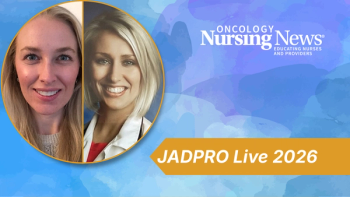
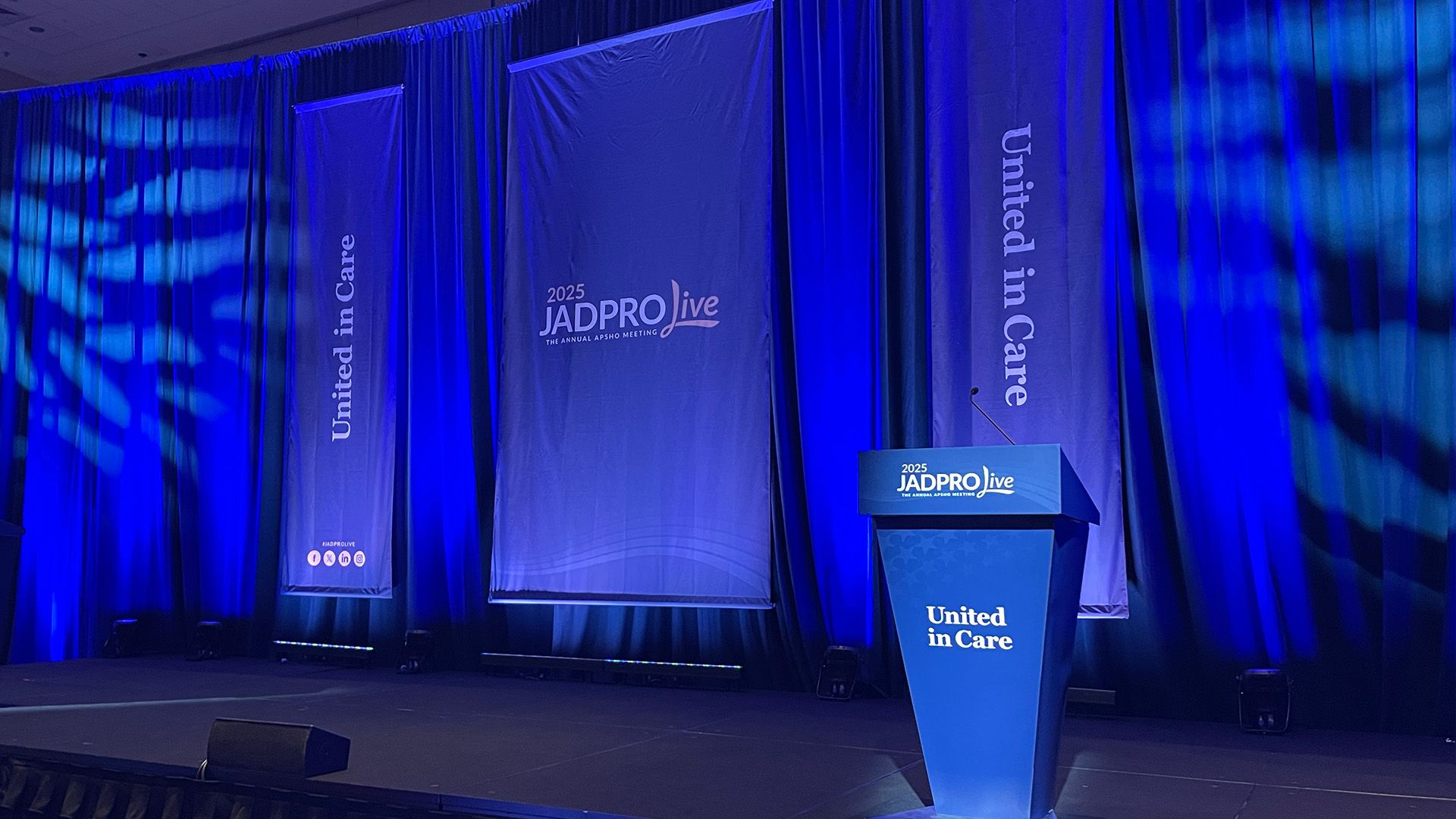
For oncology advanced practice providers (APPs), the value of JADPRO Live 2026 extended beyond the clinical content to the comparisons attendees could draw between their own practices and those of colleagues across the country, according to 2 nurse practitioners from Dana-Farber Cancer Institute who presented at the meeting. Held October 15 to 18 at the Minneapolis Convention Center in Minneapolis, Minnesota, the conference brought together nurse practitioners, physician assistants, pharmacists, and other advanced practitioners in hematology and oncology.1,2
Related to this article

A Fox Chase intervention raised trial-naïve patients' understanding of placebo use and randomization; its effect on enrollment is still untested.
Divarasib beat first-generation KRAS G12C inhibitors in NSCLC, while new data on olomorasib, daraxonrasib, and a KRAS G12D inhibitor expand the field.

Yingzi Zhang, PhD, RN, discusses anxiety and depression data from 21,206 oncology patients ahead of the ANE Research Symposium.

Dana-Farber nurse practitioners outline ADC patient selection, sequencing, ILD surveillance, and patient education from JADPRO Live 2026.

An NP-led roundtable reviewed 3L+ trial data in metastatic colorectal cancer and shared nursing strategies for myelosuppression, dosing, and goals.

New ANA guidance sets shared duties for nurses, leaders, and educators and favors restorative responses over zero-tolerance policies.

In TALAPRO-3, adding talazoparib to enzalutamide cut the risk of radiographic progression or death by 52%; anemia was the leading toxicity.
Advertisement
Advertisement