

News|Videos|January 12, 2026
Transportation, Logistics of Importance to Community Care With CDK4/6 Inhibitors
Fact checked by: Bridget Hoyt
Transportation is a key accessibility issue for patients with HR-positive metastatic breast cancer receiving CDK4/6 inhibitors at community clinics.
Advertisement
Episodes in this series








Community providers seem to be acclimated to the varied adverse effect (AE) profiles with CDK4/6 inhibitors now, and more concerned with transportation issues for their patients, said Kimberly Podsada, BSN, RN, MSN, NP-C, a nurse practitioner at the University of California San Diego, after moderating a Case-Based Roundtable on CDK4/6 inhibitors in patients with hormone receptor (HR)–positive metastatic breast cancer.
Having moderated a previous meeting of this type before, Podsada said she noticed a shift in the concerns of community advanced practice providers (APPs) from managing difficult AE profiles, which range from gastrointestinal issues to QTc prolongation and neutropenia depending on the agent prescribed, to transportation issues for patients.
Between greater confidence using and understanding how each AEs of each CDK4/6 inhibitor are likely to present, care teams can focus on ensuring patient access to care through coordinated nurse navigators.
Nurse navigators assist the patient and the rest of the care team in ensuring appointments are scheduled for the same day or connecting patients with travel assistance such as vouchers for taxis, Uber, or Lyft as funds permit.
Transcript
I got a sense that people are more comfortable now with managing the CDK4/6 inhibitor adverse effect profile, although that was a big topic of discussion as well. Access to care was what we mostly talked about—and not just for patients in the community or rural, but even more local, to their hospital or clinic, and patients taking their medicine at home.
Now the need to have so many frequent blood draws or EKGs up front can be a burden on the patient, as well as making that that commute, having access to transportation, not having family support, or not being able to afford to take a taxi, Lyft, or Uber.
Most offices now have this nurse navigator role, or someone in the office who was calling patients, checking on them, seeing how they’re tolerating medications, making sure they have their appointments scheduled for their follow-up labs. Some of the offices offered home health services so they could send someone out to the home to do a blood draw. Some offered taxi vouchers, but even those were really limited by how much funding the clinic had to provide transportation costs.
It was interesting to hear some of the different methods of each clinic on how they were trying to help their patient, whether that meant going to a lab that was closer to their home vs having to come into the clinic. Then, of course, when they have to come into the clinic for a visit anyway, trying to consolidate all of those scheduled and necessary events on the same day. If they’re coming in for some other supportive medications, how can we consolidate appointments for the patient on the same day? [There are] still some challenges with that 2-week interval to get blood work done.
This transcript has been edited for clarity and conciseness.
Advertisement
Related to this article

Two Winship nurses explain how to talk with breast cancer survivors about GLP-1 receptor agonists, from endocrine therapy to access barriers.

ABUS matched handheld ultrasound on cancer detection in women with dense breasts while lowering recall and short-interval follow-up rates.

For MBC Awareness Day, an NP and a former ICU nurse living with metastatic breast cancer discuss repeat education, biomarker testing, and support.
In the phase 2 EVITA trial, vitamin C did not slow clonal growth but was linked to fewer serious adverse events and longer exploratory survival.

Marieta Branis, APN, discusses individualized breast cancer care, monitoring for ADC and oral therapy toxicities, younger patients, and survivorship.

Real-time check-ins from patients with MBC showed quality of life dipped when depression, anxiety, or fatigue rose above usual levels.

FDA approves tucatinib maintenance with trastuzumab and pertuzumab for HER2+ breast cancer based on HER2CLIMB-05.
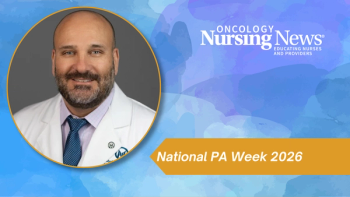
In observation of National PA Week, Moffitt PA Mark Honor discusses the expansion of APPs and key collaboration strategies for oncology nurses.
Advertisement
Advertisement
Trending on Oncology Nursing News
1
Automated Breast Ultrasound Tied to Fewer False-Positives in Dense Breasts
2
Beyond the Treatment Center: Exploring Equine Assisted Wellness
3
Future Directions in Metastatic Triple-Negative Breast Cancer Care
4
Delaying BSO to Age 50 Leaves BRCA1 Carriers With 24% Ovarian Cancer Risk
5