In the phase 2 EVITA trial, vitamin C did not slow clonal growth but was linked to fewer serious adverse events and longer exploratory survival.
Psychoneurological symptoms in hematologic malignancies may worsen quality of life, treatment burden and survivorship outcomes.
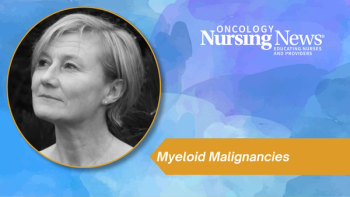
At the 2026 Oncology Nursing Society (ONS) Congress, Naomi Cazeau, MSN, ANP-BC, AOCNP, discussed findings from a concept analysis examining the psychoneurological symptom cluster in adults with hematologic malignancies. The analysis focused on the co-occurrence of pain, fatigue, sleep disturbance, cognitive dysfunction, depression and anxiety, and how recognizing these interconnected symptoms may improve patient care and survivorship outcomes.
These symptoms are highly prevalent across the adult cancer survivorship spectrum,” Cazeau said. “Pain is prevalent in up to 80% of patients with cancer, up to 75% have cognitive disturbance, 60% struggle with fatigue and between 20% and 40% have issues with mood disturbance between anxiety and depression.”
“These symptoms also have high costs associated with them and prolong patient stays and delay treatment,” she continued. “By understanding their co-occurrence, that might help clinicians understand ways that they might be treated together, thus alleviating the symptom burden and reducing the amount of time patients spend in the hospital.”
“I think it begins by having an open conversation with your patients to understand how they’re coping with their disease and their treatment beyond just the clinical symptoms,” Cazeau explained. “How are they feeling supported by their family and their other networks? How are the costs associated with care affecting their ability to cope with their disease?”
“That allows us to be able to think about solutions that can help them,” she added. “We won’t be able to help them if we don’t know the nature of what’s going on.”
“Using validated tools is one great way to conduct a multidisciplinary, multisystem assessment to ensure symptoms are captured,” Cazeau said. She pointed to commonly used instruments including the MD Anderson Symptom Inventory, the Memorial Symptom Assessment Scale and PROMIS tools developed by the National Institutes of Health.
“But also my advice to clinicians is when patients are reporting symptoms like fatigue, it’s a good idea to ask them about other symptoms,” she continued. “How are they sleeping? How are they able to function at work? How are they coping in terms of their mood?”
“From what I find clinically is that where they might report pain because that’s what’s bothering them the most physically, they almost think of the other symptoms like sleep disturbance as ambient and just part of the whole deal,” she said. “When I ask them how their sleep is, I sometimes get patients who are taken aback because they weren’t expecting to be asked that question.”
“Understanding the biological mechanisms is really key to understanding how these symptoms can be targeted,” Cazeau said. “Cytokines and inflammation have been front and center across the psychoneuroimmunology and psychiatry domains, and it’s also gaining ground in the area of the psychoneurological symptom cluster.”
“It’s not just cytokine proteins, but also understanding cytokine genes and how they interact and influence symptoms,” she explained. “This is still early days in terms of research, so understanding how it’s going to translate into interventions at the bedside is still to be decided, but it’s an area that we have to continue to research and understand.”
“The unique challenge for patients with hematologic malignancies is that many of the biological pathways associated with psychoneurological symptoms are heavily affected,” Cazeau explained. “Anemia, for instance, has been associated with these symptoms, and patients undergoing treatment for hematologic malignancies are oftentimes quite anemic.”
“There is also the role of inflammation, and the treatments we give can cause inflammation, but so can the disease process itself,” she continued. “They’re suffering with these biological issues that are compounding their symptom experience.”
“It’s also hard to study this group because hematologic malignancies include different forms of leukemia, lymphoma and multiple myeloma,” she said. “It’s hard to put them all in one bucket.”
Cazeau added that greater awareness and multidisciplinary collaboration are needed to drive additional investment and participation in this area of research.
“I think embedding standardized multisystem inventories into general practice is a first step,” Cazeau said. “Tools like the PROMIS instruments can be built into intake assessments and followed through at different time points along treatment.”
She noted that quality-of-life assessment tools are increasingly becoming part of standard care in the CAR T-cell therapy setting and suggested these approaches should be expanded more broadly across oncology practice settings.
“I think working as a community to figure out how to make symptom assessment feasible to implement into routine care — not only for large research-intensive institutions but also for small rural hospitals — is going to be a huge step forward,” she concluded.