At ASTRO 2026, Suresh Rana details how AI-driven contouring accelerates care timelines, requiring rigorous team monitoring and early nursing input.
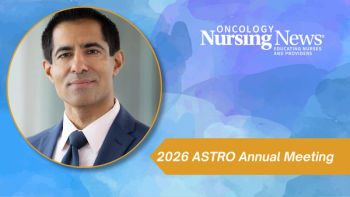
Anurag K. Agrawal, MD, of the American Cancer Society, discusses global oncology nursing challenges, including high patient ratios, hierarchy, and chemo safety.
Anurag K. Agrawal, MD, vice president of global cancer support at the American Cancer Society, discusses the systemic challenges facing oncology nurses in international settings compared with the United States during the 2026 NCCN Annual Conference. Agrawal identifies three primary barriers to optimal nursing care: high patient-to-nurse ratios, rigid professional hierarchies, and inadequate occupational safety standards.
A significant portion of the American Cancer Society’s global efforts involves "flattening" the clinical hierarchy. Dr. Agrawal notes that while nurses strive to be patient advocates, they often lack the institutional voice necessary to influence care in physician-led environments. By fostering a team-based approach, the organization aims to empower nurses to advocate effectively for their patients. Furthermore, Dr. Agrawal highlights critical safety concerns regarding the handling of hazardous drugs. In many resource-limited settings, oncology nurses lack proper personal protective equipment (PPE) and are forced to prepare or administer chemotherapy in unsafe environments. These occupational hazards, combined with heavy workloads and a lack of professional autonomy, create a complex landscape of challenges for the global oncology nursing workforce. Addressing these issues is essential for improving both provider safety and the quality of patient care worldwide.
Interviewer: [Question omitted]
Anurag K. Agrawal, MD: One is just the patient-to-nurse ratio is incredibly high as compared to the United States. Second is the hierarchical structure where nurses, of course, want to be advocates for the patients, but don't necessarily have a voice. So in many of the settings we work with, we try to decrease that hierarchy, really flatten it out, so that the healthcare teams work as a team, rather than it's coming down from the doctor; the nurses want to advocate. And so within health systems, it's really important for us to help empower them to be able to do that.
So I think that's one of the big challenges, and then, of course, the environment—a lot of occupational safety hazard risk. So we work on improving occupational safety with chemotherapy, which is often not being prepared or administered in a safe setting, lack of protective equipment. So many, many challenges for the nurses.
Would you like me to draft a set of key takeaways or bullet points to accompany this video post?