

Conference Coverage
Latest Content
Sep 17, 2026 | News
FDA Approves sNDA for Taletrectinib in ROS1+ NSCLC

Prostate Cancer Care: ADT Management and APP Guidance
Sep 17, 2026

Why Using AI to Interpret Mammogram Results Can Cause Unnecessary Panic
Sep 16, 2026

Oncology Experts Discuss On-Body Subcutaneous Isatuximab in Multiple Myeloma
Sep 16, 2026

KEYNOTE-564 5-Year Data: Adjuvant Pembrolizumab Benefits ccRCC
Sep 15, 2026








Advertisement
Shorts
0:28
Frontline Sevabertinib and Nursing Care for HER2-Mutant NSCLC
5 days ago
by
Beth Eaby-Sandy, MSN, CRNP

0:54
Beyond the Pill Diary: Best Adherence Practices for Oral Oncology
14 days ago
by
Yolanda Justal, APRN

0:31
Oral Iberdomide Expands Myeloma Care Access for Rural and Frail Patients
a month ago
by
Elise Curry, BA, BSN, RN, OCN

0:38
How Oncology Nurse Navigators Guide Patients Through Early Cancer Care
a month ago
by
Emily Mason Beard, BSN, RN, OCN, CBCN

0:34
Reframe Patient 'Difficulty' as Emotional Trauma in Oncology Care
a month ago
by
Kelly Dyckman, LCSW
0:56
How CAR-T and Bispecifics May Replace Myeloma Stem Cell Transplants
a month ago
by
Melissa LaMirand, MSN, RN, FNP-C
0:41
The 'Spark and Gasoline' of Oncolytic Therapy
a month ago
by
Michael K. Wong, MD, PhD, FRCPC

0:54
Integrative Oncology Does Not Delay Conventional Cancer Care
a month ago
by
Alexandre Chan

0:44
Simple Tip to Start Patient Health Conversations
a month ago
by
Kavita K. Mishra, MD

0:20
Why Lobular Breast Cancer Needs a Specialized Lens
2 months ago
by
Patricia Jakel, MN, RN, AOCN
Podcasts


Videos



Continuing Medical Education











































All News
Advertisement
Advertisement

ASTRO updated its pancreatic cancer radiation guideline. Dr Michael Chuong shares direct takeaways on nursing roles in multidisciplinary care.

NCCN survey data show 100% of cancer centers face drug shortages, with ifosfamide and carboplatin critical.

Co-developed by NYU Langone and Dana-Farber, the Solavia platform integrates EHR workflows, decision support, and pathway tracking for APPs and PAs.

The FDA expands accelerated approval for sevabertinib to frontline HER2-mutant NSCLC, highlighting a need for vigilant nursing management of diarrhea.
FDA approves cabozantinib capsules for RCC, HCC, and epNET. Review key dosing conversions and safety guidelines for oncology nursing practice.

The FDA expands accelerated approval for sevabertinib to frontline HER2-mutant NSCLC, highlighting a need for vigilant nursing management of diarrhea.

Stephanie Sorrentino, BSN, OCN, discusses operational strategies, toxicity management, and patient education in frontline multiple myeloma care.

Oncology nursing teams must navigate the clinical logistics and patient education for the newly approved, ctDNA-guided agent camizestrant.

FDA grants accelerated approval to sevabertinib (Hyrnuo) for HER2 TKD-mutant non-squamous NSCLC, expanding access to treatment-naive patients.
Oncology navigator Emily Beard shares insights on advocacy, the Young Survival Coalition, and dancing to sustain her career.
Advertisement

FDA approves camizestrant for ESR1-mutated advanced breast cancer, tasking oncology nurses with guiding patients through ctDNA-based surveillance.
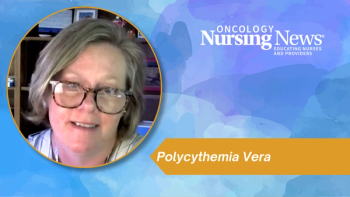
Dana Delaski, MSN, FNP-BC, shares insights on how once-daily ruxolitinib, self-injected rusfertide, and givinostat will transform PV clinic workflows.

The FDA has approved oral iberdomide (Zenbexus) for relapsed/refractory multiple myeloma, offering patients a highly potent, accessible therapy.

Oncology clinicians must actively champion NCCN guidelines as a critical pillar of breast cancer survivorship care,
With daraxonrasib approved for metastatic pancreatic cancer, Yolanda Justal, APRN, discusses essential nursing workflows for home-based care.
Advertisement
Advertisement
Trending on Oncology Nursing News
1
Oncology Experts Discuss On-Body Subcutaneous Isatuximab in Multiple Myeloma
2
FDA Approves sNDA for Taletrectinib in ROS1+ NSCLC
3
Why Using AI to Interpret Mammogram Results Can Cause Unnecessary Panic
4
Prostate Cancer Care: ADT Management and APP Guidance
5