




























































The FDA has granted a priority review designation to a new drug application (NDA) for lurbinectedin as a treatment for patients with small cell lung cancer (SCLC) who have progressed following platinum-containing therapy.
The FDA has granted a priority review designation to a new drug application (NDA) for lurbinectedin as a treatment for patients with small cell lung cancer (SCLC) who have progressed following platinum-containing therapy.

Recent years have brought landmark changes to the treatment of advanced lung cancer, but there is still more work to be done.

The agency granted full approval to pemetrexed for injection (Pemfexy), a liquid injection and branded alternative to Alimta, for nonsquamous NSCLC.

The use of liquid biopsies can expand in the world of oncology, according to Benjamin P. Levy, MD.
The FDA has granted a priority review designation to a new drug application (NDA) for selpercatinib (LOXO-292) for the treatment of patients with advanced RET fusion–positive non–small cell lung cancer (NSCLC), RET-mutant medullary thyroid cancer (MTC), and RET fusion–positive thyroid cancer.
Oncoprex in combination with osimertinib received fast track designation from the FDA to treat patients with non-small cell lung cancer.
The FDA accepted and granted priority review to the supplemental biologics license application for nivolumab in combination with ipilimumab for the first-line treatment of patients with metastatic or recurrent non-small cell lung cancer.

An expert discusses lung cancer advances from 2020, as well as exciting new research that is underway.

Not all patients with advanced non–small cell lung cancer (NSCLC) are recommended for genomic testing when treated in a community setting, and are therefore not being appropriately tested for potential molecular drivers of their disease, explained Nathan Pennell, MD, PhD.
The FDA has approved 2 abbreviated new drug applications (ANDAs) for everolimus (Afinitor) tablets for the treatment of patients numerous malignancies.

The FDA has approved atezolizumab (Tecentriq) in combination with carboplatin and nab-paclitaxel (Abraxane) for the first-line treatment of adult patients with metastatic nonsquamous non–small cell lung cancer (NSCLC) who do not harbor EGFR or ALK molecular aberrations.
The FDA has granted a priority review designation to a supplemental Biologics License Application (sBLA) for durvalumab (Imfinzi) for the frontline treatment of patients with extensive-stage small cell lung cancer (ES-SCLC).1

New studies are showing the dawn of a new era in how cancer care teams will go about treating patients with small cell lung cancer with immunotherapy combinations.

The FDA accepts the application of a biosimilar of bevacizumab in the treatment of patients with NSCLC.

Immunotherapy in the neoadjuvant setting shows promise for patients with stage III lung cancer.

Immunotherapy as a frontline treatment for patients with advanced nonsquamous NSCLC is showing potential, but there is still additional testing that needs to be done.

Future treatment for patients with the KRAS G12C mutation in NSCLC shows potential promise, according to a principal investigator studying the AMG 510 inhibitor.

The use of immunotherapy in tandem with chemotherapy is the future of treating patients with NSCLC, according to expert Catherine Shu, MD.

Lung cancer treatments are advancing. With these changes come new complications and questions that nurses will have to address with their patients.
With the emphasis on testing for biomarkers to determine treatment for patients with lung cancer, it's important to make sure the testing will have an impact on clinical decisions.
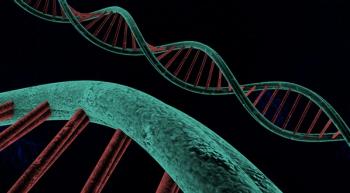
With the help of NGS, new research is emerging for targeted therapies of rare mutations in lung cancer.

New study results show that chemoimmunotherapy combination options provide an overall survival benefit to patients with stage IV nonsquamous NSCLC.
New therapeutic options are emerging for patients with Lung cancer positive for ALK or ROS1.
Looking at biomarkers PD-L1 and TMB in tandem can help predict a patient with NSCLC reaction to immunotherapy.