Oncology clinicians gathered to review relapsed CLL care options, CAR T-cell trial updates, and advanced practice provider roles.
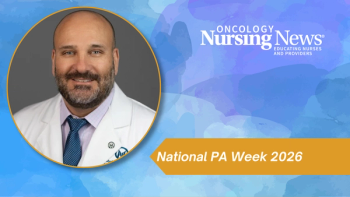
Kennon McCollum explains how psychosocial, physical, and financial barriers impact treatment selection for patients with CLL.
In a recent Oncology Nursing News case-based roundtable session, advanced practice providers and oncology nurses gathered to discuss the evolving management of chronic lymphocytic leukemia (CLL), moderated by Kennon McCollum, DNP, APRN-BC, a family nurse practitioner and cancer survivorship coordinator at Georgia Cancer Specialists in Atlanta.
Drawing from his experience as a nationally recognized chemotherapy nurse educator, university adjunct clinical faculty, and peer-reviewed author, McCollum, in an interview after the event with Oncology Nursing News, highlighted the critical need for a comprehensive, multi-domain assessment that goes beyond medical and physical symptoms to look at the patient as a whole.
Clinical practice frequently defaults to a narrow medical focus, prioritizing disease management and physiological symptoms. However, McCollum cautioned that such an approach overlooks several essential domains of cancer survivorship. In CLL, the disease and its treatments have far-reaching effects that impact psychosocial, spiritual, social, and financial aspects of life. "Look at the patient as a whole," McCollum advised. He emphasized that addressing these diverse domains is crucial, as the overall impact of CLL extends well beyond physical pathology.
A unique challenge in CLL care is that many patients remain active in the workforce and maintain demanding daily routines. Frequent, repeated clinic visits can pose severe disruptions to their professional lives. To address this, McCollum recommended that nurses routinely assess logistics. Nurses should ask patients about their transportation options, the feasibility of making repeated office visits, and how scheduling conflicts might interfere with their employment.
These logistical assessments are not merely administrative; they are central to clinical decision-making. "I even employ that into treatment decision making," McCollum explained. For example, if a therapeutic regimen requires lengthy intravenous infusions or highly frequent office visits, it may conflict significantly with an active patient's work schedule. In such cases, understanding these scheduling and lifestyle constraints allows providers to select more compatible therapy options.
Financial health is another critical domain requiring systematic nursing assessment. CLL therapies often carry substantial out-of-pocket costs, high co-pays, and ancillary expenses related to frequent clinic travel. Therefore, conducting a formal financial assessment is a vital step before final treatment selection. By evaluating how a chosen therapy and its duration will affect a patient financially, the healthcare team can help mitigate financial toxicity and support treatment adherence. Taking a holistic view ensures that treatment selection aligns not only with clinical guidelines but also with the patient's daily reality. Ultimately, assessing the whole patient allows oncology nurses to deliver sustainable, individualized care that preserves quality of life.
Through these comprehensive multi-domain evaluations, oncology nurses translate clinical evidence into patient-centered care. By identifying psychosocial and financial barriers early, nurses can advocate for resources, coordinate supportive services, and optimize therapy choices, ensuring that every patient with CLL receives the comprehensive, individualized support necessary throughout their cancer survivorship journey.