Opinion|Videos|October 8, 2026
Surveillance, Patient Resources, and Financial Support
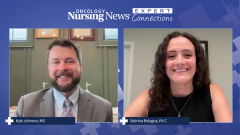
Author(s)Kyle Johnson, MD, Sabrina Bologna, PA-C
This closing segment follows the patient into surveillance as he and his wife worry about recurrence.
Advertisement
Episodes in this series
This closing segment follows the patient into surveillance as he and his wife worry about recurrence. The faculty stress setting expectations early, since bladder cancer tends to recur and close follow-up helps catch recurrences while all treatment options remain available. Surveillance relies on regular cystoscopy that becomes less frequent over time, with imaging reserved for specific clinical concerns in low-grade disease. To help patients engage in their care, the panel encourages patients and family members to attend pretreatment education sessions covering treatment, side effects, and how to reach the care team. The faculty recommend guideline-based information from the American Urological Association (AUA) and the National Comprehensive Cancer Network (NCCN), along with Bladder Cancer Advocacy Network (BCAN) materials. On cost, they acknowledge the financial toxicity of newer therapies. They advise nurses and advanced practice providers to explore local hospital assistance programs and insurance arrangements, and to connect patients with advocacy groups and manufacturer support programs.
Advertisement
Related to this article
In observation of National PA Week, Moffitt PA Mark Honor discusses the expansion of APPs and key collaboration strategies for oncology nurses.

Beth Faiman details the new IMS/IMWG consensus definition of cure for multiple myeloma, requiring 5 years of treatment-free remission.

Oncology clinicians gathered to review relapsed CLL care options, CAR T-cell trial updates, and advanced practice provider roles.
At ASTRO 2026, Suresh Rana details how AI-driven contouring accelerates care timelines, requiring rigorous team monitoring and early nursing input.
At ASTRO 2026, Dr. Erica Braschi Jordan details toxicity tracking, physical therapy referral, and quality of life in proton regional nodal irradiation.
At ASTRO 2026, Dr. Mishaal Munir details how nurse-led triage workflows and prompt symptom escalations improve care for breast cancer brain metastases.
ASTRO 2026 presenter Kayla Kafka-Peterson details an Adapt-Adopt-Build model to bridge global brachytherapy nursing gaps and standardize perioperative care.
At ASTRO 2026, Dr. Nitin Ohri details additive versus synergistic toxicities when combining radiation with novel systemic therapies in clinical trials.
Advertisement
Advertisement
Trending on Oncology Nursing News
1
FDA Approves Maintenance Tucatinib for Advanced HER2+ Breast Cancer
2
IMS 2026: Beth Faiman Talks New Definition of Myeloma Cure and More
3
National PA Week: Mark Honor on the Growth of APPs in Oncology Care
4
IMS 2026: Beth Faiman Details First Consensus Definition of Myeloma Cure
5