
Opinion|Videos|February 14, 2025
Life After CAR T Therapy: Insights for Patients and Referring Oncologists
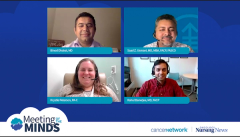
This video segment focuses on key elements of patient education and support for long-term CAR-T survivors, strategies to maintain quality of life and manage late effects, differences in supportive care needs between ide-cel and cilta-cel recipients, and approaches to fostering collaboration between academic centers and community practices for optimal long-term care.
Advertisement
Episodes in this series
Video content above is prompted by the following:
- What are the key elements of patient education and support for long-term CAR-T survivors?
- How do you help patients maintain their quality of life and manage potential late effects of treatment?
- Are there any differences in long-term supportive care needs between ide-cel and cilta-cel recipients?
- How can academic centers and community practices best collaborate to provide optimal long-term care for CAR-T patients?
- What resources or training programs have you found most beneficial for community oncologists managing CAR-T survivors?
- How do you handle the referral process for long-term follow-up between community and academic centers?
Advertisement
Related to this article
At ASTRO 2026, Suresh Rana details how AI-driven contouring accelerates care timelines, requiring rigorous team monitoring and early nursing input.
At ASTRO 2026, Dr. Erica Braschi Jordan details toxicity tracking, physical therapy referral, and quality of life in proton regional nodal irradiation.
At ASTRO 2026, Dr. Mishaal Munir details how nurse-led triage workflows and prompt symptom escalations improve care for breast cancer brain metastases.
ASTRO 2026 presenter Kayla Kafka-Peterson details an Adapt-Adopt-Build model to bridge global brachytherapy nursing gaps and standardize perioperative care.
At ASTRO 2026, Dr. Nitin Ohri details additive versus synergistic toxicities when combining radiation with novel systemic therapies in clinical trials.
APHON 2026 speaker Amy C. Haskamp, CNS, discusses tiered self-care tactics and boundaries to help pediatric oncology nurses navigate emotional distress and burnout.
At ASTRO 2026, DJohn Hillson details how early post-surgical radiation education within 6 weeks improves outcomes for head and neck cancer patients.

Jyoti Malhotra, MD, MPH, joins The Moonlight Shift to discuss first-in-human phase 1 lung cancer trials, healthcare access, and her work at Yale Cancer Center.
Advertisement
Advertisement
Trending on Oncology Nursing News
1
The Importance of Precise Clinical Communication in Oncology Nursing
2
FDA Approves Pirtobrutinib for Untreated CLL/SLL
3
Balancing Treatment Efficacy and Quality of Life in Metastatic Triple-Negative Breast Cancer
4
Prior Authorization, Costs Limit Access to Oral Blood Cancer Drugs
5