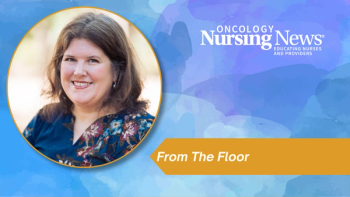
Oncology navigator Emily Beard shares insights on advocacy, the Young Survival Coalition, and dancing to sustain her career.
Emily M. Beard, BSN, RN, OCN, CBCN, BHCN, discusses the vital role of oncology nurse navigation in addressing barriers to care and improving outcomes in cancer survivorship.
On the latest episode of the Onc Nurse on Call podcast, hosts Patricia Jakel, MN, RN, AOCN, and Stephanie Desrosiers, DNP, MSN, RN, AOCNS, BMTCN, sat down with Emily M. Beard, BSN, RN, OCN, CBCN, BHCN, to explore the evolution and profound impact of oncology nurse navigation. Beard, who currently serves as an oncology survivorship navigator at the Winship Cancer Institute at Emory University, shared her journey from a community hospital to national advocacy, emphasizing that navigation is, at its heart, about being a "professional problem solver."
Beard’s path into navigation was deeply personal, sparked by her mother’s cancer diagnosis in 2005. Despite having resources and health insurance, her mother faced "analysis paralysis" when confronted with complex medical decisions.
This experience illuminated the significant barriers to care that patients face, leading Beard to become a nurse navigator at a community hospital in 2007.
Under the mentorship of the Reverend Betty Castellani, Beard learned that navigation is defined by relationships and the ability to meet a patient exactly where they are. Although clinical knowledge is essential, Beard noted that a "passion for connecting with people" is what truly drives successful patient advocacy.
During the conversation, Beard identified several key "gaps" where navigators provide essential support. She compared a new cancer diagnosis to being "dropped in a foreign country," where patients must navigate a new language and a sea of strangers while in a state of shock.
Beyond the initial diagnosis, Beard highlighted other critical transition points, as follows:
One of the most poignant moments of the episode was Beard's recollection of a young patient in her 30s who was planning a wedding. When the patient failed to show up for a chemotherapy teaching appointment, Beard used her nursing intuition to reach out directly. The patient revealed she was terrified of being a "bald bride" and feared her fiancé "didn't sign up for this.”
By taking the time to "dig a little deeper"—a luxury often unavailable to clinical providers on tight schedules—Beard was able to coordinate scalp cooling and fertility preservation. This intervention not only allowed the patient to proceed with lifesaving treatment but also addressed her long-term quality of life and family-building goals.
Beard’s work extends into national advocacy through organizations such as the Young Survival Coalition (YSC) and Living Beyond Breast Cancer. She recently participated in the YSC Research Think Tank 2.0, where she was the sole oncology nurse among 30 health care professionals tasked with setting a 10-year research agenda. Her role was to "bring the voices of so many patients forward," focusing on equity, sexual adverse effects, and fertility.
The emotional labor of oncology nursing requires intentional self-care. Beard described the importance of the "oxygen mask"—prioritizing rest, hydration, and movement. For her, this includes a weekly hip-hop dance class, which she describes as a vital outlet to "dance it out" and maintain levity.
Beard recently transitioned into a new role at Emory, helping develop a survivorship navigation program that will eventually span across all cancer disease sites. She expressed excitement about getting out of her "comfort zone" in breast and gynecological cancers to learn the unique needs of survivors across the entire oncological spectrum.
As the podcast concluded, Jakel and Desrosiers noted that Beard’s career exemplifies the privilege of journeying with patients from diagnosis through the milestones of survivorship.
Don’t forget to subscribe to Onc Nurse on Call on Apple Podcasts, Spotify, or wherever you listen to stay updated on the latest in oncology care.