Dana-Farber nurse practitioners outline ADC patient selection, sequencing, ILD surveillance, and patient education from JADPRO Live 2026.
Interviews with 15 young women with breast cancer show fertility preservation decisions unfold under time pressure and carry into survivorship.
Fertility preservation is not a single pretreatment decision but an evolving process shaped by emotional, relational, clinical and structural factors, according to a qualitative study of young women with breast cancer presented at the 2026 ASCO Quality Care Symposium.1 The authors called for oncofertility care that starts early, is tailored to each patient and continues across treatment and survivorship.
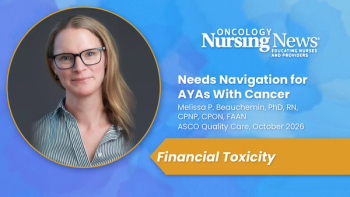
The study was led by Marcela Algave, a PhD student at Columbia University School of Nursing who previously worked as a clinical trials nurse. Senior author Melissa P. Beauchemin, PhD, RN, CPNP, CPON, FAAN, assistant professor of nursing at Columbia University School of Nursing and scientific lead for cancer care delivery research with the CUIMC Minority/Underserved NCI Community Oncology Research Program at Herbert Irving Comprehensive Cancer Center, said the work builds on Children's Oncology Group research showing gaps in fertility discussions.
"We know that we're supposed to offer fertility preservation discussions…at every initial diagnosis for a young person with cancer of reproductive age," Beauchemin said in an interview with Oncology Nursing News. "And we also know from some of the work that we've done in the Children's Oncology Group that very few actually have that discussion and offering, or at least a documented discussion."
Much of what is known comes from survivors looking back. "What was exciting about the study is that we were able to interview patients who are closer to that diagnosis," she said, noting that some participants were still receiving active treatment.
Investigators conducted semistructured interviews with English-speaking female AYAs aged 18 to 45 years who had been diagnosed with nonmetastatic breast cancer within 3 years of the interview. Participants were recruited from outpatient oncology clinics at an academic cancer center in New York City. Interviews were analyzed using conventional content analysis, with 2 team members coding and meeting regularly to support rigor.1
Of 32 eligible patients contacted, 15 completed interviews. Participants were aged 29 to 45 years; 67% were married or partnered, 60% had children before diagnosis and 33% underwent a fertility preservation procedure.1
"Most of the patients said, you know, 'I talked to my oncologist about it and they shared risks,' but…the timing was so tight," Beauchemin said. One suggestion was a person who could provide navigation support from the oncology team through the reproductive endocrinology team, a role some institutions fill with a nurse navigator.
"I think nurses play this role often even unofficially," Beauchemin said. "One of the important implications for nurses is just to be aware…that we can be the people who can listen."
She noted that not knowing what to do is a previously reported barrier to oncofertility conversations, but resources exist through online sources, social work teams and, increasingly, social media. She also emphasized that success should not be defined only by completing a procedure.
"Just because not everyone has fertility preservation…before they start treatment doesn't mean it's a failure," she said. "The real goal is to make sure that they've had time to hear it, think about it, process it, even in a short window of time."
That framing aligns with
Beauchemin acknowledged that some patients cannot pursue fertility preservation because they are clinically very ill or because of finances and logistics. "We like to fix things," she said. "But knowing that sometimes we might not be able to fix it, but that we're trying to also, from a research perspective, develop ways to improve that access."
The study was limited to 15 English-speaking participants at 1 center, and although eligibility began at age 18, all participants were aged 29 or older. The research was supported by the Reducing Health Disparities Through Informatics Pre and Postdoctoral Training Program.1
1. Algave M, Junak S, Schnall R, Beauchemin MP. Exploring fertility preservation decision-making among female AYAs with cancer: a qualitative study. JCO Oncol Pract. 2026;22(suppl):152. Presented at: 2026 ASCO Quality Care Symposium; October 16-17, 2026; Boston, MA.
2. Boyles C. To freeze or not to freeze: when is the question. Oncology Nursing News. April 24, 2026. Accessed October 29, 2026. https://www.oncnursingnews.com/view/to-freeze-or-not-to-freeze-when-is-the-question
3. Scott R. Age, parental status factors in fertility decisions in premenopausal breast cancer. Oncology Nursing News. December 26, 2025. Accessed October 29, 2026. https://www.oncnursingnews.com/view/age-parental-status-factors-in-fertility-decisions-in-premenopausal-breast-cancer