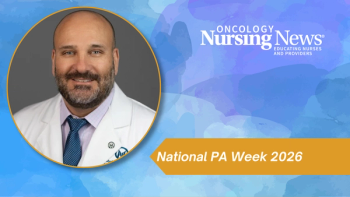
In observation of National PA Week, Moffitt PA Mark Honor discusses the expansion of APPs and key collaboration strategies for oncology nurses.
In the phase 2 EVITA trial, vitamin C did not slow clonal growth but was linked to fewer serious adverse events and longer exploratory survival.
Oral vitamin C at 1000 mg daily for 12 months did not slow clonal growth in adults with clonal cytopenia of undetermined significance (CCUS) or lower-risk myeloid malignancies, according to results of the phase 2 EVITA trial (NCT03682029) published in Cancer. However, patients who received vitamin C had fewer serious adverse events (SAEs) than those who received placebo (33% vs 57%), and an exploratory, post hoc analysis showed longer overall survival (HR, 0.35; 95% CI, 0.17-0.71; P = .0025).
The investigators described the findings as hypothesis-generating and called for a phase 3 trial.
Co-senior author Kirsten Grønbæk, MD, PhD, a clinical professor at the University of Copenhagen and Rigshospitalet, Copenhagen University Hospital, in Denmark, said in an interview with Oncology Nursing News that the results do not yet support recommending the supplement to patients, and that nurses play a central role in knowing which supplements patients choose to take anyway.
"We don't have evidence that this will help you. We don't have evidence that this will be better for your disease," Grønbæk said, describing how clinicians should frame the data for patients who ask.
CCUS is a precursor condition for myeloid malignancies, diagnosed when myeloid malignancy-related somatic mutations are found in patients with persistent unexplained cytopenia but without diagnostic morphologic findings. Patients with CCUS are typically managed with a watch-and-wait approach, as no interception strategy is currently available.
Vitamin C is a cofactor for TET enzymes, which are involved in DNA demethylation and epigenetic regulation, and TET2 mutations are common drivers of leukemia. Preclinical work suggested vitamin C may delay leukemia progression, and vitamin C deficiency is common among patients with hematologic malignancies. The research group previously reported that oral vitamin C normalized plasma levels and induced epigenetic changes in patients with myeloid cancers receiving azacitidine.
EVITA (Epigenetics, Vitamin C, and Abnormal Hematopoiesis) was an investigator-initiated, double-blind, placebo-controlled, phase 2 trial conducted at 3 sites in Denmark and 1 in the United States. Between November 1, 2017, and September 28, 2022, 109 adults were randomly assigned to oral vitamin C (ascorbic acid) 1000 mg once daily, given as two 500-mg capsules (n = 55), or matching placebo (n = 54) for 12 months, followed by long-term follow-up.
Eligible patients had CCUS; myelodysplastic syndromes (MDS) of low or very low risk by the Revised International Prognostic Scoring System; or MDS/myeloproliferative neoplasms, including chronic myelomonocytic leukemia (CMML)-0 or -1. Patients needed a somatic mutation with a variant allele frequency (VAF) of at least 5% and could not have received anticancer therapy in the preceding 6 months. People with urinary tract stones within the past year were excluded, and all other vitamin C supplementation, including multivitamins, had to be stopped during treatment.
The primary end point was the median clonal growth rate from baseline to end of treatment. Secondary end points included plasma vitamin C concentration, cytokine and chemokine levels, global DNA methylation measures, disease progression, hematologic response, and safety. Overall survival was analyzed post hoc as an exploratory end point.
No. The median clonal growth rate was 0.046 per year in the placebo group and 0.030 per year in the vitamin C group, a between-group difference of -0.016 (95% CI, -0.096 to 0.064; P = .70). These rates correspond to median proportional increases in VAF of 4.6% per year with placebo and 3.03% per year with vitamin C.
The authors noted that clonal dynamics over 1 year in this population are relatively stable, and they concluded that clonal growth rate is not a suitable surrogate end point for treatment efficacy in these patients.
At baseline, 57% of participants (62 of 109) had deficient or inadequate plasma vitamin C levels. Supplementation raised median plasma levels in the vitamin C group from 45.85 µmol/L at baseline to 81.90 µmol/L at 12 months (P < .0001), with no meaningful change in the placebo group (43.75 µmol/L vs 48.73 µmol/L; P = .88).
Six of 19 inflammatory cytokines and chemokines showed different changes between groups after correction for multiple testing. Interleukin (IL)-6, IL-10, CXCL10, macrophage colony-stimulating factor, and granulocyte colony-stimulating factor rose more with placebo than with vitamin C, whereas RANTES/CCL5 rose more with vitamin C.
Other clinical outcomes included:
Adverse events (AEs) occurred in 60% of patients in the placebo group (32 of 53) and 44% of those in the vitamin C group (24 of 55). SAEs occurred in 57% (30 of 53) vs 33% (18 of 55), respectively. Grade 3 or higher AEs occurred in 53% and 33% of patients, respectively.
Anemia (15% vs 7%), pneumonia (15% vs 2%), acute aseptic arthritis (6% vs 0%), and internal bleeding (6% vs 0%) were more frequent with placebo. Gastrointestinal AEs were more frequent with vitamin C, including diarrhea (2% vs 5%), esophagitis (0% vs 5%), and gastrointestinal infections (0% vs 4%). AEs led to discontinuation in 1 patient (2%) receiving placebo and 3 patients (5%) receiving vitamin C.
One patient in the vitamin C group developed kidney stones requiring intervention; that patient had a history of kidney stones more than a year earlier. Two deaths occurred during study treatment, both in the placebo group and both disease related.
"The number of side effects are limited with 1000 mg…. And then we had one incident of kidney stone and this was a patient that had kidney stone a long time ago," Grønbæk said.
Grønbæk emphasized that the supplement should not yet be recommended on the basis of EVITA. In a press release, she said it is "too soon to make recommendations" from these results.
For patients who decide to take vitamin C anyway, she described a screening and education conversation. "If the patient then insists that they want to take it anyway because they've seen [the] survival curve or something, then you need to find out, did they have kidney stones?" she said. "And also inform them about what are the potential side effects."
She stressed that the care team needs to know what patients are taking. "I think it's very important that we are informed. This is when things go wrong, when we're not aware what the patients are taking," Grønbæk said. "I think the most important thing is to be very open and have an open conversation with the patients about it, saying that we have no evidence that this will actually help you, but if you choose to do it anyway, please let us know."
Earlier Oncology Nursing News coverage has similarly highlighted the role of oncology teams in helping patients evaluate supplements that may interfere with treatment.
EVITA used an oral dose intended to achieve plasma saturation and support the cofactor role of vitamin C for TET2, rather than the cytotoxic effects associated with high-dose intravenous (IV) administration. A separate single-arm phase 2 study of high-dose IV vitamin C (1 g/kg 3 times weekly for 12 weeks) in 10 patients with TET2-mutated CCUS found no hematologic responses at 20 weeks.
Grønbæk said that IV approach carries a different treatment burden. "If you treat with high-dose intravenous vitamin C, you will have to come in," she said. "So it will mean a lot of hospital admission." She added that IV administration requires closer monitoring: "You have to measure things much more carefully in these situations because it is more like a drug."
Because vitamin C is excreted within about 24 hours, she explained, the EVITA team aimed for a constant level throughout the treatment year.
1. Mikkelsen SU, Al-Mousawi A, Puglisi AB, et al. Oral vitamin C supplementation in patients with clonal cytopenia of undetermined significance or lower-risk myeloid malignancies: results from EVITA, a phase 2 randomized, placebo-controlled trial. Cancer. 2026;132(19):e70549. doi:10.1002/cncr.70549
2. Gillberg L, Ørskov AD, Nasif A, et al. Oral vitamin C supplementation to patients with myeloid cancer on azacitidine treatment: normalization of plasma vitamin C induces epigenetic changes. Clin Epigenetics. 2019;11(1):143. doi:10.1186/s13148-019-0739-5
3. Can vitamin C improve outcomes in people with pre-cancer blood disorders? News release. Wiley. September 21, 2026. Accessed October 8, 2026. https://newsroom.wiley.com/press-releases/press-release-details/2026/Can-vitamin-C-improve-outcomes-in-people-with-pre-cancer-blood-disorders/default.aspx
4. Childers L. Helping patients navigate complementary treatments. Oncology Nursing News. October 19, 2022. Accessed October 8, 2026. https://www.oncnursingnews.com/view/helping-patients-navigate-complementary-treatments
5. Xie Z, Fernandez J, Lasho T, et al. High-dose IV ascorbic acid therapy for patients with CCUS with TET2 mutations. Blood. 2024;144(23):2456-2461. doi:10.1182/blood.2024024962
6. Doherty K. Large clonal hematopoiesis clones linked to shorter survival in MCL. Oncology Nursing News. May 25, 2025. Accessed October 8, 2026. https://www.oncnursingnews.com/view/large-clonal-hematopoiesis-clones-linked-to-shorter-survival-in-mcl