
Opinion|Videos|June 2, 2025
Patient Education, Shared Decision-Making, and Optimizing Care for ESR1-Mutated Breast Cancer
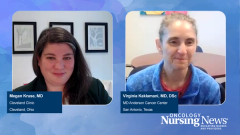
Author(s)Virginia Kaklamani, MD, DSc, Megan Kruse, MD
Panelists discuss how a multidisciplinary team approach to patient education and medication management is crucial for ensuring adherence and optimal outcomes with oral medications like elacestrant.
Advertisement
Episodes in this series
Video content above is prompted by the following:
Clinical Brief: Implementation and Patient Support Strategies
Main Discussion Topics:
- Role of multidisciplinary care team in patient education and support
- Importance of early intervention for side effect management
- Strategies for ensuring medication adherence with oral therapy
- Value of nurse coordinators and pharmacist integration
- Flexible approaches, including chemotherapy-endocrine therapy sequencing
Key Points for Physicians:
- Team-based approach crucial for successful oral therapy management
- Early touchpoints in first month prevent long-term discontinuation
- Patient education impacts adherence and anxiety management
- Consider short-course chemotherapy followed by endocrine therapy in select cases
- Communication protocols essential for optimal outcomes
The discussion highlighted that successful implementation of oral targeted therapies requires comprehensive support systems and proactive communication strategies to ensure optimal patient outcomes and treatment adherence.
Advertisement
Related to this article

Dr. Andrew Pecora on leading the first IV oncolytic virus trial, building a top-50 cancer center, and using AI to fix the cost of cancer care.
In the phase 2 EVITA trial, vitamin C did not slow clonal growth but was linked to fewer serious adverse events and longer exploratory survival.
In observation of National PA Week, Moffitt PA Mark Honor discusses the expansion of APPs and key collaboration strategies for oncology nurses.
Beth Faiman details the new IMS/IMWG consensus definition of cure for multiple myeloma, requiring 5 years of treatment-free remission.
Oncology clinicians gathered to review relapsed CLL care options, CAR T-cell trial updates, and advanced practice provider roles.
At ASTRO 2026, Suresh Rana details how AI-driven contouring accelerates care timelines, requiring rigorous team monitoring and early nursing input.
At ASTRO 2026, Dr. Erica Braschi Jordan details toxicity tracking, physical therapy referral, and quality of life in proton regional nodal irradiation.
At ASTRO 2026, Dr. Mishaal Munir details how nurse-led triage workflows and prompt symptom escalations improve care for breast cancer brain metastases.
Advertisement
Advertisement
Trending on Oncology Nursing News
1
FDA Grants Accelerated Approval to Dostarlimab in dMMR Rectal Cancer
2
How AI Could Ease the Cost Crisis in Cancer Care
3
Anktiva Plus BCG: Telling Expected Immune Effects From Red Flags
4
Automated Breast Ultrasound Tied to Fewer False-Positives in Dense Breasts
5