FDA approves sNDA for taletrectinib (Ibtrozi) in ROS1+ NSCLC with updated DOR of nearly 50 months.
At WCLC 2026, Kaitlyn Gregory details key oncology nursing insights into exercise, caregiver stress, screening models, and APP-led supportive care.
At the International Association for the Study of Lung Cancer (IASLC) 2026 World Conference on Lung Cancer (WCLC 2026), thoracic oncology multidisciplinary leaders convened to address evolving paradigms in supportive care, symptom control, and care delivery models.
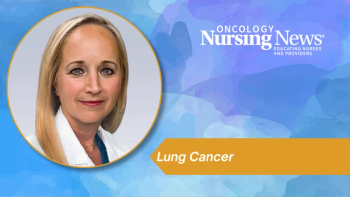
Co-chairing the session "Exercise, Symptom Control, and Psychological Support: Moving Towards Better Outcomes," Kaitlyn Gregory, DNP, ACNPC-AG, FNP-BC, RNFA, Director of Advanced Practice Providers and Thoracic Oncology Nurse Practitioner at Fox Chase Cancer Center in Philadelphia, highlighted essential frontline clinical takeaways for oncology nurses and advanced practice providers (APPs).
In an interview with Oncology Nursing News, Gregory synthesized findings from her session and shared actionable strategies for embedding evidence-based supportive care into routine clinical workflows.
Her session featured research spanning prehabilitation, electronic patient-reported outcomes (ePROs), and dyadic psychological support, and Gregory emphasized that a central message of the panel was recognizing the long-lasting physical and psychological impact of thoracic cancer therapy.
"The main takeaway I got from all the amazing presenters on this panel was the importance of recognizing the impact of exercise for patients ... before, during, and after treatment," Gregory stated.
A major focus of session MO08 involved dyadic research, including a randomized self-management trial led by City of Hope researchers and an investigation into post-surgical distress. Gregory noted that clinician awareness frequently falters regarding caregiver burnout.
"Several of the presenters also really stressed the stress that this treatment has not just on the patients but on the caregivers as well," she explained. "That's really something that we overlook sometimes as clinicians, the stress it causes on the family unit."
Gregory emphasized that these findings necessitate extending supportive resources to caregivers well into post-operative survivorship.
As lung cancer treatment regimens become increasingly complex—incorporating biomarker-driven targeted therapies, novel immunotherapies, and trimodality surgical protocols—delivering comprehensive care requires dismantling institutional silos.
"I think the most important thing is overcoming these systemic barriers is really deploying the multi-disiplinary team," Gregory stressed. "We really cannot be successful if we practice in a silo. We have to really lean on our colleagues in social work, nursing colleagues, physical therapy, occupational therapy, speech therapy [and] pain and palative care colleagues as well.”
Gregory observed that oncology care is inherently collaborative due to its complexity. Attempting to manage supportive care independently is "a recipe for failure," making a whole-person care approach essential as therapies grow more specialized.
Early detection and health equity in screening access remained prominent themes throughout WCLC 2026. Gregory highlighted a poster presentation involving Vanderbilt University and community hospital collaborators that evaluated screening eligible women for lung cancer during routine mammography visits.
"They screened eligible women for lung cancer by targeting them at the time of their mammogram," Gregory said. "They were able to take eligible women... by their intake on their mammogram form and then get them enrolled into lung cancer screening, which I thought was really a unique take on kind of partnering with other disease lines, I thought it was just ingenious.”
Gregory also underscored embedding tobacco treatment across the entire continuum of care. Clinicians must actively combat smoking-related stigma, which frequently deters individuals from seeking timely diagnostic evaluation.
Gregory’s session presented clinical evidence regarding toxicity control, including late-breaking data from the Lungfit crossover trial, community exercise outcomes in PRO-ACTIVATE, virtual interventions for older adults in ROAR-LCT, in-hospital ePRO monitoring, immune-related adverse event (irAE) temporal dynamics, and paclitaxel-induced neuropathy prevention using Goshajinkigan in the phase 2 OLCSG2101 trial.
Navigating these therapeutic toxicities reinforces the role of APPs and oncology nurses at the forefront of care delivery. Gregory highlighted that APPs are uniquely positioned as initial touch points in diagnostic navigation and mediators during survivorship handoffs.
"I don't think it should be put solely on the patient to be kind of carrying that burden of awareness ... for basically the rest of their life," Dr. Gregory concluded. "We as APPs can be mediators in the community to make sure that they're handed off well in survivorship.”