





















































Hematology
Latest News
Advertisement
Advertisement

The introduction of PET scans was a major advancement in the Hodgkin lymphoma treatment paradigm; however, some questions cannot be answered with that test, such as identifying which patients with PET-negative disease will relapse.
Over the last few weeks, the FDA was busy reviewing and approving new cancer treatments.
The FDA has added 3 months to the review period for a biologics license application (BLA) for lisocabtagene maraleucel (liso-cel) for the treatment of adult patients with relapsed/refractory large B-cell lymphoma (LBCL) after at least 2 prior therapies. The extension will allow the agency to review additional data provided by Bristol Myers Squibb, the manufacturer of the anti-CD19 CAR T-cell therapy.

The FDA approved daratumumab and hyaluronidase-fihj (Darzalex Faspro) for the treatment of adults with newly diagnosed relapsed/refractory multiple myeloma.
The FDA granted priority review to a new drug application for CC-486 for the maintenance treatment of adult patients with acute myeloid leukemia based on efficacy and safety results from the pivotal phase III QUAZAR AML-001 study.

Combined treatment with brentuximab vedotin and nivolumab could provide a more tolerable option for older patients with classical Hodgkin lymphoma.

CAR T-cell therapy is poised to have a significant impact on the treatment of patients with relapsed/refractory multiple myeloma, says Nina Shah, MD.
The FDA approved ibrutinib (Imbruvica) plus rituximab (Rituxan) as a frontline therapy for adults with chronic lymphocytic leukemia (CLL) or small lymphocytic leukemia (SLL).

In light of the COVID-19 pandemic, transplant-eligible patients with cancer are undergoing careful assessment to determine whether they should proceed with the procedure or receive additional consolidation therapy to buy time, according to Naval G. Daver, MD.
Patients at risk of developing thrombosis should receive anticoagulants, in the form of Xa inhibitors and, if necessary, andexanet alfa (Andexxa) or prothrombin concentrates to control excessive bleeding, explained Alvin H. Schmaier, MD.

Breast implant-associated anaplastic large-cell lymphoma (BIA-ALCL) is a relatively newly discovered illness, which leaves many questions for both patients and providers.
The FDA has granted 2 Orphan Drug Designations to ALPN-101 for the prevention and treatment of acute graft-versus-host-disease (GVHD), according to Alpine Immune Sciences, Inc., the company developing the first-in-class selective dual T cell costimulation inhibitor.
The FDA has granted an orphan drug designation to umbralisib for the treatment of patients with follicular lymphoma, according to TG Therapeutics, Inc, the developer of the dual inhibitor of PI3K-delta and CK1-epsilon.
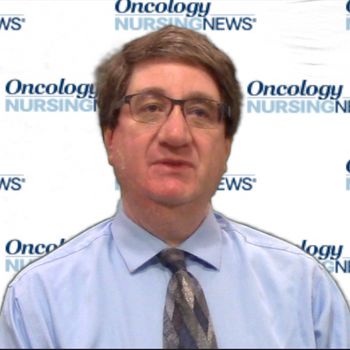
Healthcare value has been defined as outcomes divided by costs, but it's not always that simple, especially in treating patients with cancer, explained Stuart L. Goldberg, MD, Chief, Division of Outcomes and Value-Based Care at the John Theurer Cancer Center and associate professor of medicine at Seton Hall School of Medicine.

Electronic medical records are helpful when treating patients with CAR T-cell therapy. However, many systems still are not designed for this type of treatment and need to be improved.
ASCO recently issued practice guidelines for pathologic diagnosis of breast implant-associated anaplastic large-cell lymphoma (BIA-ALCL) to help healthcare practitioners better this rare disease.
The Food and Drug Administration (FDA) approved isatuximab-irfc (Sarclisa) plus pomalidomide and dexamethasone for the treatment of adults with multiple myeloma who had 2 or more prior therapies, including lenalidomide and a proteasome inhibitor.

The FDA granted priority review to a biologics license application for tafasitamab in combination with lenalidomide for the treatment of patients with relapsed or refractory diffuse large B-cell lymphoma.

Autologous stem cell transplantation continues to have a significant role for patients with high-risk myeloma; however, research efforts continue to focus on novel induction, consolidation, and maintenance regimens, as well as the use of tandem transplant, explained Andrew Branagan, MD.

Graft-versus host disease has improved in recent years, but there is still more work to be done.
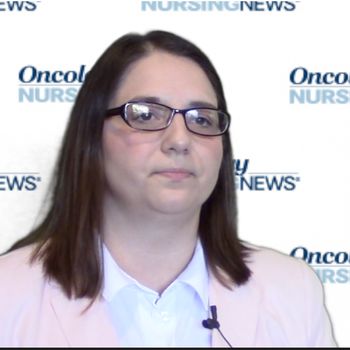
Electronic medical records (EMRs) are crucial for nurses to track adverse events and other important information for patients undergoing CAR T-cell therapy, explained Andrea Price, APN, associate director for clinical research at Washington University School of Medicine.
The FDA has granted a priority review designation to a supplemental new drug application (sNDA) for selinexor (Xpovio) as a treatment for adult patients with relapsed/refractory diffuse large B-cell lymphoma (DLBCL), not otherwise specified, who have received ≥2 prior therapies.
Clinicians should consider patient-related factors, disease-related factors, and prior therapies before deciding on a treatment regimen for patients with relapsed/refractory myeloma.
The FDA granted a priority review for the biologics license application for lisocabtagene maraleucel (liso-cel), to treat adults with relapsed or refractory large B-cell lymphoma.
Advertisement
Advertisement
Trending on Oncology Nursing News
1
Male Breast Cancer: Managing Endocrine Therapy and Survivorship Care
2
AI Breast Cancer Risk Models Guide Triage and Nurse-Led Patient Counseling
3
Nurses Can Catch Breast Cancer Lymphedema Early With Baseline BIS
4
Sunvozertinib Now Available in US for Pretreated EGFR Exon 20+ NSCLC
5