



















































While the FDA currently has no plans to ban textured breast implants, the agency did outline steps to ensure providers and patients are educated on breast implant-associated anaplastic large cell lymphoma (BIA-ALCL).
While the FDA currently has no plans to ban textured breast implants, the agency did outline steps to ensure providers and patients are educated on breast implant-associated anaplastic large cell lymphoma (BIA-ALCL).
The FDA has approved a supplemental new drug application (sNDA) for ivosidenib (Tibsovo) as a single agent for the first-line treatment of adult patients with IDH1-mutant acute myeloid leukemia (AML), as detected by an FDA-approved test, who are ≥75 years old or are ineligible to receive intensive chemotherapy.

Monoclonal antibodies and CAR-T cell therapy is changing the way that patients with myeloma are treated.

An audit of one institution's administration shows that adhering to a detailed list of tasks prevents missed steps in a complicated process.
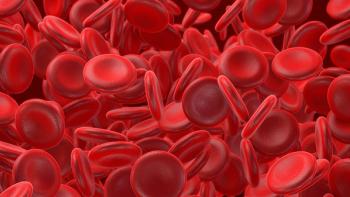
CAR-T cell therapy is greatly improving the outcomes of patients with blood cancers, but not without its own set of toxicities.

The Food and Drug Administration decided to keep the device on the market, but wants to know more about the illnesses they may potentially be linked to.
How can disparities be mitigated when it comes to giving patients the newest and most innovative cancer treatments?
The FDA has granted a breakthrough therapy designation to the combination of ivosidenib (Tibsovo) and azacitidine for the treatment of newly diagnosed patients with IDH1-mutant acute myeloid leukemia (AML) ≥75 years old or are ineligible for intensive induction chemotherapy.
All patients with myeloma should be treated for bone disease.

The FDA has granted a priority review designation to a supplemental new drug application (sNDA) for the R2 regimen of lenalidomide (Revlimid) plus rituximab (Rituxan) for use in patients with previously treated follicular lymphoma and marginal zone lymphoma (MZL).
CAR T-cell therapy is producing durable responses in many subgroups of patients. However, the treatment could also come with some major adverse events.
The FDA granted a priority review to ivosidenib (Tibsovo) for the treatment of patients with newly diagnosed acute myeloid leukemia (AML) with an IDH1 mutation who are not eligible for standard therapy.
The FDA granted a priority review to polatuzumab vedotin in combination with bendamustine plus rituximab (Rituxan) for the treatment of patients with relapsed or refractory diffuse large B-cell lymphoma (DLBCL).
The recent approval of ibrutinib plus obinutuzumab is a major advancement in the chronic lymphocytic leukemia space.
The Food and Drug Administration (FDA) approved a split-dosing regimen for daratumumab (Darzalex) for the treatment of patients with multiple myeloma.

$200,000 V Scholar Grant Awarded for Research Related to Blood Cancers
The FDA has approved the combination of ibrutinib (Imbruvica) and obinutuzumab (Gazyva) for the first-line treatment of patients with chronic lymphocytic leukemia (CLL) or small lymphocytic lymphoma (SLL).
The FDA has granted umbralisib (TGR-1202) a breakthrough therapy designation for the treatment of adult patients with marginal zone lymphoma (MZL) who have received 1 prior anti-CD20 regimen, according to TG Therapeutics, Inc., the developer of the PI3K-delta inhibitor.
The FDA has granted a breakthrough therapy designation to zanubrutinib (BGB-3111) for use in some patients with mantle cell lymphoma.
Axicabtagene ciloleucel (axi-cel) elicited a 2-year overall survival (OS) rate of 51% in patients with refractory large B cell lymphoma, representing a clear plateau in the survival curve.

The median overall survival for patients with chronic lymphocytic leukemia has more than tripled since the 1970s, primarily due to an ever-expanding armamentarium of novel agents and earlier diagnosis.

The anti-BCMA CAR T-cell therapy bb21217 demonstrated an objective response rate of 83.3%, with a very good partial response or better rate of 75% in patients with heavily pretreated relapsed/refractory multiple myeloma, according to initial results from a phase I study presented at the 2018 ASH Annual Meeting.
The FDA has approved ravulizumab-cwvz (Ultomiris) as an injection treatment of adult patients with paroxysmal nocturnal hemoglobinuria (PNH), a rare blood disorder that leads to hemolysis.

In patients with chronic lymphocytic leukemia (CLL) or small lymphocytic lymphoma (SLL), high doses of curcumin and vitamin D could help stabilize the disease, according to new research presented at the 2018 American Society of Hematology’s Annual Meeting in San Diego.
The FDA approved tagraxofusp-erzs (Elzonris) infusion for the treatment of blastic plasmacytoid dendritic cell neoplasm (BPDCN) in adults and in pediatric patients aged 2 or older.