
Dr. Wendy Harpham reflects on her journey as a physician and patient, emphasizing precise clinical communication in oncology care.
Dr. Wendy Harpham reflects on her journey as a physician and patient, emphasizing precise clinical communication in oncology care.
FDA approves pirtobrutinib for untreated CLL/SLL without 17p deletion based on BRUIN CLL-313 data. Read key nursing safety takeaways.

Most oral blood cancer drug prescriptions were first rejected by insurers, and fill rates fell sharply when out-of-pocket costs topped $175.
At ASTRO 2026, Suresh Rana details how AI-driven contouring accelerates care timelines, requiring rigorous team monitoring and early nursing input.
At ASTRO 2026, Dr. Erica Braschi Jordan details toxicity tracking, physical therapy referral, and quality of life in proton regional nodal irradiation.
At ASTRO 2026, Dr. Mishaal Munir details how nurse-led triage workflows and prompt symptom escalations improve care for breast cancer brain metastases.
ASTRO 2026 presenter Kayla Kafka-Peterson details an Adapt-Adopt-Build model to bridge global brachytherapy nursing gaps and standardize perioperative care.
Beth Faiman, PhD, and Sikander Ailawadhi, MD, discuss clinic workflows, safety checks, and at-home dosing potential for on-body isatuximab.
Solid tumor history, cardiopulmonary symptom burden, and age-dependent chemo intensity predicted 30-day readmission or death after AML induction.
At ASTRO 2026, Dr. Nitin Ohri details additive versus synergistic toxicities when combining radiation with novel systemic therapies in clinical trials.
APHON 2026 speaker Amy C. Haskamp, CNS, discusses tiered self-care tactics and boundaries to help pediatric oncology nurses navigate emotional distress and burnout.
For Gynecologic Cancer Awareness Month, Amy Schultz, RN, details symptom identification, barrier mitigation, and caregiver support in oncology care.
At ASTRO 2026, DJohn Hillson details how early post-surgical radiation education within 6 weeks improves outcomes for head and neck cancer patients.

Jyoti Malhotra, MD, MPH, joins The Moonlight Shift to discuss first-in-human phase 1 lung cancer trials, healthcare access, and her work at Yale Cancer Center.

Vanderbilt APPs discuss PSA screening, multidisciplinary care, toxicity management, and genetic testing for Prostate Cancer Awareness Month.

Take our quick survey to help Oncology Nursing News improve how we deliver updates across web, video, email, social media, and podcasts.
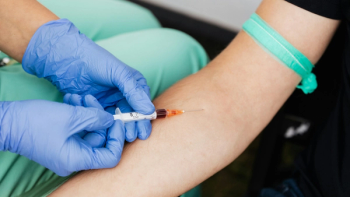
An FDA advisory panel voted to approve GRAIL's Galleri multi-cancer early detection test for adults 50+. Read key oncology nursing takeaways.

Oncology nurse April Fowler shares her personal stage 4 cancer journey, reflecting on clinical empathy, patient advocacy, and oncology endurance.
Dr. Jason Konner discusses psilocybin, clinician burnout, CIPN prevention, and safety protocols for oncology nurses and care teams in cancer care.
Non-CME PER® Podcast

FDA approves belzutifan with lenvatinib for advanced clear cell RCC after PD-1/PD-L1 inhibitor failure. Review LITESPARK-011 data and nursing takeaways.
ANA President Jennifer Mensik Kennedy outlines systemic nurse fatigue mitigation policies, emphasizing patient safety and acuity across oncology care.

From ICN 2026, Heather Jackson and Ashley Johnson detail APP breast care access models, global cancer pain barriers, and burnout mitigation tactics.
FDA approves lirafugratinib (Lyrfigtu) for FGFR2+ cholangiocarcinoma. Review REFOCUS trial data, 70 mg daily dosing, and nursing safety guidelines.
Beth Faiman, PhD, and Sikander Ailawadhi, MD, discuss clinical trials and nursing impacts of on-body isatuximab delivery in multiple myeloma.
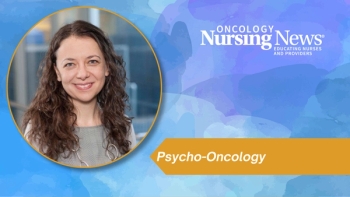
Yesne Alici, MD, of Memorial Sloan Kettering Cancer Center discusses key delirium screening, patient capacity, and bioethics in oncology nursing care.

A nurse-led support program significantly reduces death anxiety in women with breast cancer on hormonal therapy, study finds.
FDA approves lutetium lu 177 dotatate (Bravnetsa) as bioequivalent to Lutathera for GEP-NETs. Review key nursing takeaways and safety guidelines.
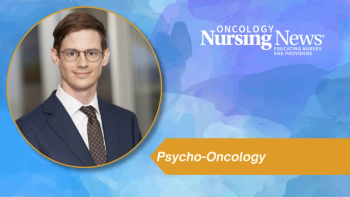
Erik Bengtsen, MD, of Memorial Sloan Kettering Cancer Center, discusses psilocybin research, demoralization, and psychopharmacology in oncology care.
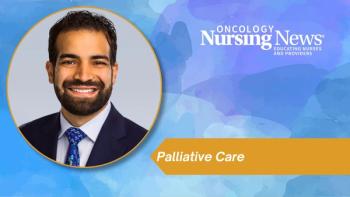
Ramy Sedhom, MD, of Penn Medicine Princeton Health discusses blending palliative care with psycho-oncology to treat patient distress in oncology care.