

AI-driven decision support can ease oncologists’ workloads and streamline care without reducing autonomy.
AI-driven decision support can ease oncologists’ workloads and streamline care without reducing autonomy.

CRS and ICANS were observed in 48% and 16%, respectively, of patients with ES-SCLC who received tarlatamab, according to real-world data.

A network to connect patients with unused medications with patients in need brought $18 million of free cancer medication while reducing drug waste.

In the phase 3 SURPASS-ET trial, ropeginterferon alfa-2b outperformed anagrelide as second-line therapy for high-risk essential thrombocythemia.

Heather J. Jackson, PhD, APRN, FNP-BC, NEA-BC, FAA-NP, shared a review of supportive oncology practices at the 2025 School of Nursing Oncology.

The addition of atezolizumab to chemoradiation led to meaningful improvements to quality of life for patients with small cell lung cancer.

Heather Jackson, PhD, APRN, FNP-BC, NEA-BC, FAA-NP, explains the utility of a holistic approach to oncology care.

An LED-based intraoral device for photobiomodulation therapy was safe and reduced severe oral mucositis in patients with head and neck cancers.
Off-the-shelf mosunetuzumab/polatuzumab vedotin produced durable responses with manageable safety in BTK inhibitor–exposed relapsed/refractory MCL.

Zidesamtinib, a brain-penetrant, TRK-sparing ROS1 TKI, showed activity and manageable safety in pretreated patients with advanced ROS1+ NSCLC.

Mosunetuzumab plus polatuzumab vedotin increased PFS and response rates vs R-GemOx in transplant-ineligible large B-cell lymphoma.
At SOHO 2025, Lorenzo Falchi, MD, highlighted the critical role of nurses in monitoring and educating patients on toxicities from novel lymphoma therapies.
FLAURA2 data show osimertinib plus chemotherapy significantly improves overall survival vs osimertinib alone in frontline EGFR+ advanced NSCLC.

Lutetium Lu 177 dotatate was linked with partial responses in patients with metastatic bronchopulmonary neuroendocrine tumors, per real-world data.
Benjamin Besse, MD, PhD, shares AE management strategies for amivantamab/lazertinib in EGFR-positive NSCLC following CHRYSALIS-2 results.

Tepotinib was associated with frequent but manageable adverse events in MET exon 14–positive NSCLC, with peripheral edema most common.
Ghayas C. Issa, MD, MS, discusses key adverse events of menin inhibitors in NPM1-mutated and KMT2Ar AML.
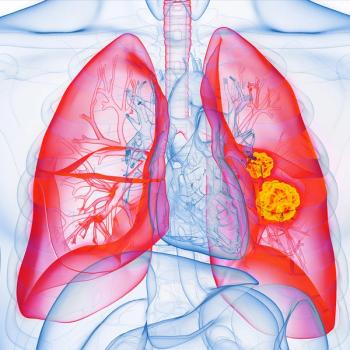
Adding ivonescimab to chemotherapy improved PFS for patients with EGFR-mutated non–small cell lung cancer after treatment with a third-generation TKI.

Expert Kelsey Martin shares nursing insights on balancing glucose control and GI side effects when caring for patients on PI3K and AKT inhibitors.
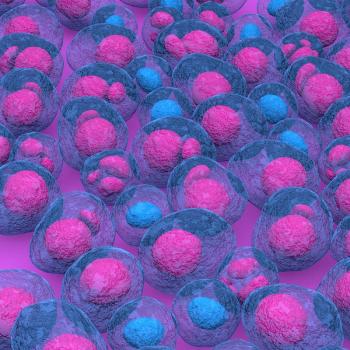
New AQUILA data show PFS improvement in patients with smoldering multiple myeloma who were treated with subcutaneous daratumumab vs active monitoring.
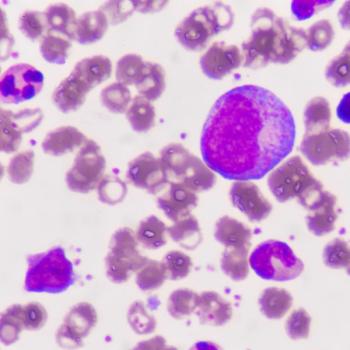
Mortality, progression, and venous thromboembolism were among outcomes improved for patients with polycythemia vera taking a GLP-1a.
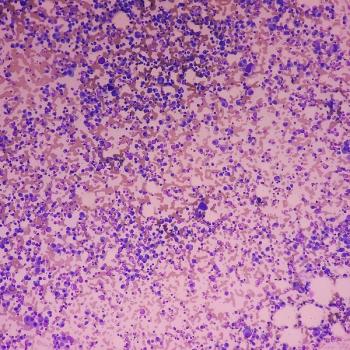
Patients with intermediate- or high-risk MDS experienced a higher modified overall response rate with the venetoclax/azacitidine vs placebo/azacitidine.

Nurses must stay up to date on novel agents and their toxicities to properly monitor for and manage immune effector cell-associated neurotoxicity syndrome.
The role of nurses and APPs is crucial to ensuring patients with cancer can receive newer therapies, shares David A. Braun, MD, PhD.
Nurse practitioner Beth Faiman shares strategies to reduce infection risk in patients receiving bispecific antibodies for multiple myeloma.
CRS is a common but manageable toxicity of CAR T-cell therapy and bispecific antibodies. Learn strategies to identify and manage this adverse effect.

Paolo Tarantino, MD, PhD, discusses ADC structure, toxicity, and nursing consideration for the treatment of patients with breast cancer.
Nurse practitioner Beth Faiman outlines nursing strategies to monitor, assess, and manage toxicities associated with talquetamab in multiple myeloma.
Beyond administering CAR T-cell therapy and bispecifics, oncology nurses must apply proactive, supportive care and an understanding of complex treatments.
David A. Braun, MD, PhD, explained that personalized cancer vaccines can be associated with toxicities typical of both vaccines and immunotherapies.