

Expert advice for administering and monitoring liso-cel in patients with follicular lymphoma.
Expert advice for administering and monitoring liso-cel in patients with follicular lymphoma.

The microbiota-based therapy MaaT013 showed promising efficacy and manageable safety in those with acute GVHD with gastrointestinal involvement.

Look back at the top 5 updates for oncology nurses and advanced practices providers published in 2025.

Melinda Mayorga, RN, MSN, CNS, AGCNS-BC, OCN, discusses end-of-life care from a multidisciplinary perspective.

Oncology nurses and APPs are key players in patient education on precision medicine.
Lillian Rodich, PA-C, MPH, discusses how integrative oncology can give patients practical strategies for managing symptoms, regardless of financial barriers.

Danielle Blair, RN, BSN, OCN, CCRP, explains what her role as an adolescent and young adult nurse navigator in oncology entails.
Kristin Daly, MSN, ANP-BC, AOCNP, shares advice for preparing patients for possible adverse effects outside of clinic hours.

Emily Shelby, MSN, FNP-C, emphasized that referrals to other specialties is key to managing heavily pretreated patients with metastatic colorectal cancer.

Jillian Thompson, MSN, ANP-BC, AOCNP, discusses how COCOON data improve toxicity management for amivantamab/lazertinib in frontline EGFR-positive NSCLC.
Here are 5 presentations that oncology APPs should know about, from patient management to practice management.
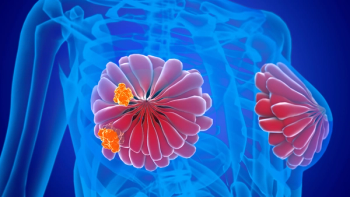
Kristi Orbaugh, MSN, RNP, AOCN, AOCNP, shared the key toxicities of each CDK4/6 inhibitor and how to monitor for them.

Catherine Boyles, RN, OCN, explains how to help patients help themselves when preparing for appointments.

Laura J. Zitella, MS, RN, ACNP-BC, AOCN, explains that later cytopenias should be monitored in patients undergoing CAR T-cell therapy.

Daniel Glidden, MS, PA-C, discusses key data oncology APPs should be aware of and how to start incorporating exercise in cancer care.

Using gender-neutral language is the first step in making a safe space for LGBTQIA+ patients with cancer, explained Al Asante-Facey, PA, MBA.

Supervised physical activity, while feasible, was not shown to affect quality of life or fatigue in patients with metastatic cancer.

Dermatitis and lymphedema are among the most pertinent adverse effects of radiation to the breast, according to Alexa M. Lantz, MSPAS, PA-C.

La-Urshalar Brock, FNP-BC, CNM, describes tactics for managing dermatologic AEs in patients with breast cancer as part of a multidisciplinary care team.

A patient with breast cancer and generalized anxiety disorder was able to avoid an unnecessary mastectomy with virtual reality, said Kelly Preti, DNP.

Data from a large prospective study identified male and older patients as being more likely to develop CIP and 34% of cases to become chronic.

A preliminary analysis of a prospective study of patients with solid tumors identified subgroups at risk of depressive symptoms via patient-report outcomes.

Ponsegromab increased body weight in patients with cancer-associated cachexia, yielding greater improvement in those who received ponsegromab previously.
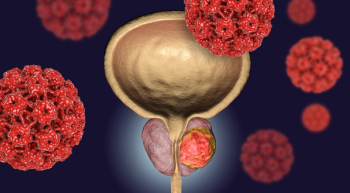
Patient-reported outcomes showed that health-related QOL stayed at baseline for patients with HRRM-positive mHSPC receiving a niraparib regimen.
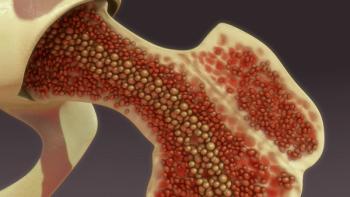
Chemo-induced myelosuppression can affect patients’ ability to do daily tasks, and management varies by patient, treatment regimens, locations, and more.
On this episode of Onc Nurse On Call, Kristin Daly, MSN, ANP-BC, AOCNP, discusses practical cancer care strategies in the age of immunotherapy.

Learn the critical factors in determining prophylaxis for venous thromboembolism, a frequent and serious complication for patients with cancer.

A network to connect patients with unused medications with patients in need brought $18 million of free cancer medication while reducing drug waste.
In the phase 3 SURPASS-ET trial, ropeginterferon alfa-2b outperformed anagrelide as second-line therapy for high-risk essential thrombocythemia.
Cassie A. Gray, MS, RN, OCN, CHPN, explains how early palliative care integration benefits patients with advanced cancer.