

Cervical cancer survivors who regularly engage in sex or use vaginal dilators report lower levels of vaginal shortening.
Cervical cancer survivors who regularly engage in sex or use vaginal dilators report lower levels of vaginal shortening.

Lynda Balneaves, RN, PhD, provides insights into the new SIO/ASCO guidelines that support mindfulness-based interventions for patients with cancer.

Stronger interventions are needed to improve adjuvant treatment rates among breast cancer survivors.

Effective interventions exist for cancer-related sexual dysfunction, but higher-quality research is still needed to optimize management.

An initiative in Florida will monitor cancer recurrence at a state-level, setting the bar for recurrence data collection and research.

Mary Katherine Montes de Oca, MD, discusses the potential benefit of cryocompression therapy in preventing peripheral neuropathy in patients with gynecologic cancers who are receiving chemotherapy.

A study in the Oncology Nursing Forum highlights which factors are associated with positive psychology and symptom burden in colorectal cancer survivors.

Heather Jackson, PhD, FNP-BC, NEA-BC, FAANP, provides a case-based perspective on the benefit of auricular acupuncture as a tool for managing cancer pain.

An analysis of 141 children who had prenatal exposure to maternal cancer showed promising cognitive and behavioral functions at age 9 years.

Ellen Miller, MSN, FNP-BC, a nurse practitioner who specializes in survivorship care, underscores what conversations surrounding fertility and pregnancy may look like after radiation.

Individuals with AML who underwent a bone marrow transplant are at an increased risk of developing subsequent neoplasms, and other chronic health conditions.

A study presented at the 2022 World Conference on Lung Cancer explored the experiences of patients who received checkpoint inhibition therapy for non–small cell lung cancer.

Michelle Mollica, PhD, MPH, RN, OCN, senior advisor in the NCI Office of Cancer Survivorship, discusses different long-term care considerations for nurses caring for patients with cancer.

Childhood cancer survivors may benefit from high-risk obstetric care despite being able to conceive and give birth safely.
Oncology nurses are key players in promoting health heart practices after a patient finishes cancer treatment.

Some oncology nurses are leading the improvement of survivorship care, a field that is becoming increasingly important in the world of cancer.

From diagnosis to post-treatment, survivors should have access to resources that help them navigate through their cancer journey.

Colleen O’Leary, MSN, RN, AOCNS, teaches nurses how to employ compassion and professionalism to improve quality of life for survivors with complex challenges.

Radiotherapy treatments for Hodgkin lymphoma may raise the risk of certain breast cancer subtypes, a study of data on women survivors from the Surveillance, Epidemiology, and End Results (SEER) registries revealed.

Survivors of endometrial cancer are at higher risk for long-term cardiovascular problems such as phlebitis, thrombophlebitis, pulmonary heart disease, hypotension and atrial fibrillation.
Caregivers of cancer survivors have unique and specific needs as their loved ones with cancer enter into survivorship care.
Nina Kaden-Lottick describes some common challenges in survivor care.

Mary McCabe, director, Cancer Survivorship Initiative, Memorial Sloan Kettering Cancer Center, discusses the evolution of survivorship care.

Susan Krigel, PhD, psychologist at Midwest Cancer Alliance, the outreach arm of The University of Kansas Cancer Center, discusses fear of recurrence among cancer survivors.

For patients dealing with cancer, a daily dose of inspiration may make a big difference in their outlook on life.

Dana Bushman, a certified yoga instructor, discusses the benefits of yoga for a patient, survivor or caregiver.

Tara Sanft, MD, assistant professor of medicine (medical oncology), medical director, Adult Survivorship, Yale Cancer Center Survivorship Clinic, discusses Yale's survivorship program, which is composed of three clinics.
Patricia Ganz, MD, UCLA Jonsson Comprehensive Cancer Center, discusses palliative care and survivorship care
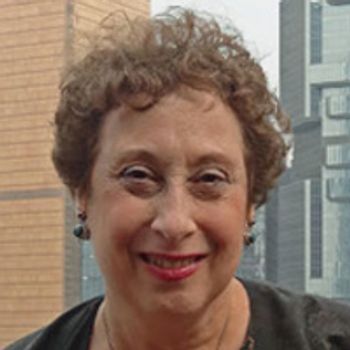
Leslie R. Schover, PhD, clinical psychiatrist, professor, behavioral science, The University of Texas MD Anderson Cancer Center, discusses low sexual desire in breast cancer survivors.