
Opinion|Videos|September 3, 2024
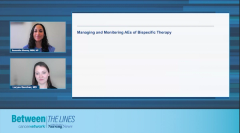
Managing GPRC5D Therapy: Unique AE Challenges and Patient Preparation
Author(s)Larysa Sanchez, MD, Samantha Shenoy, MSN, NP
Experts address the unique challenges in managing adverse events associated with GPRC5D therapies compared to other cancer treatments, while Samantha will discuss strategies for preparing and educating patients undergoing GPRC5D therapy.
Advertisement
Episodes in this series
Video content above is prompted by the following:
- What are some of the unique challenges in managing adverse events associated with GPRC5D therapies compared to other cancer therapies?
- How do you prepare patients who are going to receive GPRC5D therapy? What are you telling them?
Advertisement
Related to this article

FDA approves pirtobrutinib for untreated CLL/SLL without 17p deletion based on BRUIN CLL-313 data. Read key nursing safety takeaways.

Most oral blood cancer drug prescriptions were first rejected by insurers, and fill rates fell sharply when out-of-pocket costs topped $175.

At ASTRO 2026, Suresh Rana details how AI-driven contouring accelerates care timelines, requiring rigorous team monitoring and early nursing input.
At ASTRO 2026, Dr. Erica Braschi Jordan details toxicity tracking, physical therapy referral, and quality of life in proton regional nodal irradiation.

At ASTRO 2026, Dr. Mishaal Munir details how nurse-led triage workflows and prompt symptom escalations improve care for breast cancer brain metastases.

ASTRO 2026 presenter Kayla Kafka-Peterson details an Adapt-Adopt-Build model to bridge global brachytherapy nursing gaps and standardize perioperative care.

Beth Faiman, PhD, and Sikander Ailawadhi, MD, discuss clinic workflows, safety checks, and at-home dosing potential for on-body isatuximab.

Solid tumor history, cardiopulmonary symptom burden, and age-dependent chemo intensity predicted 30-day readmission or death after AML induction.
Advertisement
Advertisement
Trending on Oncology Nursing News
1
FDA Approves Pirtobrutinib for Untreated CLL/SLL
2
Prior Authorization, Costs Limit Access to Oral Blood Cancer Drugs
3
Outlining Tiered Self-Care Plans for Oncology Nurses
4
Tailoring Toxicity Monitoring for ADCs in Metastatic Triple-Negative Breast Cancer
5