Adding atezolizumab to adjuvant FOLFOX halved the risk of recurrence or death in ATOMIC, with more grade 3 to 4 adverse events.

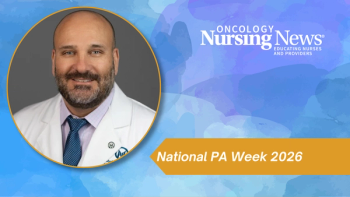
In observation of National PA Week, Moffitt PA Mark Honor details top-of-license nursing collaboration and outpatient end-stage hematology care.
In observation of National Physician Assistant (PA) Week, healthcare institutions are highlighting the clinical partnerships between PAs and oncology nursing staff. As treatment regimens grow increasingly complex and patient volumes expand nationwide, interprofessional collaboration between Advanced Practice Providers (APPs) and oncology nurses serves as a cornerstone of high-quality cancer care.
In an interview with Oncology Nursing News, Mark Honor, PA, a medical oncology physician assistant at Moffitt Cancer Center, discussed the evolution of top-of-license clinical practice, strategies for managing high-acuity outpatient hematology patients, and the daily workflow alignment between PAs and oncology nurses. Moffitt Cancer Center manages the third-highest patient volume among cancer centers in the United States, utilizing more than 600 APPs to maintain clinical operations across solid tumor and hematology clinics.
Over the past decade, administrative leadership at Moffitt Cancer Center instituted institutional mandates requiring both nursing professionals and APPs to practice at the top of their respective licenses. This operational initiative established clear boundaries between medical decision-making and nursing coordination.
In daily clinical practice, PAs focus primarily on medical management, diagnostic evaluation, and treatment selection, while relying on oncology nurses for patient assessments, clinical trial support, and care coordination. When evaluating complex or symptomatic patients, PAs frequently consult oncology nurses to confirm clinical changes, gather secondary histories, retrieve inpatient records from external hospitalizations, and coordinate with subspecialty care teams.
Managing end-stage hematologic malignancies—including acute leukemias, advanced myelodysplastic syndromes (MDS), and relapsed multiple myeloma—presents distinct clinical challenges compared to solid tumor oncology.
Unlike metastatic solid tumors (such as breast, colorectal, or prostate cancers), which typically follow predictable functional decline trajectories over several months, advanced hematologic malignancies carry acute risks of rapid decompensation from severe neutropenic infection, hemorrhage, or acute renal failure.
Historically, patients with end-stage blood cancers frequently die in acute care hospital units rather than receiving outpatient hospice support. To preserve quality of life and avoid traumatic emergency department (ED) visits, Honor emphasized a dedicated outpatient management strategy. Key interventions include scheduling clinic visits once or twice weekly, conducting frequent complete blood count and metabolic panels, prescribing prophylactic antimicrobial agents, and establishing outpatient blood transfusion protocols.
Furthermore, providing select high-acuity patients with direct provider cell phone access prevents unnecessary local emergency department admissions and maintains care within specialized oncology settings.
Since the commercial introduction of immune checkpoint inhibitors and targeted therapies in 2014 and 2015, the rapid expansion of novel antineoplastic agents has required continuous interprofessional education. PAs and oncology nurses participate in institutional training programs and utilize digital clinical trial management systems, such as the Florence platform, to verify study criteria and sign off on protocol compliance.
When novel agents enter clinical practice, PAs and oncology nurses analyze package inserts and drug mechanisms of action to anticipate toxicities, manage adverse events, and educate patients on self-monitoring. While primary physicians lead initial clinical trial screenings for treatment-naïve patients, PAs and oncology nurses manage trial-enrolled cohorts and identify candidates for relapsed/refractory research protocols.