

Opinion|Videos|October 29, 2026
Pragmatic COPERNICUS Design for Delivering Subcutaneous Amivantamab in Practice
Author(s)Elizabeth Dennis, MSN, APRN, FNP-C
Elizabeth Dennis, MSN, APRN, FNP-C, describes what sets the COPERNICUS study apart from the MARIPOSA trial in epidermal growth factor receptor (EGFR)-mutated non-small cell lung cancer: a focus on treatment implementation, not only efficacy.
Advertisement
Elizabeth Dennis, MSN, APRN, FNP-C, describes what sets the COPERNICUS study apart from the MARIPOSA trial in epidermal growth factor receptor (EGFR)-mutated non-small cell lung cancer: a focus on treatment implementation, not only efficacy. She explains that COPERNICUS evaluates subcutaneous amivantamab-based regimens in a more pragmatic clinical setting. The study assesses safety and adherence to prophylactic strategies designed to reduce dermatologic toxicities, venous thromboembolism, and administration-related reactions. Ms. Dennis considers this focus important because many patients have comorbidities and real-world challenges that traditional trials may not fully represent. She shares that COPERNICUS is a single-arm study without a randomized comparator and with relatively early follow-up, which limits direct comparisons and long-term conclusions. She views subcutaneous amivantamab as an important first-line addition that supports individualized treatment decisions. “While MARIPOSA established the survival benefit of amivantamab plus lazertinib, the [subcutaneous] formulation may improve treatment delivery,” she says. “COPERNICUS is helping us understand how to safely implement these regimens in our routine practice.”
Advertisement
Related to this article
Lisa Carter-Bawa, PhD, MPH, APRN, explains how blame keeps patients from lung cancer care and how nurses can counter that stigma in the community.

At the 10th Annual School of Nursing Oncology, faculty said nurses need fast, disease-specific updates to educate patients and manage novel therapies.

Experts detail evidence for exercise, acupuncture, and mind-body care during radiation, and the knowledge and referral gaps that limit uptake.

Coral Omene, MD, PhD, discusses the clinical impact of breast cancer disparities and how oncology nurses can support diverse trial recruitment.
An ONS review presented at EONS19 outlines 7 system-level employer strategies to curb oncology nurse burnout and improve retention.
A Columbia nurse scientist shares her takeaways from the 2026 ASCO Quality Care Symposium, from geriatric assessment to care across the age span.
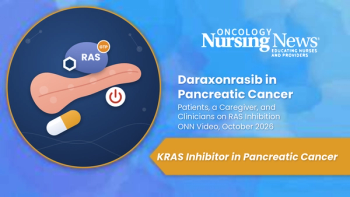
A patient, a caregiver, nurses, an NP, and an oncologist discuss rash prevention, dose holds, cost, and trial eligibility with oral daraxonrasib.
In a 117-patient cohort, 35% waited over 60 days for neoadjuvant chemotherapy, most often because of added workup, second opinions or comorbidities.
Advertisement
Advertisement
Trending on Oncology Nursing News
1
FDA Approves MSI Companion Diagnostic for Pembrolizumab in MSI-H Tumors
2
FDA Approves Durvalumab-Enfortumab Vedotin for Cisplatin-Ineligible MIBC
3
Evolving Multiple Myeloma Care: What Nurses Need to Know About an Innovative Treatment Approach in Subcutaneous Administration
4
SONO 2026: Nurses Remain the Front Line as Cancer Therapies Evolve
5